Vision Disc Manufacturer,Supplier and Exporter in India
Product Code : EL-HBE-7098
Jlab Export is a leading Vision Disc Manufacturer,and suppliers in India
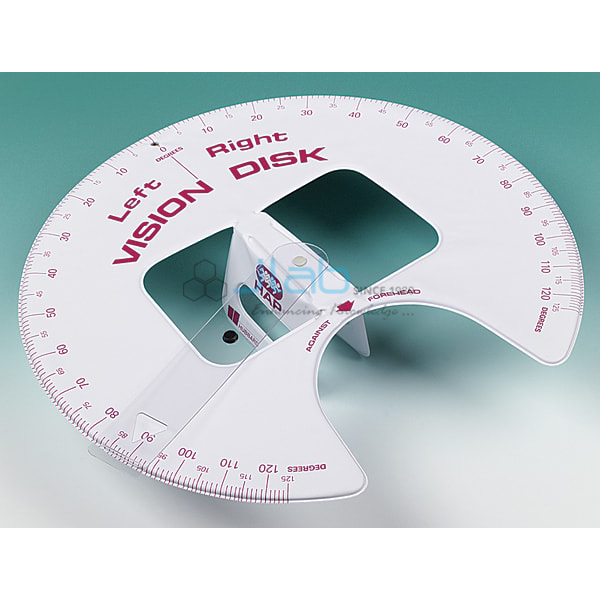
Vision Disc (code EL-HBE-7098) is a simple, versatile disk for gauging the field of vision, the reading field and peripheral vision in biology and health lessons. Calibrated in degrees and fitted with a moveable sight, it turns each student’s eyesight into a measurement the class can record and compare. JLab (Jain Laboratory Instruments Pvt Ltd, Ambala, India) supplies it to schools, colleges and dealers.
Specifications
| Parameter | Detail |
|---|---|
| Measures | Field of vision, reading field and peripheral vision |
| Scale | Calibrated in degrees |
| Sight | Moveable sight |
| Teaching material | Complete instructions and lesson ideas included |
| Quality check | Each disc is visually inspected before dispatch |
| Pack quantity | Each (sold individually) |
| Minimum order quantity | 10 units |
| Dispatch time | Usually 7–10 working days |
| Product code | EL-HBE-7098 |
| Supplied by | Jain Laboratory Instruments Pvt Ltd (JLab), Ambala, India |
What Is the Vision Disc Used For?
Your field of vision is everything you can see while your eyes stay fixed on one point, and it is measured as an angle. With the disc, a student looks straight ahead while a partner brings a target in along the degree scale; the angle at which the target is first noticed marks the edge of the field. Repeating the test for the reading field shows how much narrower the zone of clear, detailed vision is. The results lead naturally into retina structure: the centre of the retina is packed with cone cells that give detail and colour, while the edges rely mostly on rod cells that respond well to movement, which is why peripheral vision spots motion before it can make out shape. Because readings differ from one student to the next, the class can see natural variation in a real data set and discuss why wide side vision matters when crossing a road, playing sport or driving. It suits The Human Eye and the Colourful World in CBSE class 10 science and practical work in college physiology.
Frequently Asked Questions
What can the Vision Disc measure?
The field of vision, the reading field and peripheral vision, read from a scale calibrated in degrees using the moveable sight.
Can it be used to diagnose eye problems?
No — it is a teaching device. Eye specialists rely on similar field-of-vision measurements when they diagnose vision problems, and the disc lets students see why those measurements matter, but it is not a clinical instrument.
Are instructions included?
Yes. Complete instructions and lesson ideas come with the disc, so a teacher can plan a practical without extra material.
Who supplies the Vision Disc?
Jain Laboratory Instruments Pvt Ltd, trading as JLab, supplies it from Ambala, Haryana, India, and quotes for it directly.
Supplier
JLab is the trading name of Jain Laboratory Instruments Pvt Ltd, an Ambala-based science teaching equipment company incorporated in 2017, with its office on Hargolal Road, Ambala, Haryana. It supplies this vision disc alongside its own range of biology models and lab apparatus, so a school can source eye and senses practicals together, and each disc is checked visually before dispatch. JLab exports worldwide and ships to buyers in every region — for example Mauritius in East Africa, Bhutan in South Asia, Jordan in the Middle East, Kyrgyzstan in Central Asia and Sweden in Northern Europe.
Related Senses Teaching Aids
- Sight and Sound Health — a senses kit with a vision disk, lenses, an eye chart, a pinhole viewer and activities on sight and hearing.
- Human Eye Model — an enlarged, sectioned eye that comes apart to show the retina, lens and outer layers.
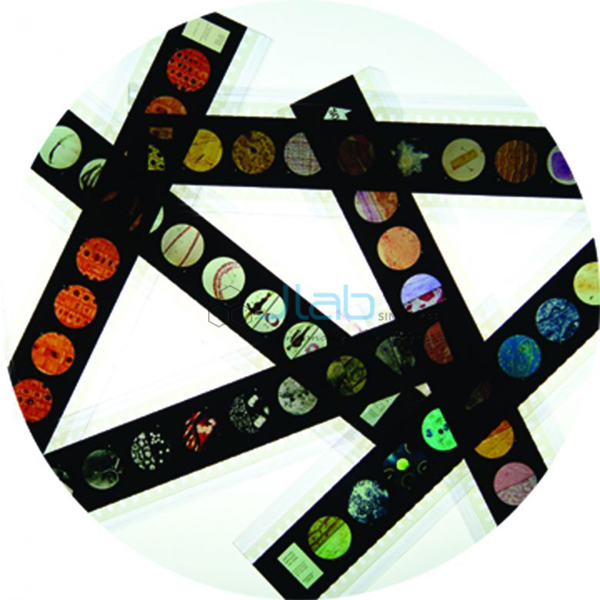
- The Senses Microslide — microscope images of sense receptors, including the rods and cones of the retina.
See the full Human Biology Equipments range or all Biology Lab Equipment.
Request a Quote
Use the Add To Cart button on this page, or send the number of discs (minimum 10 units) and your delivery location through the contact page; JLab replies with a direct quotation.
Last updated: 5 October 2026