
Porcelain Ware Manufacturer, Suppliers and Exporter in India
Jlabexport is a leading Porcelain Ware Manufacturer,and suppliers in India
The group Porcelain Ware includes laboratory glassware, crushing apparatus, filtration apparatus, and accessories used for evaporation, crystallization, heating, filtration, reaction observation, and sample preparation. Jlab Export manufactures and distributes porcelain laboratory glassware to educational institutions, scientific research centers, and industries.
Porcelain crucibles with lid, high temperature crucibles, evaporating dishes, crystallizing dishes, casserole basins, Buchner funnel, Hirsch funnel, mortar & pestle, cavity reaction plates, and clay triangles are some of the items that have been identified. Their corresponding accessories include crucible stands, filtration adapter, filter aid, and vacuum filtration units. They are categorized in eight interdependent subgroups.
Jlab Export claims to offer services to its clients across all the continents, including Asia, Africa, Europe, North America, South America, and Oceania.
What types of Porcelain Ware does Jlab Export manufacture and export?
Jlab Export lists eight Porcelain Ware subcategories covering reaction plates, clay triangles, mortars and pestles, evaporating dishes, casserole basins, crucibles and filtration funnels. The range also contains related support and filtration accessories, although not every listed accessory is made from porcelain.
The principal product groups are:
- Miscellaneous porcelain ware
- Mortar and pestle products
- Evaporating dishes
- High-temperature evaporating dishes
- Casserole basins with handles
- Crucibles with lids
- High-temperature crucibles with lids
- Buchner and Hirsch filtration funnels
Product descriptions identify low-form and tall-form crucibles, flat-form evaporating dishes, glazed and unglazed grinding surfaces, cavity plates, crucible stands and vacuum-filtration accessories. Exact specifications remain product-specific.
How do you choose Porcelain Ware for a school or university laboratory?
Select Porcelain Ware based on compatibility of the piece or accessory with the desired experiment, process of heating, filtration procedure, sample preparation task, and level of the learner. The potential buyer must verify the shape, size, capacity, glazing, heat range, and accompanying accessories before accepting a piece.
A purchasing enquiry should state:
- Intended experiment or procedure
- School, university, TVET, research or industrial use
- Required product type
- Required capacity or dimensions
- Low, tall, flat or deep form, where applicable
- Glazed or unglazed surface requirement
- Maximum operating temperature
- Chemical-contact requirement
- Required quantity
- Required lids, stands or filtration accessories
- Packing and documentation requirements
Where the catalogue gives only a product title or code, request a product-specific datasheet rather than inferring performance from another item in the same subcategory.
How should high-temperature porcelain crucibles be selected?
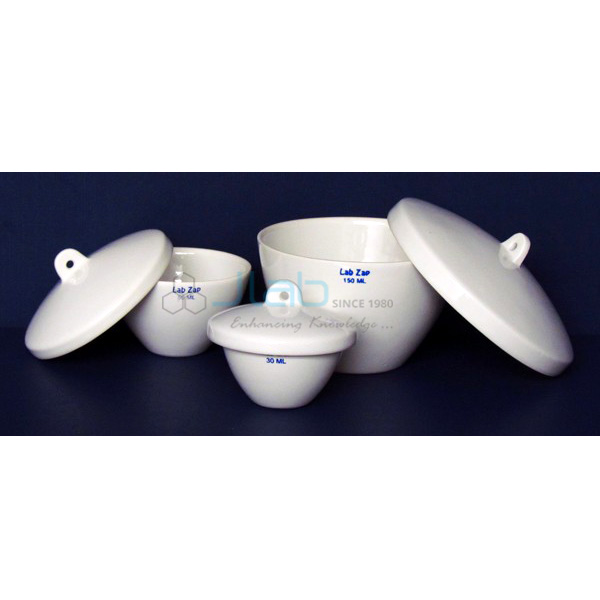
Select high-temperature porcelain crucibles by confirming the required form, lid, capacity, maximum operating temperature, glazing pattern and heating procedure. The listed superior-quality low-form and tall-form chemical-porcelain crucibles are described for use at temperatures up to 1150°C.
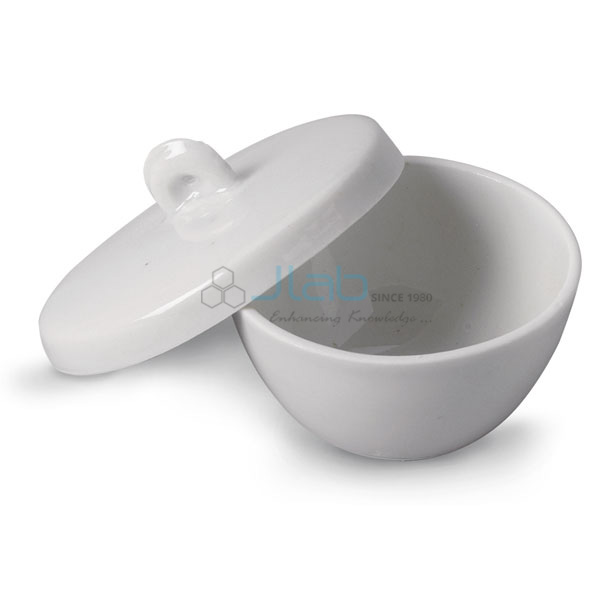
Both listed versions are glazed inside and outside except at the exterior bottom and rim. Their covers are described as completely glazed except at the rim. The same subcategory also includes a Gooch crucible with a perforated bottom, but no temperature rating is stated for that product.
Before ordering, confirm:
- Low or tall form
- Capacity and external dimensions
- Lid fit
- Temperature limit
- Heating and cooling procedure
- Furnace compatibility
- Glaze configuration
- Quantity and packing
Do not apply the stated 1150°C limit automatically to every crucible in the broader category.
What should buyers check when selecting a mortar and pestle?
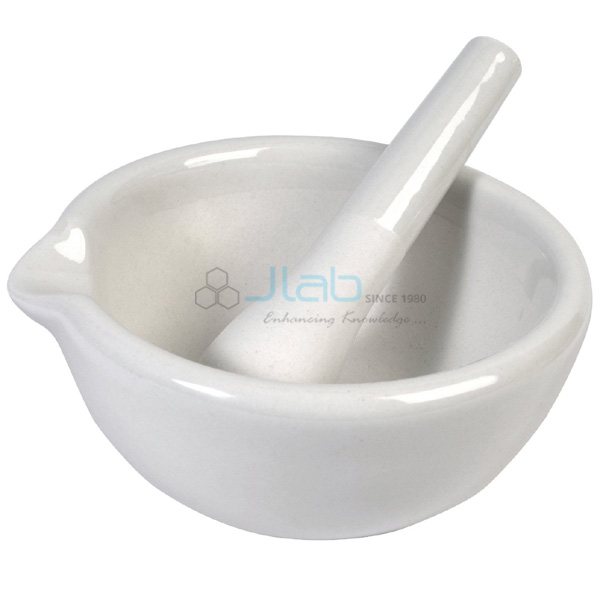
Select a mortar and pestle by checking the construction material, internal form, grinding-surface finish, sample hardness and contamination requirements. Jlab Export lists porcelain and agate configurations, including a deep-form porcelain set with a glazed exterior and an unglazed interior and grinding surface.
The agate model is described as octagonal and thick-walled, with highly polished grinding surfaces. Its stated application is preparing laboratory samples and high-purity powders, including medium-hard to very-hard samples with minimal contamination. The category also lists a standard mortar and pestle without detailed specifications.
Buyers should request:
- Porcelain or agate construction
- Mortar diameter and capacity
- Internal depth
- Pestle dimensions
- Glazed or unglazed grinding surface
- Intended sample type
- Cleaning requirements
- Supplied quantity
How do evaporating dishes and casserole basins differ?
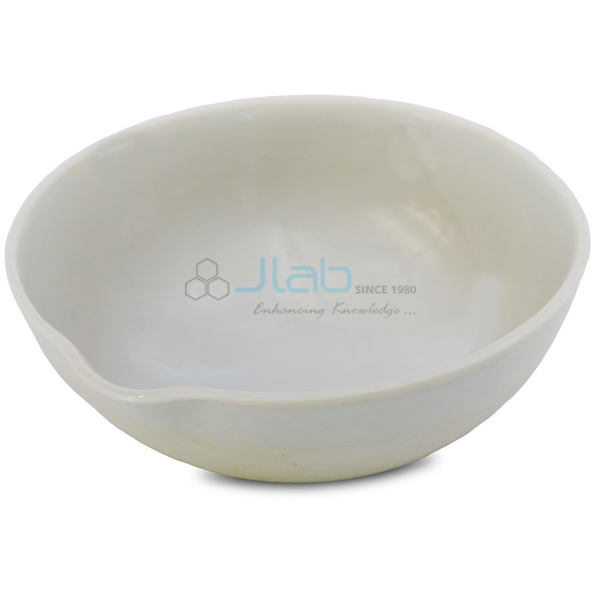
Evaporating dishes are listed in standard, crystallising, superior-quality and flat-form configurations, while the casserole basin includes a handle and pouring lip. The correct choice depends on the required vessel shape, handling method, capacity, heating procedure and pouring requirement.
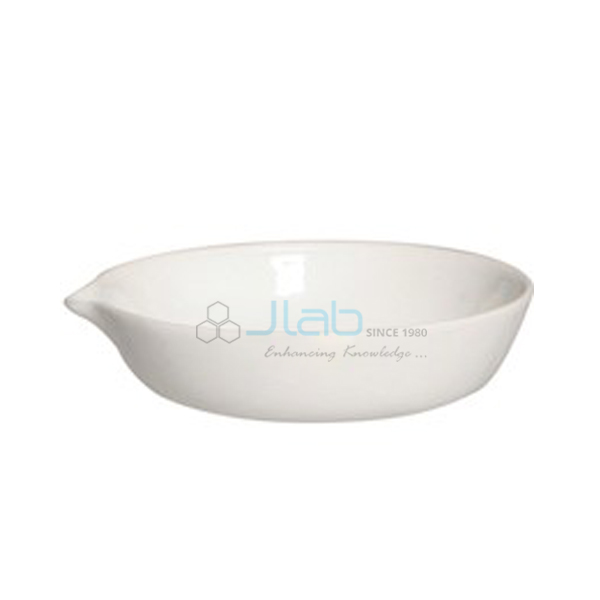
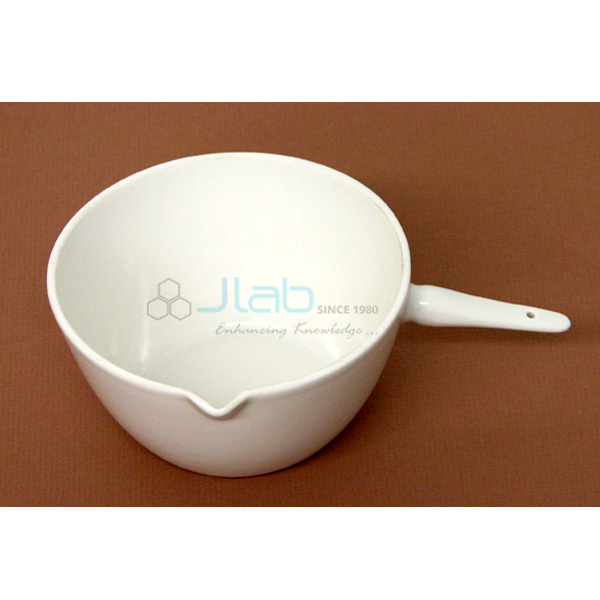
The listed superior-quality evaporating dishes are described as chemical porcelain with a lip and flat bottom, with chemical resistance stated for those specific models. The casserole basin is described as rugged, with a pouring lip and handle, and glazed inside and outside except at the rim and bottom.
Before procurement, confirm:
- Capacity and diameter
- Flat or alternative form
- Lip and pouring requirement
- Handle requirement
- Glazed and unglazed areas
- Chemical-contact requirements
- Maximum operating temperature
- Packing quantity
The standard evaporating-dish page does not supply detailed dimensions or performance values.
What Porcelain Ware is available for laboratory filtration?
The filtration range includes Buchner funnels, porcelain Buchner funnels, Hirsch funnels, filter adapters, rubber filter aids and vacuum-pump filtering kits. Buyers should select the arrangement by checking funnel dimensions, perforated-plate design, stem size, flask compatibility and required filtration volume.
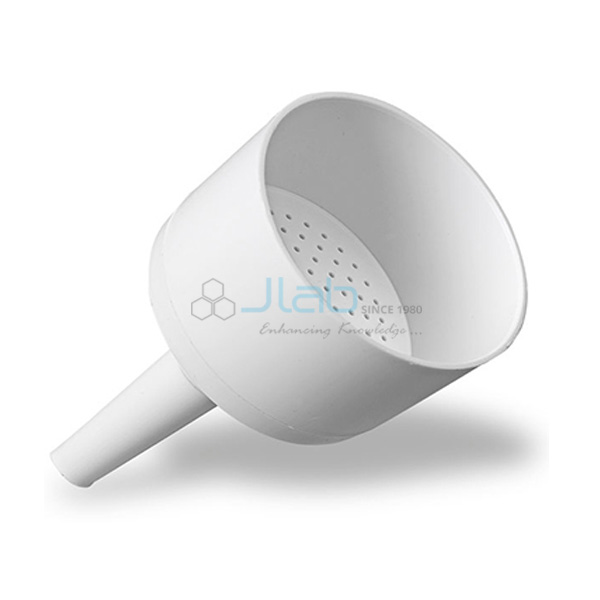
The porcelain Buchner funnel is described as glazed inside and outside except at the rim. Listed Hirsch funnels have 42 mm and 50 mm outside-diameter options, conical sides, a fixed perforated plate and a tapered stem. Filtering kits are listed in 250 ml, 500 ml and 1000 ml configurations with a vacuum pump and gauge.
Confirm:
- Buchner or Hirsch configuration
- Funnel diameter
- Stem dimensions
- Perforated-plate details
- Filter-paper size
- Flask-neck compatibility
- Adapter or seal requirement
- Vacuum-pump requirement
- Kit volume
- Included components
What should be checked when buying reaction plates and crucible supports?
Reaction plates and crucible-support products should be evaluated by their dimensions, number of cavities or holding positions, construction and compatibility with the intended vessels. Jlab Export lists a 12-cavity porcelain spotting plate, clay triangle and crucible support stands.
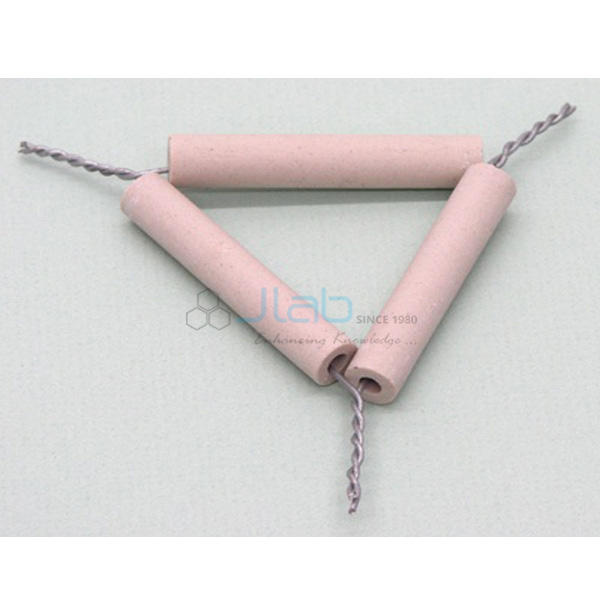
The spotting plate has 12 depressions, is glazed on the top and sides, and has approximate dimensions of 115 × 90 mm. The listed clay triangle has 50 mm sides and is constructed from clay pipes and steel wire. Crucible stands are listed for six or eight crucibles, with each opening stated as 33.25 mm in diameter.
Buyers should confirm:
- Number of cavities or positions
- Overall dimensions
- Opening diameter
- Supported crucible size
- Glazed areas
- Stand or wire construction
- Required quantity per workstation
What information should tender and export buyers provide?
Tender and export buyers should submit the complete bill of quantities, minimum specifications, quantities, destination and required manufacturer-side documentation. Jlab Export states that its tender desk supports ministries, institutions, importers, distributors, NGOs and project teams handling formal tenders or bulk orders.
A Porcelain Ware enquiry should include:
- Tender reference and submission deadline
- Product name and code
- Required capacity or dimensions
- Required material and form
- Glaze configuration
- Maximum operating temperature
- Required lids, stands or adapters
- Permitted deviations
- Required certificate copies
- Packing and carton marking
- Inspection requirements
- Delivery destination
- Shipping terms
Jlab Export identifies porcelain ware as part of its laboratory glassware and plasticware scope for tender supply. All compliance claims should be verified against current documents applicable to the offered product.
Porcelain Ware Product Types
|
Type |
Key feature |
Typical use |
|
Cavity Reaction Spot Plate |
Twelve porcelain cavities; top and sides glazed; approximately 115 × 90 mm |
Observing small laboratory reactions |
|
Clay Triangle |
50 mm sides; clay pipes with steel-wire construction |
Laboratory support accessory |
|
Porcelain Mortar and Pestle |
Deep-form option with glazed exterior and unglazed interior and grinding surface |
Grinding and preparing laboratory samples |
|
Agate Mortar and Pestle |
Octagonal, thick-walled form with polished grinding surfaces |
Preparing high-purity or harder samples with minimal contamination |
|
Evaporating Dish |
Standard porcelain product listed; detailed specification available on request |
Laboratory evaporation procedures |
|
High-Temperature Evaporating Dish |
Flat-bottom versions with a lip and stated chemical resistance |
Evaporation and crystallisation work |
|
Casserole Basin |
Handle, pouring lip and glazed interior and exterior except rim and bottom |
Heating, holding and pouring laboratory materials |
|
Porcelain Crucible with Lid |
Low-form and tall-form versions listed |
Containing samples during laboratory heating |
|
High-Temperature Crucible |
Low-form and tall-form versions stated for temperatures up to 1150°C |
Higher-temperature laboratory heating procedures |
|
Gooch Crucible |
Perforated bottom; glazed except exterior bottom and rim |
Filtration-related laboratory work |
|
Buchner Funnel |
Porcelain option glazed inside and outside except at the rim |
Laboratory filtration |
|
Hirsch Funnel |
Conical sides, fixed perforated plate and tapered stem; 42 mm and 50 mm OD listed |
Filtration using the stated funnel configuration |
|
Crucible Support Stand |
Steel-wire stands listed for six or eight crucibles |
Holding multiple crucibles |
|
Vacuum Filtering Kit |
250 ml, 500 ml and 1000 ml versions with vacuum pump and gauge |
Vacuum-assisted filtration |
Porcelain Ware Selection Criteria
|
Criterion |
What to check |
|
Intended procedure |
Identify whether the product is for grinding, evaporation, heating, filtration, reaction observation or support |
|
Product form |
Confirm tall, low, flat, deep, conical or handled configuration |
|
Material |
Verify porcelain, chemical porcelain, agate, rubber, steel or other stated material |
|
Capacity |
Request the vessel or kit capacity |
|
Dimensions |
Confirm diameter, depth, height, stem size, opening size and overall dimensions |
|
Temperature limit |
Obtain the maximum operating temperature for the exact product |
|
Glaze pattern |
Check which internal, external, bottom and rim surfaces are glazed |
|
Chemical suitability |
Confirm compatibility with the intended substances |
|
Lid |
Verify whether a lid is included and how it fits |
|
Grinding surface |
Confirm polished, glazed or unglazed construction |
|
Filtration configuration |
Check funnel type, perforated plate, stem and filter-paper requirements |
|
Flask compatibility |
Confirm neck size and adapter or sealing requirements |
|
Support compatibility |
Match clay triangles and stands to the crucible dimensions |
|
Included accessories |
Check lids, stands, adapters, filter aids, pumps and gauges |
|
Quantity |
Calculate requirements per student, group, workstation or laboratory |
|
Product documentation |
Request product codes, datasheets and current photographs |
|
Tender compliance |
Compare every offered item with the BOQ and record deviations |
|
Export packing |
Confirm individual protection, carton packing and marking |
Related Jlab Export Resources
- Jlab Export Home
- Product Catalogue
- Tender and OEM Enquiries
- About Jlab Export
- Frequently Asked Questions
- Contact Jlab Export
Frequently Asked Questions
What is laboratory Porcelain Ware?
Laboratory Porcelain Ware includes porcelain vessels, grinding tools, filtration funnels and related accessories used for heating, evaporation, crystallisation, filtration, reaction observation and sample preparation in school, university, TVET, research and industrial laboratories.
Which Porcelain Ware products does Jlab Export list?
Jlab Export lists mortars and pestles, evaporating dishes, crystallising dishes, casserole basins, crucibles with lids, Buchner funnels, Hirsch funnels, cavity reaction plates, clay triangles and related crucible-support and filtration accessories.
What temperature can the listed high-temperature crucibles withstand?
The listed superior-quality low-form and tall-form chemical-porcelain crucibles are stated for use at temperatures up to 1150°C, but this rating should not be assumed for other crucibles unless the relevant product description or datasheet confirms it.
Are all products in the Porcelain Ware category made from porcelain?
No, the category also contains an agate mortar and pestle, steel-wire crucible stands, rubberised filter adapters, rubber filter aids and vacuum-pump filtration kits, so the construction material must be checked for each product.
Are porcelain mortars glazed on the grinding surface?
The listed deep-form porcelain mortar is glazed outside except at the bottom and has an unglazed interior, while its porcelain pestle has an unglazed grinding surface; other models should be checked separately.
What is the difference between a Buchner funnel and a Hirsch funnel in this catalogue?
The catalogue lists a glazed porcelain Buchner funnel and Hirsch funnels with conical sides, a fixed perforated plate and tapered stem in stated outside diameters of 42 mm and 50 mm; further dimensions should be requested before selection.
Can Jlab Export quote Porcelain Ware for institutional tenders?
Yes, Jlab Export includes porcelain ware within its tender supply scope and accepts enquiries from institutions, importers, distributors, ministries, NGOs and project teams, subject to the submitted BOQ, specifications, quantities and documentation requirements.
Request a Quote for Porcelain Ware
Send Jlab Export the required product names, product codes, capacities, dimensions, temperature requirements, quantities, delivery destination and tender-document requirements for a product-specific quotation.
Request a Quote |Request a Catalogue |Submit a Tender Enquiry