
Test and Measurement Equipment Manufacturer, Suppliers and Exporter in India
Jlabexport is a leading Test and Measurement Equipment Manufacturer,and suppliers in India, United States, Indonesia, Brazil, Bangladesh, Mexico, Japan, Egypt, Philippines, Democratic Republic of the Congo, Vietnam, Iran, Turkey, Tanzania, United Kingdom, France, South Africa, Italy, Kenya, Colombia, Sudan, Uganda, South Korea, Argentina, Afghanistan, Yemen, Angola, Morocco, Poland, Uzbekistan, Mozambique, Malaysia, Ghana, Saudi Arabia, Peru, Madagascar, Côte d’Ivoire, Cameroon, Niger, Venezuela, Australia, Syria, Mali, Burkina Faso, Sri Lanka, Malawi, Zambia, Chad, Kazakhstan, Somalia, Chile, Senegal, Ecuador, Cambodia, Zimbabwe, Guinea, Benin, Rwanda, Burundi, Bolivia, South Sudan, Tunisia, Haiti, Belgium, Dominican Republic, Jordan, United Arab Emirates, Honduras, Tajikistan, Papua New Guinea, Portugal, Togo, Sierra Leone, Belarus, Laos, Turkmenistan, Libya, Kyrgyzstan, Nicaragua, Paraguay, Bulgaria, Serbia, Republic of the Congo, Lebanon, Liberia, Central African Republic, Palestine, Oman, Mauritania, New Zealand, Costa Rica, Kuwait, Panama, Croatia, Georgia, Eritrea, Mongolia, Uruguay, Qatar, Namibia, Bosnia and Herzegovina, Moldova, Armenia, Gambia, Jamaica, Lithuania, Albania, Gabon, Botswana, Lesotho, Guinea-Bissau, Slovenia, Equatorial Guinea, Latvia, North Macedonia, Bahrain, Trinidad and Tobago, Timor-Leste, Cyprus, Estonia, Eswatini, Mauritius, Djibouti, Fiji, Comoros, Solomon Islands, Guyana, Bhutan, Luxembourg, Suriname, Montenegro, Malta, Maldives, Cabo Verde, Brunei, Belize, Bahamas, Iceland, Vanuatu, Barbados, São Tomé and Príncipe, Samoa, Saint Lucia, Kiribati, Seychelles, Grenada, Saint Vincent and the Grenadines, Antigua and Barbuda.
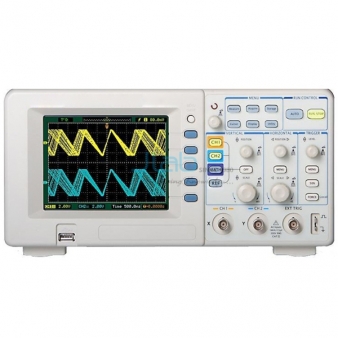
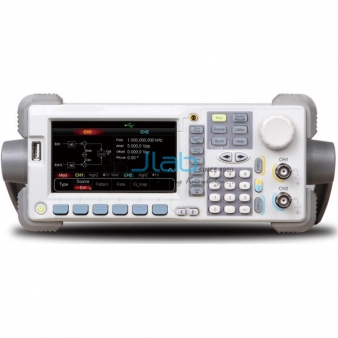
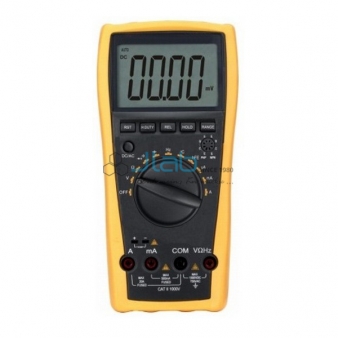
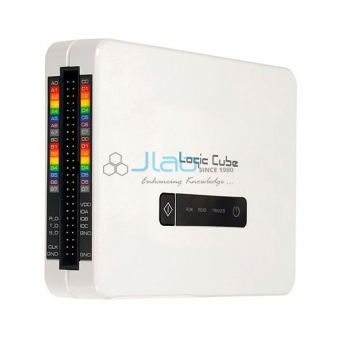
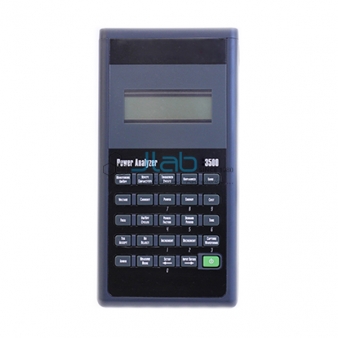
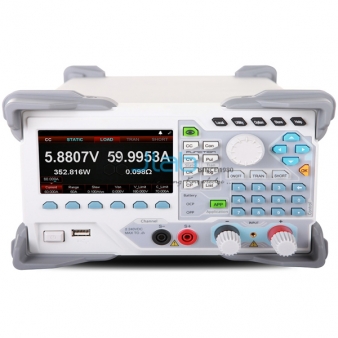
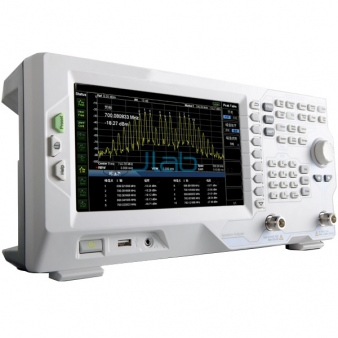
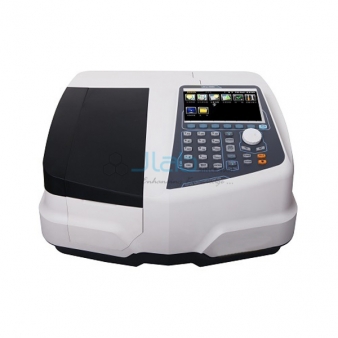
Test and measurement equipment covers the benchtop and handheld instruments used to generate, capture and analyse electrical signals — oscilloscopes, signal and function generators, analyzers, meters, power supplies and electronic loads. Jlab Export — the trading name of Jain Laboratory Instruments Pvt. Ltd., Ambala, Haryana — supplies and exports this range for electrical, electronics and communications engineering departments, polytechnics and ITI/TVET workshops, research laboratories and industrial test benches.
Unlike most of the engineering catalogue, these are general-purpose instruments rather than single-experiment trainers. The same oscilloscope serves a first-year circuits practical, a final-year project bench and a maintenance workshop, which changes how a department should specify them: by measurement range and channel count rather than by syllabus entry.
The range is grouped into fifteen instrument families, from oscilloscopes and generators through analyzers, meters and power supplies to soldering stations and PCB fabrication systems. All units are supplied against enquiry, tender and OEM or bulk order. Specifications and quotations are available on request.
What instrument families are in this category?
Fifteen families are listed, covering four broad jobs: generating a signal, capturing and displaying it, analysing it, and powering or building the circuit under test. Use the grouping below to find the right family before requesting a quotation.
|
Instrument family |
What it does |
Typical use |
|
Captures and displays waveforms against time |
Circuit debugging, waveform teaching, project benches |
|
|
Captures multi-channel digital signals |
Digital and embedded systems work |
|
|
Displays signal amplitude against frequency |
Communications and RF laboratories |
|
|
Measures power, quality and efficiency parameters |
Power electronics, machines and energy work |
|
|
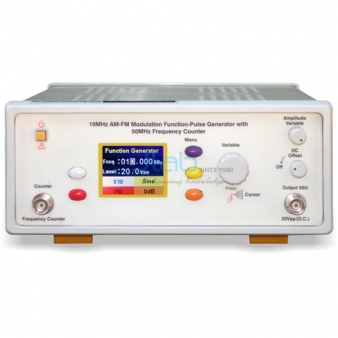
Produces standard test waveforms |
Standard signal source for a teaching bench |
|
|
Produces user-defined waveforms |
Advanced signal simulation and project work |
|
|
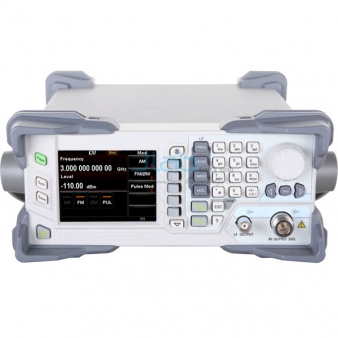
Produces radio-frequency test signals |
Communications laboratories, antenna and receiver work |
|
|
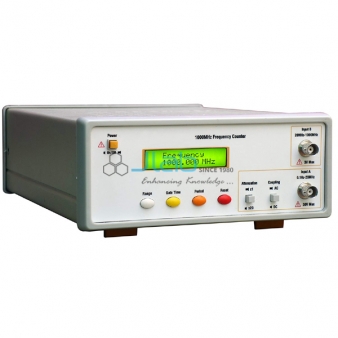
Measures signal frequency and period |
Timing, oscillator and calibration work |
|
|
General electrical measurement instruments |
Every bench; basic voltage, current and resistance work |
|
|
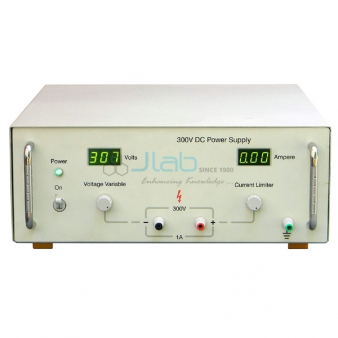
Provides regulated DC to the circuit under test |
Universal bench requirement |
|
|
Draws a controlled load for source testing |
Power supply, battery and converter testing |
|
|
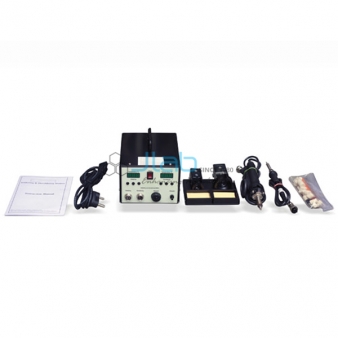
Assembly and rework of circuit boards |
Electronics workshops and repair training |
|
|
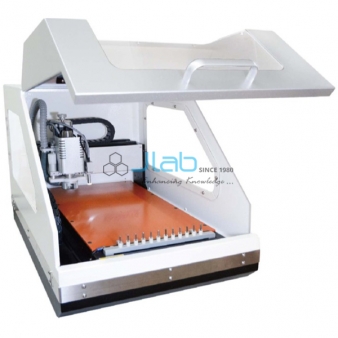
In-house circuit board production |
Project labs and prototyping facilities |
|
|
Grouping listed on the site |
Contents available on request |
|
|
Grouping listed on the site |
Contents available on request |
How should a department decide what to buy first?
Start with the instruments every bench needs, then add the specialised ones. A working electronics bench needs a power supply, a meter, a signal source and an oscilloscope. Analyzers, RF generators and electronic loads are added for specific courses or research areas, usually in smaller quantities.
The practical consequence is that quantities differ sharply by family. A department typically buys oscilloscopes, meters, power supplies and function generators in bench multiples — one set per two or three students — while a spectrum analyzer or logic analyzer may be shared across a whole laboratory. Soldering stations follow the bench multiple; a PCB fabrication system is usually a single shared facility. Setting these ratios before requesting a quotation gives a far more useful price than a single line per instrument type.
What specifications should you ask for before ordering?
Ask for the measurement range and resolution on every instrument, and the channel count on anything that captures signals. For oscilloscopes that means bandwidth, sample rate and channels; for generators, frequency range and output; for power supplies, voltage and current range with the number of independent outputs.
No specifications are published on the site for this category, so these must come from the quotation. Request them in writing per model rather than per family, because "oscilloscope" covers an enormous span of capability and price. Ask at the same time for the interface options — USB, LAN or GPIB — if the department intends to log results to a PC, and for the mains supply and plug type appropriate to the destination country on export orders.
What should a buyer confirm on the quotation?
|
Criterion |
What to check |
|
Model designation |
A specific model number, not just the instrument family |
|
Measurement range |
Range and resolution for each measured parameter |
|
Bandwidth and channels |
For oscilloscopes, logic and spectrum analyzers |
|
Output range |
Frequency, amplitude and output count on generators and supplies |
|
Accuracy statement |
Stated accuracy or tolerance for the model quoted |
|
Calibration |
Whether a calibration certificate is supplied, and by whom |
|
Safety compliance |
Electrical safety marking applicable to the destination market |
|
Mains supply |
Voltage, frequency and plug type for the destination country |
|
Interfaces |
USB, LAN or GPIB where PC logging or automation is required |
|
Accessories |
Probes, leads, adapters and carrying case — included or extra |
|
Support |
Warranty terms, service route and spares availability |
Does the equipment come calibrated?
Confirm calibration in writing on the quotation rather than assuming it. Ask whether a calibration certificate is supplied with the instrument, which body issued it, what parameters it covers and its date of issue — and separately, what the recommended recalibration interval is and how recalibration will be handled after supply.
This matters more for test and measurement than for most laboratory equipment. A teaching bench can often work with an uncalibrated instrument; a research measurement, an industrial acceptance test or an accredited testing environment cannot. If a tender specifies traceable calibration, that requirement should be quoted explicitly against each model, with the issuing body named. Do not accept a general company-level quality statement as a substitute for a per-instrument calibration certificate.
How does Jlab Export supply this range?
Jlab Export operates from Ambala, Haryana and exports directly, supplying single instruments, full bench sets, tender quantities and OEM or bulk orders. No prices are published; each model is quoted on enquiry once the specification, quantity and destination are known.
Jain Laboratory Instruments Pvt. Ltd. was established in 1986 and states a manufacturing unit of 15,000 square metres. For a complete electronics laboratory, raise a lab-setup enquiry rather than separate requests, so that bench quantities, shared instruments, power distribution and accessories are quoted together.
What quality standards does the company state?
Jlab Export states certification to ISO 9001, ISO 14001 and ISO 13485, CE marking, WHO-GMP, and compliance with Directive 93/42/EEC for medical devices. These are manufacturer-stated — verify current certificate scope and validity before publishing or before submitting them with a tender.
For electronic instruments specifically, a company quality certification is not the relevant document. What a buyer needs is the electrical safety marking that applies to the destination market for the model supplied, plus the calibration certificate discussed above. Request both per model at quotation stage.
Explore related categories
- Engineering Lab Equipment (parent category)
- Electronics Lab Equipments
- Laboratory Instruments
- Electrical Work Bench
- Training Workshop Labs
- Mechanical Engineering Lab Equipment
- Metallurgical Equipment
- Survey Equipment
- All Products
- Tenders / OEM Supply
Frequently asked questions
What is test and measurement equipment?
Test and measurement equipment is the set of instruments used to generate, capture, measure and analyse electrical signals. It includes oscilloscopes, function and RF signal generators, spectrum, logic and power analyzers, meters, DC power supplies and electronic loads, together with the soldering and PCB fabrication equipment used to build the circuits being tested.
Who is this range for?
Electrical, electronics and communications engineering departments in colleges and universities; polytechnics, ITIs and TVET workshops; research laboratories; and industrial test and maintenance benches. The instruments are general-purpose rather than tied to one prescribed experiment.
How many of each instrument does a laboratory need?
Power supplies, meters, oscilloscopes and function generators are usually bought in bench multiples — one set per student group — while spectrum analyzers, logic analyzers and PCB fabrication systems are typically shared across a laboratory. Deciding these ratios before enquiry produces a far more accurate quotation.
Are calibration certificates supplied?
Confirm this per model on the quotation. Ask which body issued the certificate, what parameters and ranges it covers, its date, and the recommended recalibration interval. A company-level quality certification is not a substitute for an instrument calibration certificate, particularly where a tender requires traceability.
Are specifications and prices published on the site?
No. Bandwidths, ranges, channel counts, accuracies and prices are not listed for this category, and pricing depends on model, quantity, accessories and destination. Send the required specification and quantities to receive a written quotation with model numbers.
Can a complete electronics laboratory be supplied against tender?
Yes. Tender and OEM enquiries are handled through the tender desk, where bench quantities, shared instruments, accessories and destination-specific supply requirements are quoted together rather than line by line.
Request a quotation
Send the instrument families and specifications you need, quantities per bench, and destination country for a written quotation with model numbers.
- Request a Quote
- Tender / OEM enquiry
- Phone: +91-85699-09696
- Works: 2475-84, Hargolal Road, Ambala, Haryana, India