
Microscope Manufacturer, Suppliers and Exporter in India
Jlabexport is a leading Microscope Manufacturer,and suppliers in India
Microscopes are optical instruments used to magnify and examine specimens, structures and materials that cannot be studied adequately with unaided vision. JLab Export is a Manufacturer & Exporter of microscopes from Ambala, India for schools, universities, TVET institutions, research laboratories and relevant industrial users.
The current Microscope category includes student, dissecting, monocular, binocular, coaxial, pathological, tissue-culture, projection and stereoscopic microscope configurations. It also lists microscope components and calibration accessories, including eyepiece equipment, achromatic objectives, mechanical stages, binocular and trinocular heads, and stage micrometers. These products support microscopy requirements in teaching, biological observation, pathology-related laboratory work, instructional demonstrations, optical calibration and other laboratory applications. Buyers should select equipment according to the intended user, observation method, head configuration, stage design, objective requirements and required accessories. Product pages provide selected specifications, but several listings remain incomplete or contain mismatched descriptions. Complete technical specifications, current configurations and documentation should therefore be confirmed before quotation or tender submission.
What microscope products are listed in this category?
The category lists ten microscope configurations and five microscope components or calibration accessories. Each item has a JL-M product code, allowing buyers to identify the required product in a quotation, bill of quantities or technical enquiry. Complete specifications are not displayed consistently across every listing.
The listed products are:
- Dissecting Microscope — JL-M-855
- Student Microscope — JL-M-858
- Pathological and Medical Microscope — JL-M-864
- Monocular Inclined Microscope — JL-M-868
- Binocular Microscope — JL-M-871
- Coaxial Binocular Microscope — JL-M-874
- Tissue Culture Microscope — JL-M-876
- Projection Microscope — JL-M-880
- Stereoscopic Microscope — JL-M-884
- Stereoscopic Zoom Binocular and Trinocular Microscope — JL-M-886
- Eyepieces — JL-M-901
- Achromatic Objectives — JL-M-903
- Mechanical Stage — JL-M-905
- Binocular and Trinocular Head — JL-M-910
- Stage Micrometer — JL-M-914
How do you choose a microscope for a school or university laboratory?
Choose a microscope by matching the viewing configuration, stage, illumination and optical components to the learner level and practical activity. A basic student microscope may suit introductory observation, while binocular, tissue-culture, projection or stereoscopic configurations require separate technical evaluation.
Before requesting a quotation, specify:
- School, university or TVET level
- Department or subject
- Specimens or materials to be examined
- Monocular, binocular or trinocular requirement
- Straight or inclined observation head
- Required stage type and movement
- Required objectives and eyepieces
- Illumination requirement
- Quantity
- Required accessories
The Student Microscope listing specifies a monocular straight fixed tube, a fixed 75 × 85 mm square stage with stage clips and a 25 mm plano-concave mirror mounted on a gimbal mount.
What is the difference between monocular and binocular microscope configurations?
A monocular microscope provides one viewing tube, while a binocular microscope provides a two-eye viewing head. The listed Monocular Inclined Microscope has a 45-degree inclined head that rotates through 360 degrees, while the listed Binocular Microscope has a 45-degree inclined binocular head with the same rotational arrangement.
The Monocular Inclined Microscope uses a quadruple nosepiece with centring and positive click stops. The Binocular Microscope also includes a quadruple nosepiece and lists a 135 × 140 mm mechanical stage.
Buyers should additionally confirm:
- Interpupillary adjustment
- Diopter adjustment
- Eyepiece specifications
- Objective specifications
- Focusing controls
- Stage travel
- Condenser
- Illumination
These details are not fully stated in the category summary and should be requested for the selected model.
Which microscopes have interchangeable or specialised observation heads?
The Tissue Culture Microscope and the listed binocular or trinocular configurations provide specialised head arrangements. The Tissue Culture Microscope has a 45-degree inclined binocular head described as interchangeable with monocular or trinocular heads, allowing the required viewing format to be specified during procurement.
The Stereoscopic Microscope has a binocular head inclined at 45 degrees, rotatable through 360 degrees and fitted with adjustable interpupillary distance. The Stereoscopic Zoom Binocular and Trinocular Microscope listing describes a 45-degree inclined trinocular head that rotates through 360 degrees.
Buyers should confirm:
- Head supplied as standard
- Optional head configurations
- Camera-port availability
- Interpupillary range
- Eyepiece compatibility
- Optical-path arrangement
- Required adapters
Specifications should be checked against the current product datasheet because the product title and summary are not fully aligned for every listing.
What should buyers check in a projection microscope?
A projection microscope should be selected by its tube configuration, objective turret, stage movement and required projection arrangement. The listed Projection Microscope has a fixed straight monocular tube with a stated length of 160 mm and a triple revolving nosepiece with centring and positive click stops.
Its detachable mechanical stage provides X–Y cross movement over a stated 50 × 75 mm area and includes a graduated vernier scale. Buyers should also request:
- Objective and eyepiece specifications
- Projection surface or screen details
- Illumination source
- Focusing controls
- Image size
- Power requirements
- Supplied accessories
- Dimensions and weight
These additional specifications are not included in the category summary and remain available on request.
Which microscope objectives and stage accessories are listed?
The category lists achromatic objectives, a mechanical stage, observation heads and a stage micrometer as microscope components and calibration accessories. These products should be selected by microscope compatibility, objective power, mounting arrangement, movement range and intended calibration or observation requirement.
The Achromatic Objectives listing includes:
- 2×
- 4×
- 5×
- 10×
- 20×
- 40×
- 45×
- 60×
- 100× oil immersion
The listing also states an anti-fungus coating and chrome or painted finishes. The Mechanical Stage provides rack-and-pinion movement of 70 mm on the X-axis and 30 mm on the Y-axis. The Stage Micrometer is described for routine calibration of light microscopes, particularly when changing objectives or working with different microscopes.
How should microscope accessories be checked for compatibility?
Microscope accessories should be matched to the microscope model, optical system, mounting arrangement and intended function before ordering. An objective, stage, eyepiece component or observation head should not be treated as universally interchangeable unless compatibility is confirmed in writing.
Provide the following information:
- Existing microscope make or model
- Product code of the required accessory
- Objective mounting or thread requirement
- Required objective powers
- Head or tube connection
- Stage mounting dimensions
- Required movement range
- Eyepiece diameter and magnification
- Camera or trinocular requirement
- Quantity
The Binocular and Trinocular Head listing refers to a fully coated optical system intended to provide clear images, flatness and contrast. Complete mounting and dimensional specifications remain available on request.
How should TVET, research and industry buyers prepare a microscope enquiry?
TVET, research and industry buyers should define the observation task, specimen or material, optical configuration, stage requirements and required documentation. The same microscope type may not suit instructional demonstrations, biological specimens, pathology-related work, optical calibration and material examination.
A complete enquiry should state:
- Microscope or accessory name
- JL-M product code
- Intended application
- Required observation head
- Objective and eyepiece requirements
- Required total magnification
- Stage type and travel
- Illumination requirement
- Camera or image-output requirement
- Quantity
- Electrical requirements
- Required datasheets and certificates
- Destination country
- Tender reference, where applicable
JLab Exports FAQ states that product-choice consultations and microscope training may be arranged through its contact page. The final scope should be confirmed in the quotation.
Can microscopes be supplied for tenders and bulk orders?
Yes, JLab Export states that microscopes can be included in institutional, government, educational and bulk-equipment tenders. Its tender page identifies microscopes as a category covering student, binocular and metallurgical microscopes, together with slides and cameras.
Tender buyers should provide:
- Complete bill of quantities
- Product names and JL-M codes
- Mandatory specifications
- Required quantities
- Acceptable deviations
- Required accessories
- Certificate requirements
- Inspection requirements
- Packing instructions
- Destination and delivery terms
- Tender submission deadline
The tender page states that JLab Export supports education departments, universities, polytechnics, school chains, importers, distributors and project teams. Exact documentation and product availability should be recorded in the final quotation.
Which regions does JLab Export state that it serves?
JLab Export states that it exports to markets across Asia, Africa, Europe, North America, South America and Oceania. Its About Us page names the USA, UK, Australia, UAE, South Africa, Germany, France, Nigeria, Kenya, Brazil, Vietnam and Sri Lanka among the countries served.
International buyers should provide:
- Destination country
- Required voltage and frequency
- Plug configuration
- Packing requirements
- Required manuals
- Inspection conditions
- Import documentation requirements
- Preferred shipment terms
Product availability, documentation and destination-market suitability should be confirmed for the selected microscope or accessory. A general export statement does not establish that every configuration is available or approved in every market.
What microscope standards and certifications are stated?
JLab Exports lists company-stated certifications and standards include:
- ISO 9001
- ISO 13485
- ISO 14001
- ISO/IEC 17025
- NABL
- CE Marking
- UL Listing
- ETL Listing
- CSA
- RoHS
- REACH
- FDA 21 CFR Part 820
- ASTM standards
- GLP
- GMP
- Directive 93/42/EEC
- ISO 12864
- IEC 61010-1
- ASTM E112
- ISO 643
- ISO 10936
- DICOM 3.0
- WHO-GMP
- NIST-traceable calibration
- BIS/EAR export compliance
Microscope product types
|
Type |
Key feature stated on the website |
Typical use |
|
Dissecting Microscope — JL-M-855 |
Product name and code are listed; specifications are available on request |
Dissection or low-magnification observation requirement |
|
Student Microscope — JL-M-858 |
Straight monocular tube, 75 × 85 mm fixed stage and 25 mm plano-concave mirror |
Student instruction and basic laboratory observation |
|
Pathological and Medical Microscope — JL-M-864 |
Aluminium die-cast construction and quadruple nosepiece |
Pathology-related or medical laboratory microscope requirement |
|
Monocular Inclined Microscope — JL-M-868 |
45-degree monocular head, 360-degree rotation and quadruple nosepiece |
Single-eye laboratory observation |
|
Binocular Microscope — JL-M-871 |
45-degree binocular head, 360-degree rotation and 135 × 140 mm mechanical stage |
Two-eye laboratory observation |
|
Coaxial Binocular Microscope — JL-M-874 |
Aluminium pressure die-cast body, PU coating and quadruple ball-bearing nosepiece |
Binocular microscope requirement with coaxial configuration |
|
Tissue Culture Microscope — JL-M-876 |
Binocular head interchangeable with monocular or trinocular heads |
Tissue-culture observation requirement |
|
Projection Microscope — JL-M-880 |
Fixed 160 mm monocular tube and detachable 50 × 75 mm X–Y stage |
Projection-based observation or instruction |
|
Stereoscopic Microscope — JL-M-884 |
45-degree binocular head, 360-degree rotation and adjustable interpupillary distance |
Stereoscopic observation |
|
Stereoscopic Zoom Binocular and Trinocular Microscope — JL-M-886 |
Trinocular head and built-in 135 × 120 mm mechanical stage are stated |
Zoom, binocular or trinocular observation requirement |
|
Eyepieces — JL-M-901 |
Listing text describes phase-contrast objectives, centring telescope and green filters |
Exact eyepiece or phase-contrast requirement requires clarification |
|
Achromatic Objectives — JL-M-903 |
Objectives from 2× to 100× oil immersion with anti-fungus coating |
Microscope objective replacement or configuration |
|
Mechanical Stage — JL-M-905 |
Rack-and-pinion movement of 70 mm × 30 mm |
Controlled X–Y specimen positioning |
|
Binocular and Trinocular Head — JL-M-910 |
Fully coated optical system is stated |
Microscope head replacement or configuration |
|
Stage Micrometer — JL-M-914 |
Intended for routine calibration of light microscopes |
Microscope calibration and instructional laboratory use |
Microscope selection criteria
|
Criterion |
What to check |
|
Intended user |
Confirm school, university, TVET, research or industrial use. |
|
Observation task |
State the specimen, structure or material to be examined. |
|
Microscope type |
Select student, dissecting, pathological, monocular, binocular, tissue-culture, projection or stereoscopic configuration. |
|
Observation head |
Confirm straight, inclined, monocular, binocular or trinocular configuration. |
|
Head movement |
Check whether rotation or interchangeability is required. |
|
Nosepiece |
Confirm triple, quadruple or another objective-turret requirement. |
|
Objectives |
Specify objective powers, optical type and oil-immersion requirement. |
|
Eyepieces |
Request magnification, field and mounting specifications. |
|
Stage |
Confirm fixed or mechanical stage, dimensions and X–Y travel. |
|
Illumination |
Specify mirror or powered illumination and associated electrical requirements. |
|
Focusing system |
Request coarse, fine or coaxial focusing details. |
|
Digital imaging |
Confirm camera port, adapters, output and software where required. |
|
Calibration |
Specify whether a stage micrometer or other calibration accessory is needed. |
|
Compatibility |
Provide the existing microscope model when ordering accessories. |
|
Documentation |
Request current datasheets, manuals, certificates and inspection records. |
|
Procurement details |
Provide product codes, quantities, destination, packing and tender requirements. |
Related catalogue and procurement links
- JLab Export Home
- Complete Product Catalogue
- Microscope Category
- Tender and Bulk Supply
- About JLab Export
- Frequently Asked Questions
- Contact and Quotation Enquiries
Frequently Asked Questions
What microscope products does JLab Export list?
JLab Export lists student, dissecting, pathological, monocular, binocular, coaxial, tissue-culture, projection and stereoscopic microscope configurations. The category also includes objectives, stages, observation heads and a stage micrometer, with JL-M product codes for quotation and tender identification.
Which microscope is intended for student use?
The Student Microscope JL-M-858 is the categorys specifically named student model. Its listing states that it has a straight fixed monocular tube, a 75 × 85 mm fixed square stage with clips and a 25 mm plano-concave mirror mounted on a gimbal arrangement.
Does the category include binocular microscopes?
Yes, the category includes a Binocular Microscope, Coaxial Binocular Microscope, Tissue Culture Microscope and stereoscopic configurations with binocular or trinocular heads. Buyers should compare head angle, rotation, stage, nosepiece and interchangeable-head requirements before choosing a model.
Are microscope objectives available separately?
Yes, Achromatic Objectives JL-M-903 are listed separately in powers from 2× to 100× oil immersion. The listing also states that the objectives have an anti-fungus coating and are available with chrome or painted finishes. Compatibility should be confirmed before ordering.
Is a microscope calibration accessory listed?
Yes, the Stage Micrometer JL-M-914 is described for routine calibration of light microscopes. The listing specifically refers to its use when alternating objectives or working with different microscopes and identifies student, laboratory and instructional settings as relevant contexts.
What details should a microscope quotation request include?
A microscope quotation request should include the product name, JL-M code, application, head type, objectives, stage, illumination, accessories, quantity and destination. Buyers should also specify required manuals, inspection records, certificate copies, packing instructions and any tender deadline.
Can JLab Export support microscope tenders?
Yes, JLab Export includes microscopes within its institutional and tender catalogue. Buyers should provide a complete BOQ, required specifications, product quantities, accessories, compliance format, inspection conditions, destination and delivery terms for line-by-line technical and commercial review.
Do the stated standards apply to every microscope?
The supplied pages do not prove that every listed standard applies to every microscope or accessory. All certification and compliance claims are manufacturer-stated and should be verified using current certificates, accreditation scopes, test reports and model-specific declarations before publication or tender submission.
Request Microscope Pricing
Submit the required microscope or accessory names, JL-M product codes, technical specifications, quantities, destination and documentation requirements for technical and commercial review.
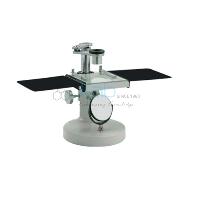

Student Microscope
Product Code : JL-M-858
Observation Monocular straight fixed tube. Stage Fixed square stage size 75 x 85mm with stage clips. Illumination Plano-Concave mirror diameter 25mm mounted on gamble mount.
View Details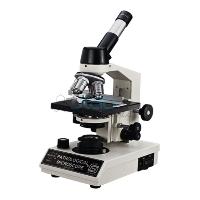
Pathological and Medical Microscope
Product Code : JL-M-864
Stand Stable and Robust, assembled from Aluminium DIE-CAST parts. Nosepiece Quadruple nosepiece with accurate centring and positive click stops.
View Details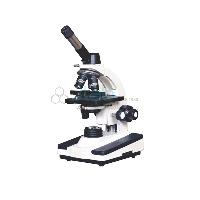
Monocular Inclined Microscope
Product Code : JL-M-868
Observation Head 45-degrees inclined Monocular head rotatable through 360-degrees. Nosepiece Quadruple nosepiece with accurate centring and positive click stops.
View Details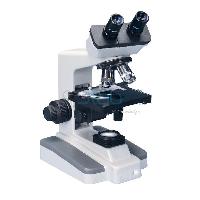
Binocular Microscope
Product Code : JL-M-871
Observation Head 45-degrees inclined Binocular head rotatable through 360-degrees. Nosepiece Quadruple nosepiece with accurate centring and positive click stops Stage Mechanical stage of 135x140mm.
View Details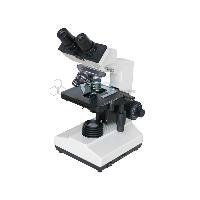
Coaxial Binocular Microscope
Product Code : JL-M-874
Frame All aluminium pressure die-casted body. Paint P.U. coating in light cream shade. Width="24%">Nose piece class=""Mso Normal"">Quadruple ball bearing nosepiece.
View Details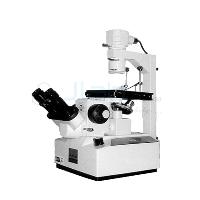
Tissue Culture Microscope
Product Code : JL-M-876
Observation Head 45-degrees inclined Binocular head interchangeable with Monocular or Trinocular observation head. Nosepiece Quadruple revolving turret nosepiece with positive accurate click stops.
View Details
Projection Microscope
Product Code : JL-M-880
Body Monocular Fixed Straight Tube, length 160mm.Nosepiece Triple revolving nosepiece with accurate centring and positive click stops Stage Detachable Mechanical stage for X-Y cross movement 50X75mm, fully graduated vernier scale.
View Details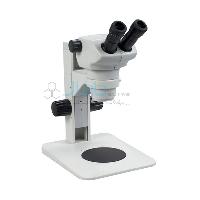
Stereoscopic Microscope
Product Code : JL-M-884
Observation Head Binocular head inclined at 45-deg., rotated through 360-deg with adjustable inter-papillary distance.
View Details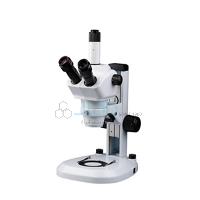
Stereoscopic Zoom Binocular and Trinocular Microscope
Product Code : JL-M-886
Observation Head 45-degrees inclined Trinocular head rotatable through 360-degrees. Nosepiece Quadruple nosepiece with accurate centring and positive click stops Stage Built in graduated mechanical stage of 135x120mm.
View Details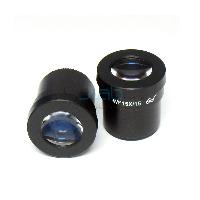
Eyepieces
Product Code : JL-M-901
Phase Contrast cum Bright Field with turret phase contrast equipment DIN Standard phase objective PH-10x, PH-20x, PH-40x and PH-100x as also centring telescope and green filters
View Details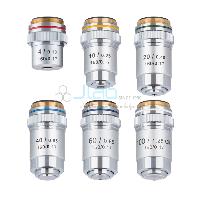
Achromatic Objectives
Product Code : JL-M-903
Achromatic objectives 2x, 4x, 5x, 10x, 20x, 40x, 45x, 60x and 100x Oil Immersion. With anti-fungus coating Both chrome and paint finish.
View Details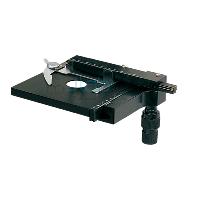
Mechanical Stage
Product Code : JL-M-905
Both horizontal and vertical movements are made by a rack and pinion arrangement provided. It has a movement of 70mm in X-axis and 30mm in Y-axis.
View Details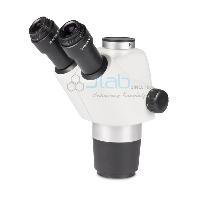
Binocular and Trinocular Head
Product Code : JL-M-910
Fully coated optical system provides sharp and clear images with extremely good flatness and contrast. The images are brighter and more distinct even as the periphery of the field of view.
View Details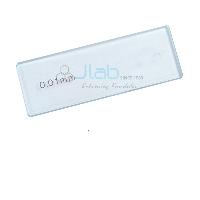
Stage Micrometer
Product Code : JL-M-914
These accurate stage micrometers are intended for routine calibration of light microscopes, particularly when alternating objectives of different microscopes. Ideal for student, lab settings and instructional purposes. Robust construction.
View Details