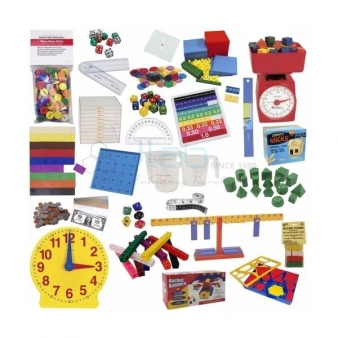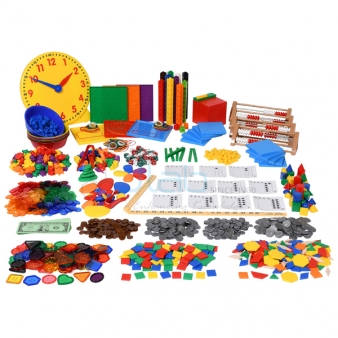

Math Lab Equipment Manufacturers in Ambala Manufacturer, Suppliers and Exporter in India
Jlabexport is a leading Math Lab Equipment Manufacturers in Ambala Manufacturer,and suppliers in India
Math Lab Equipment includes manipulatives, models, boards, measuring instruments and activity resources used to demonstrate mathematical concepts through practical work. This category is intended for schools, universities, TVET institutions, research settings and industrial training environments that require physical resources for geometry, algebra, trigonometry, probability, fractions, measurement and interdisciplinary STEM activities.
Jlab Export manufactures and exports Math Lab Equipment from Ambala, India. The supplied category page identifies Geometric Solid Sets, Symmetry Kits, Algebraic Identity Cubes, Trigonometry Boards, Measurement Kits, Probability Sets and Fraction Discs. The wider catalogue also separates Bulk Math Kits for Schools and STEM Math Kits as related mathematics categories.
The current category grid does not display individual products, product codes, dimensions, bills of materials or technical specifications. Buyers should request the complete contents, quantities, intended activities, construction details and documentation before approving equipment for institutional procurement, export supply or tender submission.
How do you choose Math Lab Equipment for an institution?
Choose Math Lab Equipment by matching each item to the mathematical concept, activity level and intended users. Geometry solids, algebra models, fraction discs, probability sets, trigonometry boards and measuring instruments serve different learning objectives and should be selected against an activity-based equipment schedule.
The enquiry should identify:
- Mathematical topic
- Required activity or demonstration
- Intended school, university, TVET, research or industrial audience
- Number of students or groups
- Required models, manipulatives or instruments
- Dimensions and component quantities
- Manuals, charts or activity guidance
- Required quantity
- Packing and delivery destination
The current page provides category-level product names but no individual specifications. Request product-level details before technical approval.
Which types of Math Lab Equipment are identified?
The supplied category identifies equipment for geometry, symmetry, algebra, trigonometry, measurement, probability and fractions. Its catalogue structure also includes separate Bulk Math Kits for Schools and STEM Math Kits categories.
The named equipment groups are:
- Geometric Solid Sets
- Symmetry Kits
- Algebraic Identity Cubes
- Trigonometry Boards
- Measurement Kits
- Probability Sets
- Fraction Discs
- Bulk Math Kits for Schools
- STEM Math Kits
These names establish the broad mathematical topics covered, but they do not provide an itemized list of models, quantities or activity instructions. Buyers should confirm the exact configuration of each set or kit through a catalogue or formal quotation.
What should a Math Lab Equipment specification include?
A Math Lab Equipment specification should identify the mathematical topic, activity, product format, components, dimensions, quantities and intended education level. Generic wording such as “math kit” or “geometry set” is not sufficient for line-by-line technical comparison.
A complete specification should include:
- Product or kit name
- Intended mathematical concept
- Education or training level
- Activity or demonstration list
- Itemized bill of materials
- Quantity of each component
- Dimensions or measuring range
- Construction material
- Number of users supported
- Manuals, charts or worksheets
- Storage and packing arrangement
- Required quantity and destination
The supplied FAQ states that science kits may include manuals and charts, while curriculum-correlation documentation is stated as available for Maths Laboratory Equipment. Manufacturer-stated — verify before publishing or tender submission.
How should schools prepare a mathematics laboratory list?
Schools should prepare a mathematics laboratory list by topic, learner group and activity rather than ordering one undifferentiated kit. The schedule should separate geometry, algebra, trigonometry, fractions, probability, symmetry, measurement and STEM mathematics requirements.
For every activity, state:
- Required model or manipulative
- Number of students per group
- Number of groups
- Quantity per group
- Dimensions or component count
- Teacher-demonstration or student-use format
- Required worksheets or instructions
- Storage requirements
- Replacement components
The Jlab catalogue lists Bulk Math Kits for Schools and STEM Math Kits as separate subcategories, indicating that institutional and STEM-oriented mathematics requirements may need different configurations. Complete product contents remain available on request.
How do standard Math Lab Equipment and STEM Math Kits differ?
Standard Math Lab Equipment is organized around mathematical concepts and manipulatives, while STEM Math Kits may combine mathematics with broader science, technology or engineering activities. The exact distinction depends on the component and activity lists supplied for each kit.
The catalogue separates:
- Math Lab Equipment
- Bulk Math Kits for Schools
- STEM Math Kits
Buyers should request separate bills of materials and activity schedules for each category. Compare the mathematical topics, apparatus, instruments, number of users, manuals and required external resources.
Do not assume that a bulk school kit and a STEM Math Kit contain the same equipment. The current pages do not publish a line-by-line comparison.
What should buyers check in geometric and algebraic models?
Buyers should check the concept represented, number of pieces, dimensions, labeling, construction and activity instructions for every geometric or algebraic model. The supplied category identifies Geometric Solid Sets, Symmetry Kits and Algebraic Identity Cubes but does not publish their individual configurations.
The specification should state:
- Shapes or identities represented
- Number of models or pieces
- Dimensions
- Color or labeling requirements
- Whether parts are fixed or separable
- Teacher-demonstration or group-use format
- Included activity guidance
- Required storage case or tray
- Quantity required
Any claims concerning polymers, finishes, chemical compliance or safety should be verified for the exact product rather than applied to the entire category.
What should buyers check in mathematics measurement equipment?
Buyers should check the instrument type, measuring range, least count, resolution, accuracy and included accessories. The category page refers to Vernier calipers and micrometer screw gauges under Measurement Kits, but it does not publish individual product specifications.
A measurement-equipment request should identify:
- Required instrument
- Measuring range
- Least count or resolution
- Required accuracy
- Construction
- Scale or display type
- Included case or accessories
- Quantity
- Intended activity
- Calibration or verification documents, where required
The existing page also places Logic Gates Trainers within its Measurement Kits description. This classification should be confirmed before the category is published.
How should institutional buyers compare Math Lab Equipment quotations?
Institutional buyers should compare Math Lab Equipment against one common BOQ and activity schedule. Every quotation should identify the offered product, model or kit, components, dimensions, quantities, documentation and declared deviations.
A comparison should include:
- Required and offered description
- Mathematical topic
- Component list
- Dimensions or range
- Quantity per set
- Number of users supported
- Manuals and worksheets
- Included storage
- Proposed equivalent
- Compliance or deviation status
- Packing basis
- Delivery destination
Jlab Export’s tender page states that mathematics kits and math lab equipment are included in its tender scope and that itemized quotations, technical datasheets and deviation columns may be supplied.
Can Math Lab Equipment be customized?
Jlab Export states that it provides custom-designed educational and laboratory equipment. Customized Math Lab Equipment should be finalized through an approved topic list, activity schedule, component list, dimensions and required quantities before production.
A customization request should state:
- Mathematical topics
- Intended learner level
- Required activities
- Number of students or institutions
- Models and manipulatives required
- Dimensions and quantities
- Labels or institutional markings
- Manual or worksheet requirements
- Storage and packing format
- Delivery destination
The final quotation should identify each component and any proposed substitution. Curriculum-based claims should be treated as manufacturer-stated and verified against current correlation documentation.
How should Math Lab Equipment be specified for tenders?
Math Lab Equipment for tenders should be specified through a complete BOQ, activity requirements, component quantities, dimensions, documentation checklist and submission deadline. Each offered kit should be mapped directly to the buyer’s schedule, with equivalents and deviations stated separately.
Jlab Export’s tender page lists mathematics kits and math lab equipment within its institutional procurement scope. It states that buyers may receive line-by-line quotations, make or model details, technical datasheets, compliance or deviation statements, certificate copies for verification, packing lists and inspection documentation.
Tender enquiries should include the tender reference, quantities, destination, packing instructions and any sample or pre-award approval requirements.
Can Math Lab Equipment be ordered for export projects?
Yes. Jlab Export manufactures and exports educational equipment for institutional and tender requirements. Its Math Lab Equipment page states that it handles requirements across Southern Asia, the Middle East, Africa, Europe and North America, while other supplied Jlab pages publish different export and distributor coverage.
An export enquiry should include:
- Destination country
- Product or kit list
- Quantities
- Complete component schedule
- Dimensions and specifications
- Documentation requirements
- Packing and carton-marking instructions
- Inspection conditions
- Required shipping documents
- Delivery terms
Current destination coverage should be confirmed through a formal quotation.
Math Lab Equipment Types
|
Type |
Key feature supported by supplied information |
Typical use |
|
Geometric Solid Sets |
Physical geometric-model set |
Demonstrating solid shapes and spatial concepts |
|
Symmetry Kits |
Symmetry-focused kit format |
Practical symmetry activities |
|
Algebraic Identity Cubes |
Cube-based algebra model |
Demonstrating algebraic identities |
|
Trigonometry Boards |
Board-format trigonometry aid |
Trigonometry demonstrations and activities |
|
Measurement Kits |
Category text refers to Vernier calipers and micrometer screw gauges |
Dimensional measurement activities |
|
Probability Sets |
Probability-focused manipulative set |
Practical probability activities |
|
Fraction Discs |
Disc-format fraction manipulative |
Demonstrating fractions and fraction relationships |
|
Bulk Math Kits for Schools |
Separate school bulk-kit category |
Multi-class or institutional mathematics requirements |
|
STEM Math Kits |
Separate STEM-focused mathematics category |
Mathematics activities integrated with STEM learning |
The supplied category page does not display individual products or verified kit-level configurations.
Math Lab Equipment Selection Criteria
|
Criterion |
What to check |
|
Mathematical topic |
Confirm whether the requirement concerns geometry, symmetry, algebra, trigonometry, fractions, probability, measurement or STEM mathematics. |
|
Intended audience |
State whether the equipment is for school, university, TVET, research or industrial training. |
|
Learning objective |
Identify the concept, theorem, calculation or measurement activity to be demonstrated. |
|
Product format |
Confirm whether a model, board, manipulative, instrument or complete kit is required. |
|
Activity coverage |
Request the full list of activities or demonstrations supported. |
|
Bill of materials |
Obtain an itemized component list with quantities. |
|
Dimensions |
Request the size of models, boards, discs, cubes and other components. |
|
Measuring range |
For instruments, confirm the range, least count, resolution and required accuracy. |
|
Construction |
Request product-specific material, labeling and finish information. |
|
User capacity |
State the number of learners, groups or institutions to be served. |
|
Documentation |
Confirm manuals, charts, worksheets and curriculum-correlation documents required. |
|
Storage |
Request the required case, tray, cabinet or packing arrangement. |
|
Customization |
Define modifications through an approved written component schedule. |
|
Tender compliance |
Attach the BOQ, datasheet requirements and deviation format. |
|
Export requirements |
State destination, packing, marking, inspection and shipping-document requirements. |
Related Jlab Export Pages
- Jlab Export Home
- View All Product Categories
- About Jlab Export
- Math Lab Equipment Tender Enquiries
- Frequently Asked Questions
- Contact Jlab Export
Frequently Asked Questions
What is Math Lab Equipment?
Math Lab Equipment includes models, manipulatives, boards, measuring instruments and activity resources used to demonstrate mathematical concepts through practical work. The correct equipment depends on the topic, learner level, activity, number of users and required product configuration.
Which Math Lab Equipment types are identified by Jlab Export?
Jlab Export identifies Geometric Solid Sets, Symmetry Kits, Algebraic Identity Cubes, Trigonometry Boards, Measurement Kits, Probability Sets and Fraction Discs, together with related Bulk Math Kits for Schools and STEM Math Kits categories.
Are individual products displayed on the category page?
No. The current Math Lab Equipment page states that there are no products in the category, so product names, codes, images, dimensions, component lists and product-level specifications are not available in the visible grid.
Who is Math Lab Equipment intended for?
The supplied audience includes schools, universities, TVET institutions, research settings and industry. Each item should be selected according to the mathematical topic, intended activity, user level, group size and required technical configuration.
What should a Math Lab Equipment quotation request include?
A quotation request should include the mathematical topics, product or kit types, activities, component quantities, dimensions, measuring requirements, documentation and delivery destination. Tender buyers should also supply the BOQ, reference number and submission deadline.
Are manuals or curriculum documents available?
Jlab Export states that kits may include manuals and charts and that curriculum-correlation documentation is available on request for Maths Laboratory Equipment. Manufacturer-stated — confirm the exact documents supplied with each quoted product or kit.
Can Jlab Export customize Math Lab Equipment?
Jlab Export states that it provides custom-designed, curriculum-based educational and laboratory equipment. A customized math kit should be finalized through an approved topic list, activity schedule, bill of materials, dimensions, quantities and documentation requirements.
Can Math Lab Equipment be quoted for institutional tenders?
Yes. Jlab Export’s tender page lists mathematics kits and math lab equipment within its institutional scope and states that line-by-line quotations, technical datasheets, compliance or deviation statements and export packing documentation can be supplied.
Request a Math Lab Equipment Quote
Submit the required mathematical topics, product or kit types, activities, component lists, dimensions, quantities, documentation requirements and delivery destination.