

Science Kit Manufacturer, Suppliers and Exporter in India
Jlabexport is a leading Science Kit Manufacturer,and suppliers in India
Science kits on this page are grouped laboratory packages — apparatus, glassware, models, charts and, where the subject requires it, chemicals — supplied as one specified set for a subject or a whole school laboratory. Jlab Export manufactures and exports these packages from Ambala, India, and lists twelve of them here under the EL-SK product code series.
The range covers physics, chemistry and biology packages labelled for CBSE and ISC practical work, composite packages that equip a school laboratory in one order with or without mathematics, and separate pharmacy, psychology, social studies, DIY science and mathematics packages. Buyers are typically schools equipping a new laboratory, colleges fitting out a pharmacy or psychology laboratory, and procurement teams pricing a laboratory line in a tender or bill of quantities.
Each package publishes its full apparatus list on its own product page. You do not have to request a bill of materials before you can compare packages — open the product page and the itemised table is there, with item descriptions, SKU codes, quantities and units.
What is actually published for each package
Every package on this page is a specified list, not a description. The five packages checked for this page publish the following:
|
Package |
Code |
Items published |
Stated level |
Stated class capacity |
|
EL-SK-13309 |
58 |
CBSE physics practical |
Up to 30 students |
|
|
EL-SK-13313 |
102 |
Class XI–XII |
Up to 30 students |
|
|
EL-SK-13314 |
215 |
ISC classes XI–XII |
Up to 30 students |
|
|
EL-SK-13320 |
181 |
College / university psychology |
Not stated |
|
|
EL-SK-13322 |
272 |
Class IX–X science |
Not stated |
The remaining packages in the grid — CBSE and ISC biology, pharmacy, social studies, DIY science, mathematics, and the composite package with mathematics — are listed above with their EL-SK codes and can be opened from the grid.
How do I select equipment for a new CBSE school laboratory?
Start from the practical schedule, not the package title. Decide which subjects the laboratory must serve, at which class levels, and for how many students at once — then match those three answers against the published apparatus list rather than the package name.
The class-capacity figure matters more than it looks. The physics and chemistry packages state that they support up to 30 students working simultaneously, and the quantities in the list are built around that: five concave and five convex lenses, six Bunsen burners, twelve test-tube holders. A school running practicals in batches of 40 needs a quantity revision, not a different package; a school running batches of 20 is buying spare capacity. Send your batch size with the enquiry and ask for the quantity column to be re-cut against it.
What is the difference between a science kit and a STEM kit here?
On this catalogue the difference is specificity. The packages on this page are laboratory sets defined item by item against a subject and a class level. The STEM kit categories elsewhere on the site — including this category own child page, Stem Science kits — do not currently display individual products, contents or codes.
The practical consequence for procurement: a package from this page can be quoted, compared and evaluated against a technical schedule today. A STEM kit requirement has to be defined in writing first — topics, activities, components, quantities — and confirmed by written specification before it can be priced or compared.
How do the CBSE and ISC chemistry packages differ?
They differ in depth, not in subject. Both are stated for classes XI and XII and both are built for up to 30 students, but the ISC package publishes 215 lines against the CBSE package 102.
The additional content is concentrated in three places. Instrumentation: the ISC package adds a pen-type pH meter and a conductivity (TDS/EC) meter, neither of which appears in the CBSE list. Technique apparatus: it adds a Buchner funnel, a vacuum desiccator, chromatography jar apparatus and chromatography paper, pipette pumps, a salt bridge, weighing bottles and a gas absorption tube. Reagents: its chemicals section runs to roughly 110 lines against roughly 34, including qualitative-analysis reagents such as Nessler, Tollen, Millon, Molisch, Schiff, Fehling No. 1 and No. 2, and Benedict.
It also adds consumable safety items the CBSE list does not carry — polycarbonate safety goggles, disposable gloves and masks. If your specification requires personal protective equipment inside the package rather than as a separate line, check that column before comparing prices.
How do the composite packages compare with buying subjects separately?
The composite package is an assembly of the single-subject packages, and the published lists show it. The 272-line composite package without mathematics is set out in three labelled blocks — Physics 58 lines, Chemistry 102 lines, Biology 112 lines — and its physics and chemistry blocks reproduce the CBSE Physics and CBSE Chemistry packages line for line under the same JLPH and JLCH codes.
Two decisions follow from that:
- Level. The composite package without mathematics is stated for Class IX–X science, while the CBSE chemistry package is stated for Class XI–XII. Identical chemistry codes are being supplied against different stated class levels, so confirm which level your quotation is being priced for.
- Overlap. Ordering the composite package and the single-subject packages together duplicates apparatus rather than extending it. If you need both a Class IX–X laboratory and a Class XI–XII laboratory, ask for the overlap to be identified and priced once.
The biology block is where the composite package carries content the single-subject physics and chemistry packages do not: three student compound microscopes with 10x and 15x eyepieces and 10x and 45x objectives, around fifty prepared slides covering plant and animal tissue, roughly twenty preserved specimens in plastic jars, and thirteen anatomical models and system boards.
Where does the mathematics laboratory sit?
Mathematics is the dividing line between the two composite packages. One is listed with a mathematics laboratory (EL-SK-13321), one without (EL-SK-13322), and a standalone Mathematics Lab Package (EL-SK-13323) is listed separately in the grid.
Before choosing between them, get both apparatus lists and compare on: the mathematics items themselves, whether the science blocks are identical between the two composites, quantities per item, and whether the standalone mathematics package duplicates what the composite already includes. Do not assume mathematics content is the only difference until both published lists have been compared.
What should a tender or BOQ enquiry contain?
Quote against one common schedule, item by item. Package titles and board labels are not comparable units; published SKU lines are.
Send with the enquiry:
|
Item |
Why it changes the quotation |
|
Package name and EL-SK code |
Fixes which list is being priced |
|
Class level and subject |
Determines which of two similar packages applies |
|
Students working simultaneously |
Drives the quantity column |
|
Number of laboratories or institutions |
Distinguishes one set from a repeated set |
|
Line-by-line technical schedule or BOQ |
Makes deviations visible |
|
Substitution rules |
States whether equivalents are acceptable and on what basis |
|
Consumable and reagent quantities |
The chemistry and biology lists carry pack sizes that get used up |
|
Restricted-item instructions |
See the section below |
|
Destination, packing and marking |
Affects packing and documentation |
|
Required documentation format |
Datasheets, compliance statements, declarations |
Ask for any deviation from your schedule to be listed separately rather than absorbed into the package total.
Restricted and controlled items to check before you order
Three item classes in the published lists routinely need a decision before a purchase order, particularly for export:
- Mercury-filled thermometers. The CBSE chemistry, ISC chemistry and composite lists each include a 30 cm, −10 to 110 °C mercury thermometer. Many jurisdictions restrict mercury measuring devices under the Minamata Convention. If your destination does, request a spirit or digital substitute and have it confirmed in writing.
- Asbestos-centred wire gauze. The published chemistry lists specify "Wire Gauge, With Frame & Asbestos Centre". Asbestos is prohibited in a number of import markets. Request a ceramic-centre gauze substitution and confirm the change on the final apparatus list.
- Hazardous and regulated chemicals. The reagent sections include concentrated acids, benzene, phenol, carbon disulphide, bromine water, formaldehyde solution and sodium metal under liquid paraffin. These carry dangerous-goods packing, transport and import-licensing implications. Confirm which reagents can be shipped to your destination and which should be sourced locally against the same specification.
The Psychology Lab Packages list needs a separate check. Alongside laboratory apparatus it lists standardised psychological tests and inventories. Publishers of such instruments commonly restrict supply to qualified users, and the package list does not carry SKU codes for these items. Confirm supply eligibility, edition and licensing for each named test with your department before including them in an order.
How are consumables replaced?
Treat the reagent and consumable lines as a recurring order, not a one-time one. The published lists carry pack sizes — 500 g and 500 ml reagent containers, filter-paper packets, test tubes in packs of 50 and 100, indicator-paper packets of 100 and 200, coverslips and slides in packs — and these are the lines that run out first.
When you order the package, ask for the consumable lines to be extracted into a separate reorder schedule with pack sizes and codes. That gives you a repeat-order document that does not require re-quoting the whole package.
Frequently asked questions
Are full package contents published?
Yes. Each package product page carries an itemised table of items, quantities and units, and most also carry SKU codes. The category page shows names, codes and short descriptions; the complete lists are on the product pages.
Which subjects are covered?
Physics, chemistry and biology under CBSE and ISC labels, plus pharmacy, psychology, social studies, DIY science and mathematics packages, and composite packages combining school science subjects.
How many students does a package support?
The CBSE physics, CBSE chemistry and ISC chemistry packages each state support for up to 30 students working simultaneously. The other packages do not state a capacity; ask for one before ordering.
Do the board labels confirm curriculum compliance?
No. CBSE and ISC references on these packages are manufacturer-stated descriptions. Check the published apparatus list against your institution current practical schedule before relying on the label in a compliance statement or tender response.
Are the composite and single-subject packages independent?
No. The composite package without mathematics reproduces the CBSE physics and CBSE chemistry lists inside itself under the same item codes. Ordering both duplicates apparatus.
Can packages be quoted against a bill of quantities?
Yes — quote against the published SKU lines. Send your BOQ, class level, batch size, quantities, substitution rules and destination so that deviations can be identified line by line.
Request a quotation
Send the package name and EL-SK code, the class level and subject, the number of students working simultaneously, the number of laboratories, your technical schedule or BOQ, any restricted-item substitutions required, and the delivery destination. Ask for the quotation to be returned against your line numbering so that deviations are visible.
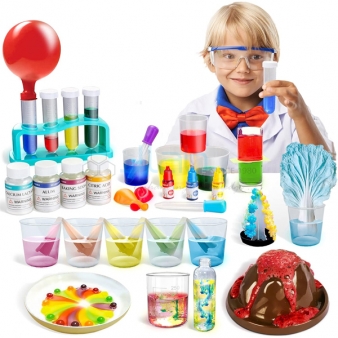

CBSE Physics Lab Equipment Package for School
Product Code : EL-SK-13309
This comprehensive Physics lab package is specially designed to meet the CBSE curriculum requirements.
View Details
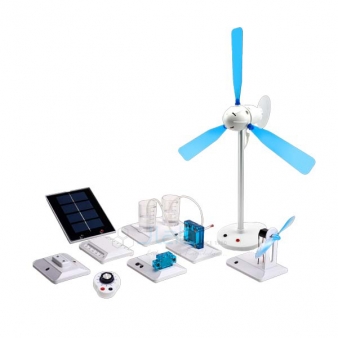
CBSE: Chemistry Lab Equipment Package for School
Product Code : EL-SK-13313
This comprehensive chemistry lab package is thoughtfully designed to meet the complete experimental needs of Class XI and XII students
View Details
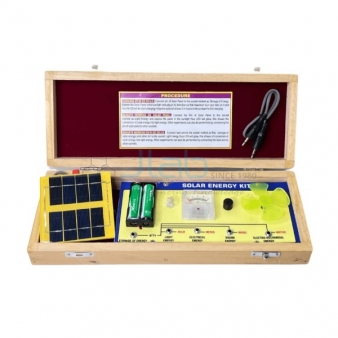
ISC: Chemistry Lab Equipment Package for School
Product Code : EL-SK-13314
This comprehensive chemistry lab package is thoughtfully designed by professionals to support all practical experiments
View Details
CBSE: Biology Lab Equipment Package for School
Product Code : EL-SK-13315
This all-inclusive biology lab package is expertly designed to support the complete range of CBSE-mandated experiments
View Details
ISC Biology Lab Equipment Package
Product Code : EL-SK-13316
This professionally designed package includes all the essential equipment needed to perform ISC Biology experiments
View Details
Pharmacy Lab Equipment Package
Product Code : EL-SK-13317
Ideal for conducting all required experiments for Pharm programs
View Details
Social Studies Lab Package
Product Code : EL-SK-13318
The Social Studies Lab Package is a comprehensive set of tools, activities, and resources
View Details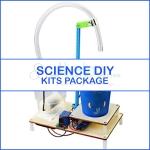
Science Diy Kits Lab Package
Product Code : EL-SK-13319
The Science DIY Kits Lab Package is an engaging, hands-on learning resource
View Details
Psychology Lab Packages
Product Code : EL-SK-13320
Psychology Lab Packages are comprehensive sets of tools, equipment
View Details
CBSE Composite Lab Equipment Package with Maths lab (Lab Apparatus list)
Product Code : EL-SK-13321
The Composite Lab Package includes all the essential equipment needed to perform the complete set of experiments
View Details
CBSE Composite Lab Equipment Package without Maths lab (Lab Apparatus list)
Product Code : EL-SK-13322
The Composite Lab Package includes all the equipment necessary to perform the mandatory Class IX and X science experiments
View Details
Mathematics Lab Packages
Product Code : EL-SK-13323
Our Mathematics Lab Packages are designed to support hands-on learning and conceptual understanding for students
View Details
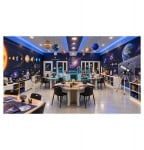
Astronomy Lab Installation Service
Product Code : EL-SK-13583
Complete astronomy laboratory planning and installation Telescopes and observational astronomy equipment
View Details
Composite Science Laboratory Installation Service
Product Code : EL-SK-13584
Complete science laboratory design and installation Physics, chemistry, biology, and general science facilities
View Details