
Mechanical Engineering Lab Equipment Manufacturer, Suppliers and Exporter in India
Jlabexport is a leading Mechanical Engineering Lab Equipment Manufacturer,and suppliers in India
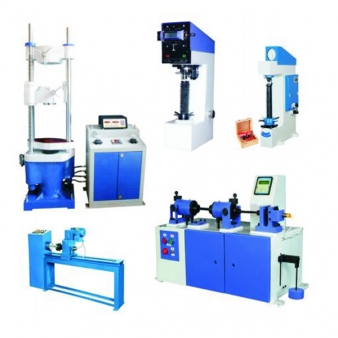
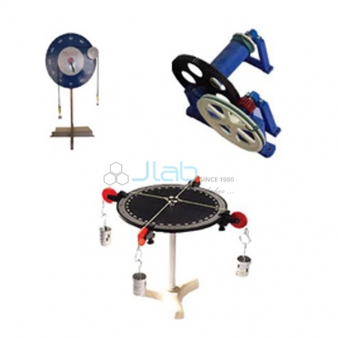
Mechanical Engineering Lab Equipment refers to the testing machines, training models and instruments used for measurement in the practical labs belonging to a mechanical engineering department, which includes strength of materials, applied mechanics, dynamics of machines, thermal engineering, metrology, refrigeration and air conditioning, automobile, mechatronics, CAD/CAM and the mechanical workshop. Jlab Export, which is the trade name for Jain Laboratory Instruments Pvt. Ltd., Ambala, Haryana, manufactures and supplies this range of equipment to engineering colleges and universities, polytechnics, ITIs and TVET institutes, research laboratories and industry training centers.
This is a departmental category rather than a single-experiment one. A mechanical engineering programme runs eight to eleven distinct laboratories across four years, each with its own space, services and equipment list, and the eleven groupings below correspond to those laboratories.
Equipment is supplied against enquiry, tender and OEM or bulk order. Specifications, drawings and quotations are available on request.
Which laboratory does each grouping equip?
Each grouping corresponds to a named laboratory in a mechanical engineering syllabus. Identify the laboratory you are equipping first, then work through the equipment list for that lab rather than browsing across groupings.
|
Grouping |
Laboratory it equips |
Subject area covered |
|
Strength of materials / materials testing |
Tension, compression, bending, torsion, hardness, impact |
|
|
Applied mechanics / engineering mechanics |
Forces, friction, levers, pulleys, equilibrium |
|
|
Dynamics of machines |
Balancing, vibration, governors, gyroscopic effects, cams |
|
|
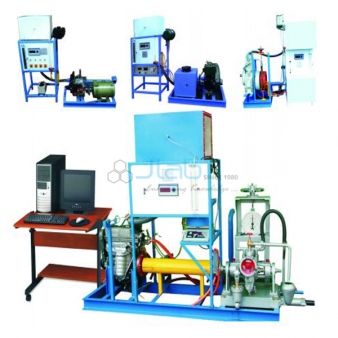
Thermal engineering / IC engines |
Engine testing, performance and energy conversion |
|
|
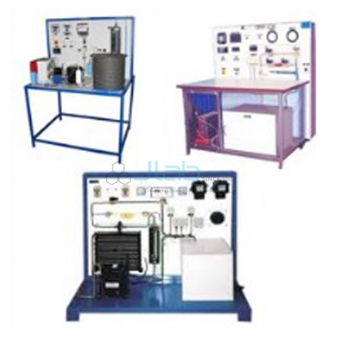
Refrigeration and air conditioning |
Vapour compression cycles, psychrometry, HVAC trainers |
|
|
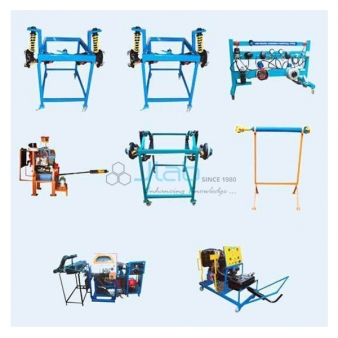
Automobile engineering |
Vehicle systems, transmission, chassis and engine assemblies |
|
|
Metrology and measurement |
Dimensional measurement, gauges, comparators, surface finish |
|
|
Workshop practice |
Fitting, turning, machining and fabrication training |
|
|
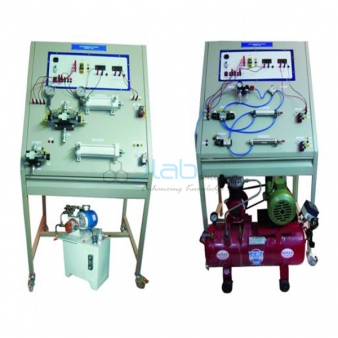
Mechatronics |
Sensors, actuators, control and automation trainers |
|
|
CAD/CAM |
Computer-aided design and manufacture, CNC interfacing |
|
|
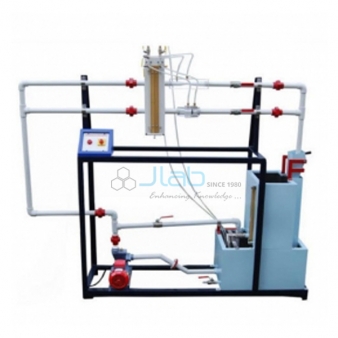
Hydrology |
Water resources and flow measurement |
Contents and specifications for each grouping are available on request. Note that hydrology is normally a civil engineering subject rather than a mechanical one — see the related categories block if that is what you are equipping.
How do you equip a mechanical laboratory from scratch?
Work laboratory by laboratory, not item by item. Each of the labs above has different floor loading, power, water, drainage and ventilation requirements, and mixing their equipment lists into a single requisition tends to produce a quotation that cannot be installed as delivered.
The four labs that most often drive building constraints are strength of materials (heavy floor-standing testing machines needing a solid floor and three-phase power), thermal engineering (engine test rigs needing exhaust extraction, fuel storage and cooling water), refrigeration and air conditioning (refrigerant handling and ventilation) and the mechanical workshop (machine tool foundations, swarf handling, guarding and noise). Metrology, applied mechanics, mechatronics and CAD/CAM are comparatively light and bench-based. Sequence procurement accordingly: the heavy labs need building decisions settled before equipment is ordered.
What drives the quantity of each item?
Class size and session length drive quantity, and the ratio differs sharply by lab. Bench apparatus in applied mechanics or metrology is usually bought in group multiples, while a single universal testing machine or engine test rig serves an entire cohort in rotation.
Set the batch size and the number of parallel groups before requesting a quotation. A department running practicals for sixty students in a three-hour session with groups of four needs fifteen positions in a bench-based lab, but may run the same cohort through one heavy rig across several sessions. Stating this in the enquiry produces a realistic quantity and price. It also surfaces durability questions early — apparatus used fifteen times a week has different wear expectations from apparatus used twice a term.
What should a buyer confirm on the quotation?
|
Criterion |
What to check |
|
Laboratory and syllabus |
The item performs the specific experiment prescribed for that lab |
|
Capacity and range |
Load, speed, temperature or measurement range for the model quoted |
|
Footprint and weight |
Floor area, height and loading, particularly for testing machines |
|
Power supply |
Single or three-phase, rating, and destination-country voltage |
|
Services |
Water, drainage, compressed air, fuel and exhaust extraction as applicable |
|
Safety |
Guarding, emergency stop and interlocks on rotating and powered equipment |
|
Instrumentation |
Load cells, dial gauges, sensors and digital readouts included or extra |
|
Consumables and specimens |
Test specimens, refrigerant, fuel, cutting tools — supplied or sourced locally |
|
Documentation |
Experiment manual, installation drawing and operating instructions |
|
Installation |
Whether installation and commissioning are included on export orders |
|
Commercial terms |
Export packing, lead time, warranty, spares and service route |
How does Jlab Export supply this range?
Jlab Export manufactures at Ambala, Haryana and exports directly. Equipment is supplied as individual items, as complete laboratory sets, against tender, and as OEM or bulk production. No prices are published; each item is quoted on enquiry once the laboratory, specification, quantity and destination are known.
Jain Laboratory Instruments Pvt. Ltd. was established in 1986 and states a manufacturing unit of 15,000 square metres. Because this category spans eleven laboratories, a departmental enquiry is usually more efficient than separate requests — send the syllabus or the laboratory list and receive a quotation structured lab by lab.
What quality standards does the manufacturer state?
Jlab Export states certification to ISO 9001, ISO 14001 and ISO 13485, CE marking, WHO-GMP, and compliance with Directive 93/42/EEC for medical devices.
For mechanical laboratory equipment the more relevant documents are usually item-specific: the calibration certificate for a testing machine or a metrology instrument, and the machinery safety documentation for powered equipment. A company quality-management certification does not cover either. Request both explicitly, per item, at quotation stage.
Related laboratories elsewhere in the catalogue
Several adjacent laboratories are catalogued under other sections of the site:
- Heat Transfer Lab Equipment
- Fluid Mechanics and Hydraulics Lab Equipment
- Theory of Machine Lab Equipments
- Metallurgical Equipment
- Civil Engineering Lab Equipments
- CNC Trainer Machine andWorkshop Tools
- Automobile Engineering
- Test and Measurement Equipment
- Engineering Lab Equipment
- All Products ·Tenders / OEM Supply
Frequently asked questions
What equipment does a mechanical engineering laboratory need?
A mechanical engineering department typically needs separate laboratories for strength of materials, applied mechanics, dynamics of machines, thermal engineering, refrigeration and air conditioning, metrology, workshop practice, and increasingly mechatronics and CAD/CAM. Each has its own equipment list, space and services. The eleven groupings in this category correspond to those laboratories.
Which labs need building work rather than just equipment?
Strength of materials, thermal engineering, refrigeration and air conditioning, and the mechanical workshop. These need decisions on floor loading, three-phase power, exhaust extraction, cooling water, refrigerant handling and machine foundations before equipment is ordered. Metrology, applied mechanics, mechatronics and CAD/CAM are bench-based and comparatively straightforward.
Can a complete department be equipped in one order?
Yes. Departmental, turnkey and tender enquiries are handled through the tender and OEM desk, where the laboratory list is quoted lab by lab with services and installation requirements identified rather than as a flat item list.
Are specifications and prices published?
No. Capacities, ranges, dimensions, power ratings and prices are not listed on the site for this category, and pricing depends on model, quantity, accessories and destination. Send the laboratory list and required specifications to receive a written quotation.
Do the testing machines come with calibration certificates?
Confirm this per item on the quotation. For testing machines and metrology instruments, ask which body issued the certificate, what ranges it covers, its date, and the recommended recalibration interval. A company-level quality certification is not a substitute for an item calibration certificate.
Is installation included on export orders?
Confirm at quotation stage, as it varies by item and destination. Heavy floor-standing equipment and engine test rigs raise installation, foundation and commissioning questions that bench apparatus does not; raise these in the enquiry so the quotation addresses them.
Request a quotation
Send your laboratory list, required capacities, student numbers per session and destination country for a written quotation structured laboratory by laboratory.
- Request a Quote
- Tender / OEM enquiry
- Phone: +91-85699-09696
- Works: 2475-84, Hargolal Road, Ambala, Haryana, India