
Mass Transfer Lab Equipment Manufacturer, Suppliers and Exporter in India
Jlabexport is a leading Mass Transfer Lab Equipment Manufacturer,and suppliers in India
Mass transfer lab equipment covers the bench-scale units used to study how a chemical species moves between phases — by drying, extraction, adsorption, absorption or distillation. Jlab Export — the trading name of Jain Laboratory Instruments Pvt. Ltd., Ambala, Haryana — manufactures and exports these units for chemical, biochemical and process engineering departments, polytechnics and TVET institutes, research laboratories and industrial training centres.
Mass transfer sits alongside fluid mechanics and heat transfer as one of the three transport processes taught in a chemical engineering programme, and its practical work is unit-operations based: students run a separation, sample the phases, and calculate transfer rates, equilibrium behaviour and stage efficiency from measured concentrations.
The units currently listed in this category cover drying, solid-liquid extraction and adsorption. All are supplied against enquiry, tender and OEM or bulk order. Specifications, drawings and quotations are available on request.
What is listed in this category?
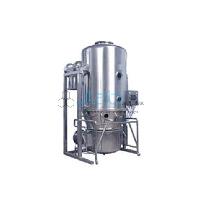
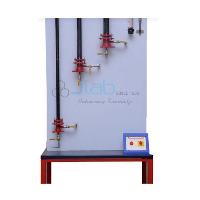
Three units are listed: a fluidized bed dryer, a solid-liquid extraction unit and a packed-bed adsorption unit. Together they cover three distinct mass transfer operations — drying, leaching and adsorption — rather than three variants of one operation.
|
Unit |
Product code |
Mass transfer operation |
Typical experiment focus |
|
JL-MTLE-2661 |
Drying (solid–gas) |
Moisture removal from a fluidized solid bed over time |
|
|
JL-MTLE-2662 |
Leaching (solid–liquid) |
Recovery of a soluble component from a solid bed using solvent |
|
|
JL-MTLE-2664 |
Adsorption (fluid–solid) |
Uptake of a solute onto a packed adsorbent bed |
Per-unit dimensions, capacities, materials and service requirements are not published. Request the specification sheet for the unit you need before finalising a requisition.
Which unit fits which part of the syllabus?
Match the unit to the operation the experiment is about, not to the equipment shape. A dryer answers rate-of-drying questions, an extraction unit answers solvent-recovery and stage-efficiency questions, and an adsorption column answers breakthrough and capacity questions. The three are not interchangeable.
A fluidized bed dryer is normally used for drying-rate curves and the distinction between constant-rate and falling-rate periods, and it also demonstrates fluidization itself. A solid-liquid extraction unit supports leaching experiments where a solute is recovered from a solid matrix and the effect of solvent quantity or contact time is measured. A packed-bed adsorption unit supports breakthrough-curve work and adsorbent capacity determination. Where a course requires distillation, absorption or humidification alongside these, confirm availability by enquiry — see the note on related categories below.
What do you need to run these units in a teaching lab?
Confirm three services before ordering: electrical supply for heating and blowers, water or solvent handling provision, and ventilation or fume extraction where volatile solvents are used. Bench or floor space and drainage should be checked at the intended position rather than assumed from the catalogue image.
Beyond services, teaching-lab practicality comes down to sampling and analysis. Mass transfer experiments produce concentration data, so the unit is only half the setup — the department also needs a means of measuring concentration, whether by titration, gravimetric analysis or an instrument already held. Consumables matter too: adsorbent, solvent and feed material are recurring costs that the equipment quotation does not usually cover. Raise both points at enquiry stage so the quotation reflects what is actually needed to run the experiment.
What should a buyer confirm on the quotation?
|
Criterion |
What to check |
|
Operation covered |
The unit performs the specific operation the syllabus prescribes |
|
Capacity and batch size |
Working volume or bed size against class size and session length |
|
Services required |
Electrical load, water, and solvent handling at the intended position |
|
Ventilation |
Fume extraction requirement where volatile solvents are involved |
|
Instrumentation |
Temperature, flow and pressure measurement included or quoted separately |
|
Sampling provision |
Sampling points and method for taking phase samples during a run |
|
Materials of construction |
Wetted and heated parts, as quoted for the specific unit |
|
Consumables |
Adsorbent, solvent or feed material — supplied or sourced locally |
|
Documentation |
Experiment manual with procedure and sample calculation |
|
Commercial terms |
Export packing, lead time, warranty and spares as quoted |
How does Jlab Export supply this range?
Jlab Export manufactures at Ambala, Haryana and exports directly. Units are supplied singly, as complete laboratory sets, against tender, or as OEM production. No prices are published; each unit is quoted on enquiry once operation, capacity, quantity and destination are known.
Jain Laboratory Instruments Pvt. Ltd. was established in 1986 and states a manufacturing unit of 15,000 square metres. For a full unit-operations laboratory rather than a single rig, raise a lab-setup enquiry so that bench layout, services, ventilation and the experiment sequence are quoted together.
What quality standards does the manufacturer state?
Jlab Export states certification to ISO 9001, ISO 14001 and ISO 13485, CE marking, WHO-GMP, and compliance with Directive 93/42/EEC for medical devices. These are manufacturer-stated — verify current certificate scope and validity before publishing or before submitting them with a tender.
Scope matters in procurement. A quality-management certification covers the manufacturing system rather than an individual apparatus, and the medical-device directive applies to the companys hospital range rather than to process engineering trainers. Where a tender asks for product-specific test or calibration certificates for a mass transfer unit, request them explicitly at quotation stage.
Explore related categories
- Engineering Lab Equipment (parent category)
- Heat Transfer Lab Equipment
- Fluid Mechanics and Hydraulics Lab Equipment
- Fluid Mechanics Lab Equipment
- Mechanical Engineering Lab Equipment
- Chemistry Lab Equipment
- Lab Glassware
- Laboratory Research Equipment
- All Products
- Tenders / OEM Supply
Frequently asked questions
What is mass transfer lab equipment?
Mass transfer lab equipment is bench-scale apparatus for studying the movement of a chemical species between phases — through drying, extraction, adsorption, absorption or distillation. It is used in chemical and process engineering practicals, where students measure concentrations before and after a separation and calculate transfer rates and stage efficiency from the results.
What is in this category at present?
Three units: a fluidized bed dryer, a solid-liquid extraction unit of the bed type, and a packed-bed adsorption unit. They cover drying, leaching and adsorption respectively. Distillation columns, tray dryers and a spray tower are also manufactured but are currently listed under the Fluid Mechanics and Hydraulics section.
Do you supply distillation columns and absorption columns?
Distillation columns appear elsewhere in the catalogue rather than in this category, so confirm current availability and configuration by enquiry before specifying them in a requisition. Send the required column type, number of stages or plates and duty, and you will receive a written response against your specification.
Are specifications published for these units?
No. Dimensions, capacities, materials, heater ratings and service requirements are not listed on the site for this category. Request the specification sheet for the specific unit before finalising a purchase order or a tender response.
Are prices shown?
No. Pricing depends on configuration, capacity, quantity, packing and destination, so units are quoted against enquiry. Send the operation required, capacity, quantities and destination for a written quotation.
Can a complete unit-operations laboratory be supplied against tender?
Yes. Tender and OEM enquiries are handled through the tender desk, where the full experiment sequence, bench layout and service requirements are quoted together rather than as separate line items.
Request a quotation
Send the operation you need to demonstrate, required capacity, quantities and destination for a written quotation.
- Request a Quote
- Tender / OEM enquiry
- Phone: +91-85699-09696
- Works: 2475-84, Hargolal Road, Ambala, Haryana, India