
Chemistry Lab Equipment Manufacturer, Suppliers and Exporter in India
Jlabexport is a leading Chemistry Lab Equipment Manufacturer,and suppliers in India
Chemistry Lab Equipment includes apparatus, instruments, experiment kits, models and supporting materials used for chemical measurement, heating, weighing, separation, electrochemistry, environmental investigation and classroom demonstration. Jlab Export manufactures and exports chemistry laboratory equipment for schools, universities, TVET institutions, research laboratories and industrial users.
The listed range covers general chemistry equipment, demonstration equipment, environmental chemistry, green chemistry, laboratory investigation kits, microchemistry equipment, micro science kits, model sets, balances, burners, distillation apparatus, pH meters, burettes, water baths and related laboratory products. Jlab Export serves institutional and export buyers across Asia, Africa, Europe, North and South America, and Oceania. Exact capacities, materials, measurement ranges, electrical requirements, included components and experiment coverage depend on the selected product and should be confirmed before ordering.
What products are included in the Chemistry Lab Equipment range?
The Chemistry Lab Equipment range includes general apparatus, measuring and weighing instruments, heating equipment, distillation products, electrochemistry apparatus, demonstration kits, environmental investigations, microchemistry systems, educational materials and molecular model sets. Each subcategory serves a different laboratory or teaching function and requires separate technical evaluation.
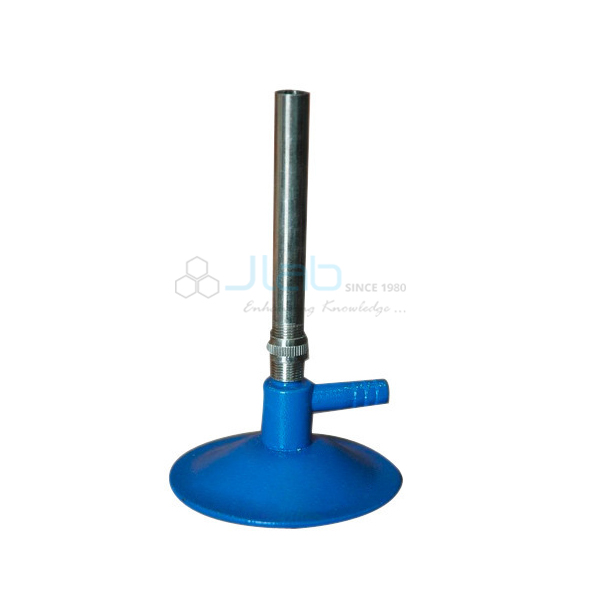
Listed products include copper water baths, Bunsen burners, electronic and mechanical balances, electric water stills, filter pumps, mini centrifuges, Daniel cells, carbon electrodes, pH meters, Kipps apparatus and burettes. The educational range also includes acid–base investigations, consumer chemistry kits, environmental chemistry activities, green chemistry exercises and atomic or molecular model sets.
How do you choose Chemistry Lab Equipment for a school or university?
Choose Chemistry Lab Equipment by matching each product to the experiment, measurement, chemical process and learner level. Buyers should first identify the practical activity, then confirm capacity, range, construction, required accessories, power supply and the number of students or laboratory workstations.
A procurement schedule should state:
- Chemistry topic or practical exercise
- School, university, TVET, research or industrial use
- Teacher-demonstration or student-use format
- Required measurement or process
- Capacity, range or dimensions
- Number of users per workstation
- Required quantities
- Supplied components and consumables
- Operating instructions
- Packing and documentation requirements
Do not select an instrument from its product name alone. Request a product-specific datasheet where accuracy, material, temperature, electrical rating or chemical compatibility affects the application.
Which equipment is used for weighing and measurement?
Chemistry laboratories can use electronic, analytical, single-pan, double-beam, triple-beam and counter balances, together with test weights and pH meters. The correct product depends on the required capacity, readability, linearity, measurement method, display and calibration requirements.
The supplied catalogue lists a double-beam balance for weighing up to 2 kg when used with supplementary masses, a single-pan balance with a stated capacity of 311 g × 10 mg, and a triple-beam balance with a stated total weighing capacity of 610 g. A separate digital top-loading balance listing states a 0.1 g unit weight and ±0.003 g linearity. These specifications belong only to the identified products and must not be applied to the complete balance range.
Which equipment supports heating, distillation and liquid handling?
Heating, distillation and liquid-handling requirements can be addressed with water baths, Bunsen burners, water stills, distillation apparatus, filter pumps, burettes and Kipps apparatus. Buyers should confirm construction material, vessel capacity, joint size, heat source, outlet arrangement, connection type and included glassware.
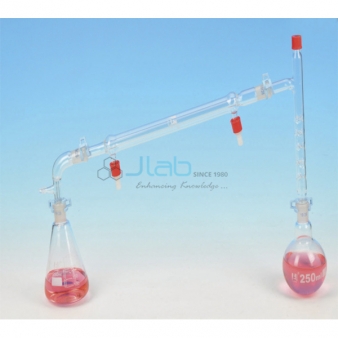
The copper water bath is listed as hemispherical, fitted with two handles and concentric rings, with stated capacities of 100 ml, 125 ml, 150 ml and 200 ml. One distillation apparatus is described as borosilicate glass with a 19/26 joint, while a separately listed burette is available in 25 ml and 50 ml capacities. These values are product-specific.
How should chemistry demonstration and investigation kits be selected?
Select chemistry demonstration and investigation kits by checking the stated learning activity, number of demonstrations, included reagents, physical apparatus, instructions and learner participation format. A teacher-led demonstration kit should not automatically be substituted for a student investigation kit.
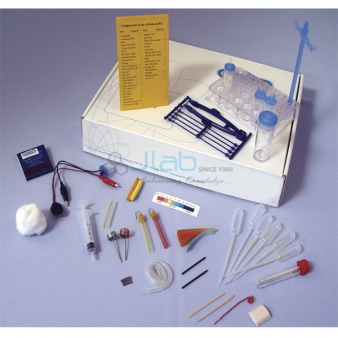
The demonstration range includes activities covering multi-step reduction, eutectic-alloy formation and Le Chateliers principle. The listed kits include instructions and sufficient reagents for five demonstrations. Investigation products cover acids, bases and pH, kitchen chemistry and comparison of the buffering ability of calcium-carbonate-based antacids. Exact kit contents, storage conditions and replacement-consumable requirements should be requested before purchase.
What is the difference between environmental and green chemistry equipment?
Environmental chemistry equipment focuses on observing chemical effects in environmental systems, while the listed green chemistry products examine treatment processes, alternative chemical choices, wastewater remediation, biodiesel production and related applications. Buyers should select the activity according to the required investigation rather than relying on the category label alone.
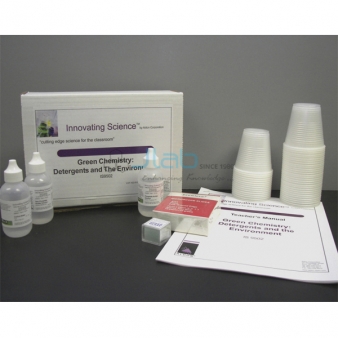
Environmental activities include acid rain, weathering and erosion, and the effects of nitrates and phosphates on fresh water. Green chemistry products include small-scale water-treatment and filtration procedures, detergents and the environment, electrochemical wastewater remediation, biodiesel production and a hydrogen fuel-cell demonstration. Product-specific contents and required chemicals remain subject to confirmation.
What should buyers check when selecting microchemistry equipment?
Microchemistry equipment should be selected by checking the experiment list, student capacity, supplied physical hardware, plate format, material and chemical compatibility. The catalogue lists basic and advanced student kits, combo plates and micro science accessories, but the exact contents vary by product.
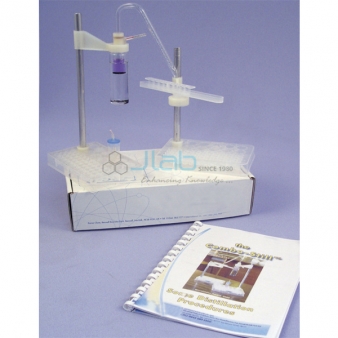
The basic micro science kit is described as enabling more than 100 chemical experiments that previously required macroscale apparatus. One combo plate is designed to the dimensions of standard 96-well and 48-well plates. A separate organic micro science combo plate is described as polypropylene, opaque, resistant to most organic chemicals and autoclavable. These properties apply only to the named products.
How should a complete chemistry laboratory requirement be prepared?
Prepare a complete chemistry laboratory requirement by organising products according to experiments, shared instruments, workstation apparatus, demonstration kits, models, consumables and replacement parts. This separates reusable equipment from materials that may need periodic replenishment.
A room-wise schedule should include:
- Course or training programme
- Chemistry topic
- Practical exercise
- Equipment or kit required
- Minimum specification
- Included accessories
- Quantity per workstation
- Number of workstations
- Total quantity
- Consumable or replacement requirement
- Documentation requirement
- Packing and delivery instructions
This format helps technical committees compare offers line by line and identify products that need additional datasheets or compliance clarification.
What should tender and export buyers include in their enquiry?
Tender and export buyers should provide the complete BOQ, minimum specifications, required quantities, delivery destination, submission deadline and applicable documentation clauses. Jlab Export states that it can prepare line-by-line quotations, compliance or deviation statements, technical datasheets and a documentation checklist for institutional procurement.
The enquiry should include:
- Tender reference number
- Product names and codes, where available
- Minimum technical specifications
- Permitted deviations
- Required quantities
- Required certificate copies
- Sample-approval requirements
- Packing and carton-marking instructions
- Inspection requirements
- Shipping destination
- Delivery terms
- Installation or training requirements
Company-stated certificates should be verified by the buyer for current validity, issuing authority, scope and product applicability.
Chemistry Lab Equipment Types
|
Type |
Key feature |
Typical use |
|
Water Baths |
Copper-sheet construction, handles, concentric rings and listed capacity options |
Controlled heating or warming in chemistry practical work |
|
Bunsen Burners |
Listed options include a stopcock model with a nickel-plated tube and air regulator |
Laboratory flame-heating activities |
|
Laboratory Balances |
Electronic, analytical, beam and counter balance configurations |
Weighing solids, powders and laboratory materials |
|
Distillation Apparatus |
Listed glass and stainless-steel product configurations |
Separation or purification by distillation |
|
pH Meters |
Listed model includes manual temperature-compensation adjustment |
Measuring acidity or alkalinity |
|
Burettes |
Listed capacities include 25 ml and 50 ml |
Controlled liquid delivery during chemistry procedures |
|
Electrochemistry Apparatus |
Daniel cell, porous pot and carbon-rod electrode products |
Electrochemistry and electrolysis activities |
|
Demonstration Kits |
Stated reactions, instructions and defined reagent quantities |
Teacher-led chemistry demonstrations |
|
Environmental Chemistry Kits |
Activities involving acid rain, nitrates, phosphates and eutrophication |
Environmental chemistry investigations |
|
Green Chemistry Kits |
Water treatment, detergents, wastewater, biodiesel and fuel-cell activities |
Green chemistry and environmental-process instruction |
|
Investigation Kits |
Activities involving pH, kitchen chemistry and antacid buffering |
Student-led chemistry investigations |
|
Microchemistry Kits |
Basic and advanced kits, combo plates and microscale apparatus |
Chemistry experiments using microscale systems |
|
Materials Kits |
Fabric samples, material blocks, instant snow and alloy-related products |
Studying material appearance and properties |
|
Molecular Model Sets |
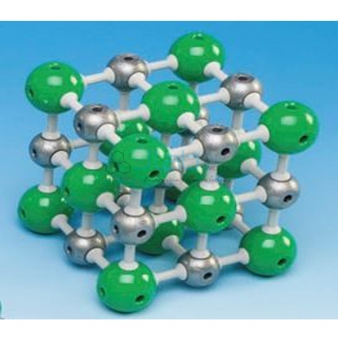
Moulded balls, connecting lugs and atomic or molecular arrangements |
Visualising atoms, molecules and compounds |
Product examples and stated features are drawn from the linked Jlab Export chemistry subcategories. Exact specifications remain product-specific.
Chemistry Lab Equipment Selection Criteria
|
Criterion |
What to check |
|
Intended experiment |
Identify the chemical reaction, measurement, separation or demonstration required |
|
User level |
State whether the product is for school, university, TVET, research or industry |
|
Equipment category |
Select apparatus, instrument, demonstration kit, investigation kit, microchemistry set or model |
|
Capacity |
Confirm vessel volume, weighing capacity or sample capacity |
|
Measurement range |
Request range, readability, resolution, linearity and accuracy where applicable |
|
Construction material |
Confirm glass, metal, copper, polypropylene or other stated material |
|
Chemical compatibility |
Check suitability for the chemicals and solvents used |
|
Temperature requirement |
Confirm heating range, thermal resistance and cooling requirements |
|
Electrical requirement |
Check voltage, frequency, power and plug configuration for powered instruments |
|
Connections and joints |
Verify glass-joint size, tubing connections, outlets and fittings |
|
Included components |
Confirm apparatus, leads, electrodes, glassware, stands and accessories |
|
Kit contents |
Request the reagent list, quantity, demonstrations and instruction material |
|
Workstation planning |
Calculate quantities for individual, group or shared use |
|
Consumables |
Identify reagents, electrodes, filters or parts requiring replacement |
|
Documentation |
Request datasheets, operating instructions and experiment manuals |
|
Compliance |
Verify certificate scope and product applicability before approval |
|
Tender conformity |
Record compliance or deviations against every BOQ clause |
|
Export packing |
Confirm individual packing, carton marking and shipment requirements |
Related Jlab Export Resources
- Jlab Export Home
- Product Catalogue
- Tender and OEM Enquiries
- About Jlab Export
- Frequently Asked Questions
- Contact Jlab Export
Frequently Asked Questions
What is Chemistry Lab Equipment?
Chemistry Lab Equipment includes instruments, apparatus, kits, models and supporting materials used to weigh substances, measure chemical properties, heat samples, separate mixtures, demonstrate reactions and conduct practical investigations in schools, universities, TVET institutions, research laboratories and industrial settings.
What Chemistry Lab Equipment does Jlab Export list?
Jlab Export lists balances, burners, water baths, water stills, filter pumps, centrifuges, distillation apparatus, pH meters, burettes, Kipps apparatus, electrochemistry products, demonstration kits, environmental and green chemistry activities, microchemistry kits, material sets and atomic or molecular models.
Are the same specifications applicable to every chemistry product?
No, each chemistry product has its own capacity, material, range, components and intended use, so a specification stated for one balance, burette, distillation set or demonstration kit must not be applied to another item without checking the individual product datasheet.
Does the range include chemistry demonstration kits?
Yes, the listed demonstration range includes activities involving colourful vanadium reduction, formation of eutectic alloys and Le Chateliers principle, with the referenced product descriptions stating that instructions and sufficient reagents for five demonstrations are included.
Does Jlab Export list microscale chemistry equipment?
Yes, Jlab Export lists basic and advanced student micro science kits, combo plates and related microscale products, including a basic-kit description that refers to more than 100 chemical experiments previously requiring macroscale apparatus.
What should be checked before ordering a laboratory balance?
Before ordering a laboratory balance, confirm its weighing capacity, readability, graduation or resolution, linearity, display, pan arrangement, supplied masses, calibration requirements and intended material, because the catalogue lists electronic, analytical, single-pan, double-beam, triple-beam and counter configurations.
Can Jlab Export quote for complete chemistry laboratory tenders?
Yes, Jlab Export states that it accepts BOQs and schedules of requirements for institutional tenders and can provide line-by-line quotations, compliance or deviation statements, technical datasheets and applicable tender documentation.
Request a Quote for Chemistry Lab Equipment
Send Jlab Export the required product names, experiments, technical specifications, quantities, destination and tender or documentation requirements for a product-specific quotation.
Request a Quote |Request a Catalogue |Submit a Tender Enquiry