

Animal Cell Manufacturer,Supplier and Exporter in India
Product Code : EL-AM-6069
Jlab Export is a leading Animal Cell Manufacturer,and suppliers in India
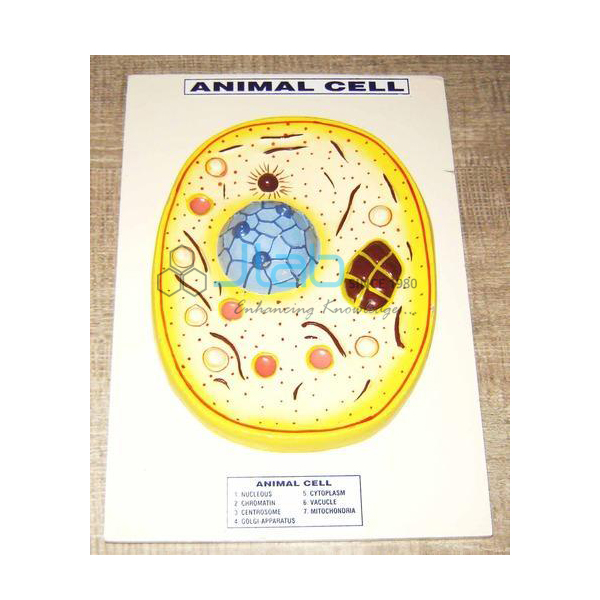
Animal Cell (code EL-AM-6069) is a teaching model of an animal cell enlarged 20,000 times, showing the delicate internal structure of the cell together with two processes of cell dynamics, so students see how the organelles look and what some of them do. It is made by Jain Laboratory Instruments Pvt Ltd (JLab) at its works in Ambala, India.
Specifications
| Parameter | Detail |
|---|---|
| Model | Animal cell |
| Enlargement | 20,000 times |
| Organelles shown | Nucleus, endoplasmic reticulum, mitochondria, ribosomes and polysomes, Golgi apparatus |
| Also shows | Centrioles, lysosomes and fat vacuoles |
| Cell dynamics | Extrusion of a Golgi vesicle; signs of pinocytosis |
| Mounting and size | On a base, 500 x 370 x 240 mm |
| Quality check | Each model is visually inspected before dispatch |
| Pack quantity | Each (sold individually) |
| Minimum order quantity | 10 units |
| Dispatch time | Usually 7–10 working days |
| Product code | EL-AM-6069 |
| Manufacturer | Jain Laboratory Instruments Pvt Ltd (JLab) — OEM |
| Country of origin | India (made in Ambala, Haryana) |
What Is the Animal Cell Model Used For?
It is used to teach the fine structure of the animal cell in cell biology. At this enlargement the model can show parts of the cell that are far too small to resolve with a light microscope and are known from electron microscopy, so a class sees the kind of detail an electron micrograph reveals rather than only what a stained slide shows.
Frequently Asked Questions
Which organelles does the animal cell model show?
The nucleus, endoplasmic reticulum, mitochondria, ribosomes and polysomes and the Golgi apparatus, as well as centrioles, lysosomes and fat vacuoles.
What cell processes are shown on the model?
The extrusion of a Golgi vesicle and signs of pinocytosis. The Golgi apparatus packages materials into vesicles that can fuse with the cell membrane and release their contents outside the cell, while pinocytosis is the uptake of droplets of fluid in small vesicles pinched off from the membrane.
What do lysosomes and centrioles do?
Lysosomes hold digestive enzymes that break down worn-out cell parts and material taken into the cell. Centrioles are short cylinders of microtubules that help organise the spindle when an animal cell divides.
How large is the model?
It stands on a base and measures 500 x 370 x 240 mm.
What should an export enquiry include?
The quantity, the destination country and port or city, the delivery terms you need (for example FOB or CIF), any packing or labelling requirements and the tender reference where there is one.
OEM Manufacturer
JLab is the trading name of Jain Laboratory Instruments Pvt Ltd, an Indian manufacturer of biology and anatomy teaching models that was incorporated in 2017 and works from Hargolal Road, Ambala, Haryana. JLab builds this cell model in its own works instead of buying it from a trader, so schools, colleges, dealers and importers deal directly with the maker for first and repeat orders. JLab exports worldwide and ships to buyers in every region — for example South Africa in Southern Africa, Niger in West Africa, the UAE in the Middle East, Tunisia in North Africa and Chile in South America.
Related Cell Models and Charts
- Plant Cell — a simplified one-piece plant cell model showing the nucleus, chloroplasts, cell wall and vacuoles.
- Chloroplast — a two-part three-dimensional chloroplast model with removable thylakoids.
- Animal Cell Model — a separate, labelled animal cell teaching model on a hard cardboard base, with a numbered key card.
- Animal Cell Organelles Chart — a laminated wall chart on the organelles of the animal cell.
See more in the Anatomical Models range and the Anatomical Models sub-category.
Request a Quote
Send an enquiry with the Add To Cart button, or contact JLab through the contact page, stating how many models you need, where they are to be delivered and any other cell models or charts to include in the quotation.
Last updated: 22 October 2026


