Human Excretory System Model Manufacturer,Supplier and Exporter in India
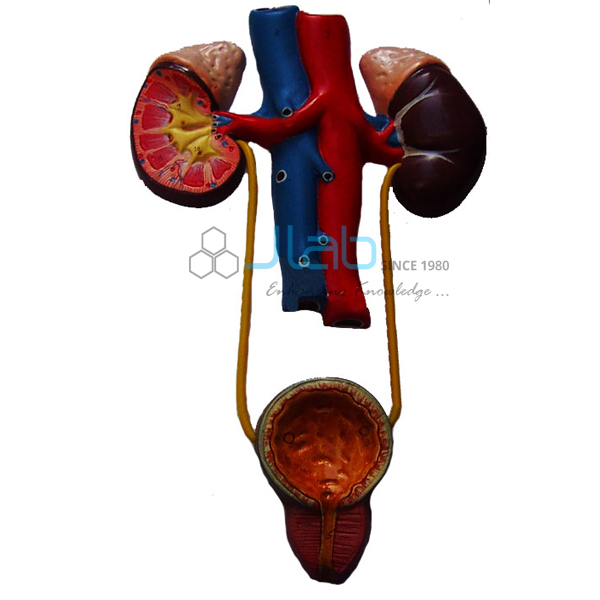
Product Code : EL-SLE-4586
Jlab Export is a leading Human Excretory System Model Manufacturer,and suppliers in India
Human Excretory System Model (code EL-SLE-4586) is a labelled teaching model of the human excretory system, showing the kidneys with ureters, the adrenal glands, the urinary bladder with prostate and the major blood vessels. It is standard size and mounted on a stand for class demonstration. It is made by Jain Laboratory Instruments Pvt Ltd (JLab) at its works in Ambala, India.
Specifications
| Parameter | Detail |
|---|---|
| Structures shown | Kidneys with ureters, adrenal glands, urinary bladder with prostate, and the major blood vessels |
| Labelling | Well labelled |
| Mounting | Mounted on a stand |
| Size | Standard size |
| Quality check | Each model is visually inspected before dispatch |
| Pack quantity | Each (sold individually) |
| Minimum order quantity | 10 units |
| Dispatch time | Usually 7–10 working days |
| Product code | EL-SLE-4586 |
| Manufacturer | Jain Laboratory Instruments Pvt Ltd (JLab) — OEM |
| Country of origin | India (made in Ambala, Haryana) |
How Does It Compare with Other JLab Urinary System Models?
| Model | Structures shown | Other listed details |
|---|---|---|
| This model (EL-SLE-4586) | Kidneys with ureters, adrenal glands, bladder with prostate, major blood vessels | Well labelled; on a stand; standard size |
| Urinary Organs, Kidney and Bladder Model | Kidneys, ureters, adrenal glands, bladder with prostate, major blood vessels | Natural size; separates into 3 parts; right kidney sectioned; bladder and prostate removable |
| Urinary System Model | Kidneys in detail, with an enlarged dissected kidney showing cortex, calyx, pyramid and papilla | Includes a magnified nephron |
Choose this model for a labelled overview of the whole excretory system on a stand. The three-part natural-size model adds a sectioned kidney and a removable bladder for closer study, and the urinary system model concentrates on the inside of the kidney down to the nephron.
What Is the Human Excretory System Model Used For?
The model shows how the body removes nitrogenous waste in urine. Blood reaches each kidney through the renal artery, branching from the aorta, and is filtered in the kidney’s nephrons; the cleaned blood returns through the renal vein to the vena cava. Urine runs down the ureters to the urinary bladder, where it is stored before leaving through the urethra. The adrenal glands sit on top of the kidneys but are endocrine glands rather than excretory organs, and the prostate, found in males, surrounds the urethra just below the bladder — both are worth pointing out so students do not confuse them with the urinary organs. The model supports class 10 biology lessons on excretion in human beings, senior biology on excretory products, and nursing and paramedical anatomy, and fits into a human biology model set beside heart, digestive and kidney models.
Use the labels to trace the path from blood vessel to kidney, ureter, bladder and urethra, and then ask students to label a blank diagram from the model. Keep the model on its stand away from direct sunlight and dust it with a soft dry cloth.
What to Specify When Ordering
- Quantity — the minimum order is 10 units.
- Level of detail — this labelled overview model, or a sectioned or enlarged kidney model from the comparison above.
- Labels or key — tell JLab if you need a particular label language.
- Companion items — kidney models and kidney charts can be added to the same enquiry.
Frequently Asked Questions
Which organs does this excretory system model show?
The kidneys with ureters, the adrenal glands, the urinary bladder with prostate, and the major blood vessels that supply and drain the kidneys.
Is the model labelled?
Yes, it comes well labelled, so students can name each organ and vessel directly from the model.
What size is it and how is it mounted?
It is a standard-size model mounted on a stand. For a natural-size model that separates into parts, see the urinary organs model in the comparison above.
Can parts of the model be removed?
The listing does not mention removable or sectioned parts. If you need a sectioned kidney or a removable bladder, the urinary organs, kidney and bladder model is listed with them.
Why are the adrenal glands and prostate on an excretory system model?
They lie next to the urinary organs — the adrenals on top of the kidneys and the prostate below the bladder — so the model shows them in position, although neither is an excretory organ.
Who manufactures this model?
Jain Laboratory Instruments Pvt Ltd (JLab) makes it at its works in Ambala, Haryana, India, and quotes for it directly.
OEM Manufacturer
JLab is the trading name of Jain Laboratory Instruments Pvt Ltd, a biology model and school science equipment manufacturer in India, incorporated in 2017 and based on Hargolal Road, Ambala, Haryana. The model is made at JLab’s own works rather than bought from a trader, so schools, colleges, dealers and importers buy it factory-direct, every model is inspected by eye before it is packed, and repeat orders are handled by the manufacturer. JLab exports worldwide and can serve buyers in every region — for example Libya in North Africa, Kyrgyzstan in Central Asia, Panama in Central America and the Caribbean, Austria in Western Europe and the Philippines in Southeast Asia. Tender details are on the JLab lab tenders page.
Related Kidney and Excretion Teaching Aids
- Human Kidney Model — internal and external structure of the kidney and adrenal gland with their vessels and the upper ureter, on a stand.
- Kidney Section Model — an enlarged longitudinal section of the right kidney showing the glomerulus and tubules.
- Human Kidney Chart — a wall chart for teaching how the kidney forms urine.
See more models in the School Lab Equipment range.
Request a Quote
Quotes come direct from the manufacturer. Use the Add To Cart enquiry button on this page, or send the quantity (minimum 10 units), any labelling requirement and your delivery location through the contact page.
Last updated: 4 October 2026