
The Circulatory System Microslide Manufacturer,Supplier and Exporter in India
Product Code : EL-HBE-6979
Jlab Export is a leading The Circulatory System Microslide Manufacturer,and suppliers in India
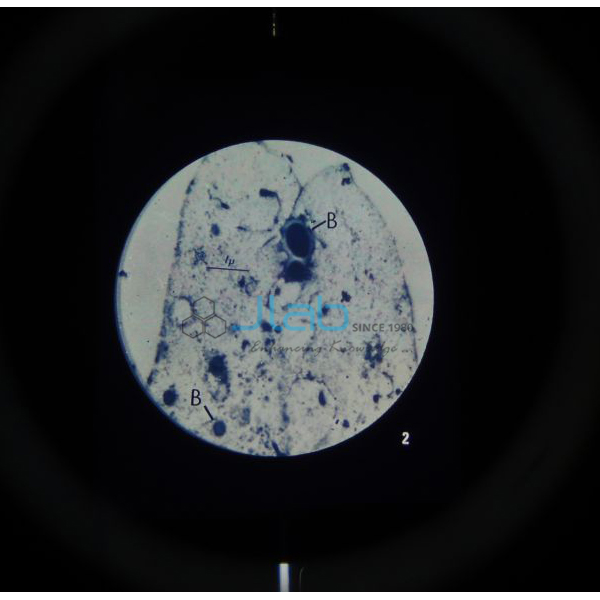
The Circulatory System Microslide (code EL-HBE-6979) is a set of eight related 35 mm images, photographed through a microscope, that covers blood, the vessels that carry it and the heart that pumps it — from an artery and vein and the lung capillaries to a phagocyte, lymph vessels with valves, the valve at the aorta and a rat heart at 4x and 6x. JLab (Jain Laboratory Instruments Pvt Ltd, Ambala, India) supplies it to schools, colleges and dealers.
Get a quote: use the Add To Cart enquiry button below, or send your quantity and destination through the contact page.
Specifications
| Parameter | Detail |
|---|---|
| Brand | Microslide |
| Format | Set of eight related 35 mm images photographed through a microscope |
| Images (as listed) | Artery and vein; lung capillaries; human blood; rat heart (6x); phagocyte; lymph vessel and valves; rat heart (4x); valve at aorta |
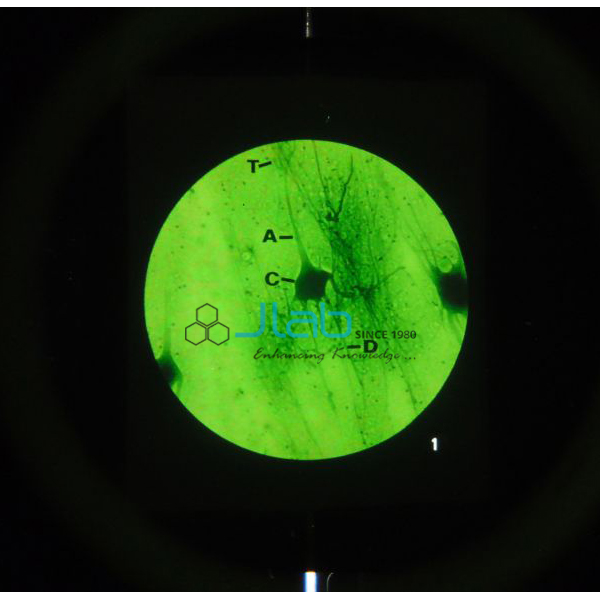
| Labelling | Arrows and callouts help students locate the important features |
| Text folder | Detailed text designed to stimulate, inform and question students, with a pocket to store the Microslide |
| Viewer | To be viewed through a Microslide Viewer (separate item) |
| Quality check | Each set is visually inspected before dispatch |
| Pack quantity | Each (one set) |
| Minimum order quantity | 10 units |
| Dispatch time | Usually 7–10 working days |
| Product code | EL-HBE-6979 |
| Supplied by | Jain Laboratory Instruments Pvt Ltd (JLab), Ambala, India |
What Is The Circulatory System Microslide Used For?
Circulation is usually taught from diagrams; this set shows the real tissues behind them. Seeing an artery beside a vein makes their difference concrete: arteries carry blood away from the heart at higher pressure and have thicker, more muscular walls, while veins bring blood back to it. The lung capillaries are where blood takes up oxygen and gives off carbon dioxide, and the human blood and phagocyte images introduce the cells the blood carries, including the white cells that engulf bacteria. The lymph vessel with its valves shows the one-way drainage system that returns tissue fluid to the blood, and the rat heart at two magnifications, together with the valve at the aorta, shows the mammalian heart and the valve that stops blood flowing back into it.
The images support transportation in human beings in class 10 science and body fluids and circulation in class 11 biology, and they make a quick visual revision for college physiology and nursing students. Students look at each picture through a Microslide Viewer, use the arrows and callouts to pick out the feature named, and then work through the questions in the text folder, whose pocket keeps the Microslide safe between classes.
What to Specify When Ordering
- Number of sets — at least 10 units; many schools order one per group.
- Viewers — Microslide Viewers are a separate item; add them if needed.
- Practical follow-up — a human blood prepared slide or a heart model can be quoted at the same time.
Frequently Asked Questions
Which images are in The Circulatory System Microslide?
Eight: artery and vein, lung capillaries, human blood, a rat heart at 6x, a phagocyte, a lymph vessel with valves, a rat heart at 4x, and the valve at the aorta.
What do the two rat heart images show?
The same organ at 4x and 6x. The rat is a mammal, so its heart follows the same four-chambered plan as the human heart and is a practical example for studying heart structure.
Is a Microslide Viewer required?
Yes. The images are meant to be viewed through a Microslide Viewer, which JLab lists separately; tell us in your enquiry how many viewers you need, if any.
How does it differ from a prepared blood slide?
A prepared slide is a real specimen that students examine under a compound microscope. The Microslide holds photographs already taken through a microscope, with arrows and callouts, and covers eight circulation topics from blood vessels to the heart, so the two work well together.
What is the minimum order and how soon is it dispatched?
Ten units minimum; dispatch is usually within 7–10 working days after a visual check. For an export quotation include the destination country and port or city, your preferred delivery terms such as FOB or CIF, and any packing or tender requirements.
Who supplies The Circulatory System Microslide?
Jain Laboratory Instruments Pvt Ltd (JLab) in Ambala, Haryana, India, which resells this Microslide product and quotes for it directly with its own biology range.
Supplier
JLab is the trading name of Jain Laboratory Instruments Pvt Ltd, a science-laboratory equipment company incorporated in 2017 and based on Hargolal Road, Ambala, Haryana. Its catalogue combines its own biology models, charts and apparatus with resold teaching resources such as Microslide sets, which lets a school order a whole circulation unit — heart model, prepared slides and photomicrographs — on one quotation; sets are inspected visually before they are packed. JLab exports worldwide and ships to buyers in every region — Brazil in South America, Canada in North America, Senegal in West Africa, Afghanistan in South Asia and Namibia in Southern Africa among them.
Related Circulation Resources
- Microslide Viewer — the viewer designed for Microslides, lit by a white reflector rather than batteries.
- Human Blood Prepared Slide — a permanent microscope slide for studying red cells, white cells and platelets.
- Human Heart Model — a natural-size, two-part heart with a removable front for looking into the chambers.
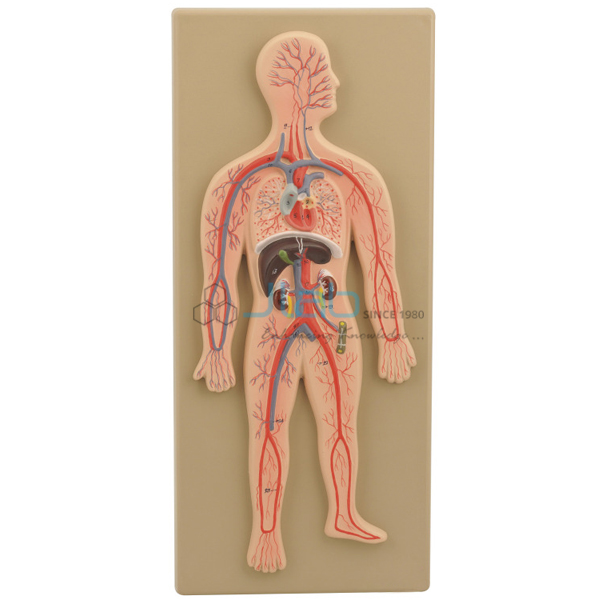
- Circulatory System Model — a model activity set with a heart cutaway, the body’s vessels and an enlarged cutaway of a vein and an artery.
- Human Heart Walk Thru — a floor mat on which students walk the path of blood through the heart.
See the full Human Biology Equipments range and other Biology Lab Equipment.
Request a Quote
Quotes come direct from JLab. Use the Add To Cart enquiry button on this page, or send the number of sets (minimum 10 units), the viewers or models you want to add, and the delivery address or port through the contact page.
Last updated: 5 October 2026