Analytical Balance Manufacturer,Supplier and Exporter in India
Product Code : EL-MI-2133
Jlab Export is a leading Analytical Balance Manufacturer,and suppliers in India
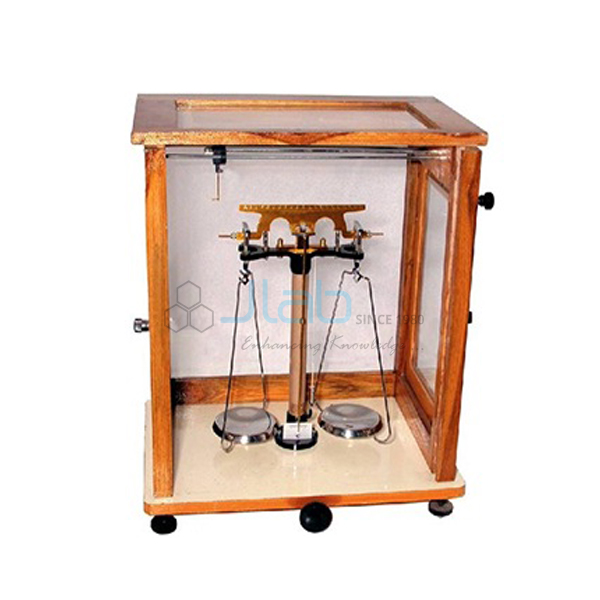
Analytical Balance (code EL-MI-2133) is a Sartorius-type (pattern) short-beam analytical balance with a 200 g capacity and 0.1 mg sensitivity, used for precise weighing in chemistry and physics labs at schools, colleges and universities. Its 14 cm triangular aluminium-alloy beam carries a rider scale of 100 divisions with zero at the centre, and agate knife edges work on agate planes. It is made by Jain Laboratory Instruments Pvt Ltd (JLab) at its works in Ambala, India.
Specifications
| Parameter | Detail |
|---|---|
| Type | Short-beam analytical balance, Sartorius-type pattern (a design pattern only — made by JLab, not a Sartorius product) |
| Capacity | 200 g |
| Sensitivity | 0.1 mg (1/10 milligram) |
| Beam | Triangular beam, 14 cm long, aluminium alloy |
| Rider scale | Fitted in front of the beam; 100 divisions (notches) with zero at the centre |
| Knife edges | Agate, with finely selected edges |
| Bearings (planes) | Agate |
| Arrestment | Vertical, raising type |
| Pans | Inverse stainless steel, 70 mm diameter |
| Case | Well-seasoned, polished teak wood case with a slider and two panel doors |
| Base | Sun-mica / synthetic black board base with levelling screws |
| Overall dimensions (L x B x H) | 365 x 265 x 455 mm |
| This listing covers | The balance in its case; weights are not listed as included and are separate catalogue items |
| Quality check | Each balance is visually inspected before dispatch |
| Pack quantity | Each (sold individually) |
| Minimum order quantity | 10 units |
| Dispatch time | Usually 7–10 working days |
| Product code | EL-MI-2133 |
| Manufacturer | Jain Laboratory Instruments Pvt Ltd (JLab) — OEM |
| Country of origin | India (made in Ambala, Haryana) |
How Does It Compare with Other JLab Beam Balances?
| Model | Capacity | Sensitivity | Pans | Other listed details |
|---|---|---|---|---|
| This analytical balance (EL-MI-2133) | 200 g | 0.1 mg | Inverse stainless steel, 70 mm | 14 cm triangular aluminium-alloy beam; 100-division rider scale; vertical arrestment; teak case |
| Chemical Balance | 200 g | 0.2 mg | Inverse stainless steel, 70 mm | Lacquered brass beam with 50 scale divisions to each side; teak case with front slider; supplied without weights |
| Physical Balance (7-Stone) | 200 g | 2 mg | Stainless steel, 100 mm | 7-stone agate knife edges; hangers with double hooks for upthrust experiments |
| Physical Balance (3-Stone) | 200 g | 5 mg | Stainless steel, 100 mm | 3-stone agate knife edges; supplied without weights |
All four weigh up to 200 g. Choose this analytical balance when you need the finest reading in the range, 0.1 mg, for quantitative chemistry; the chemical balance reads to 0.2 mg in a similar case and footprint, while the two physical balances, at 2 mg and 5 mg, suit general physics weighing and upthrust work where that resolution is enough.
What Is the Analytical Balance Used For?
An analytical beam balance is used wherever a mass must be known to a fraction of a milligram: weighing a primary standard such as oxalic acid or Mohr’s salt to make a standard solution for class 11 and class 12 titration practicals, gravimetric analysis in college and university chemistry labs, and careful density and relative-density work in physics. As chemical balance lab equipment for a school or teaching laboratory, it shows students how a mass is found by comparison with standard weights rather than read from a display.
Set the balance on a firm bench away from draughts and level it with the levelling screws. With the beam arrested, put the sample in a weighing bottle or on a watch glass on one pan and standard weights on the other, using forceps. Release the arrestment gently, observe the swing, arrest again before changing any weight, and finish by moving the rider along the rider scale until the beam balances. Close the doors while reading, never weigh a warm object, and always arrest the beam when the balance is not in use so that the agate knife edges and planes are not worn or chipped.
What to Specify When Ordering
- Model — this 0.1 mg analytical balance, or the chemical or physical balances compared above if a coarser sensitivity is acceptable.
- Weights — the balance is listed without weights, so add a weight box or spare weights to the same enquiry.
- Quantity — the minimum order is 10 balances; many institutions plan one balance per bench or student group.
- Packing — mention any export packing, labelling or tender marking you need for the wooden-cased balances.
Frequently Asked Questions
What are the capacity and sensitivity of this analytical balance?
It weighs up to 200 g with a sensitivity of 0.1 mg (1/10 milligram). The pans are inverse stainless steel, 70 mm in diameter.
What does “Sartorius type” mean for this balance?
It names the short-beam design pattern the balance follows. The balance itself is made by JLab in Ambala; it is not a Sartorius product and implies no connection with that company.
How is the rider scale used?
The rider scale in front of the beam has 100 notches with zero at the centre. After the bulk of the mass is balanced with weights, the rider is moved along the notches to balance the small remaining difference, so the last part of the reading comes from the rider position instead of the smallest weights.
Are weights included with the balance?
Weights are not part of this listing. The Analytical Weight Box and the spare physical gram weights linked below are separate items that can be quoted together with the balance.
How does it differ from the JLab Chemical Balance?
Both weigh up to 200 g on 70 mm inverse stainless steel pans and have the same 365 x 265 x 455 mm overall size. This model has a triangular aluminium-alloy beam with a 100-division rider scale and 0.1 mg sensitivity; the chemical balance has a lacquered brass beam with 50 divisions to each side and 0.2 mg sensitivity.
Why are the knife edges and planes made of agate?
Agate is very hard and takes a fine, smooth edge, so the beam pivots with little friction and the edges wear slowly. Arresting the beam whenever the pans are loaded or unloaded keeps them sharp.
What should an export enquiry include?
Send the quantity, the destination country and port or city, the delivery terms you prefer (for example FOB or CIF), any packing or labelling instructions, and the tender reference if one applies.
Who manufactures this analytical balance?
Jain Laboratory Instruments Pvt Ltd, trading as JLab, builds it at its works in Ambala, Haryana, India, and quotes for it directly.
OEM Manufacturer
JLab is the trading name of Jain Laboratory Instruments Pvt Ltd, a manufacturer of laboratory instruments and science lab equipment in India, incorporated in 2017 and based on Hargolal Road, Ambala, Haryana. This analytical balance is assembled at JLab’s own works rather than sourced from a trader, so schools, colleges, dealers and importers deal factory-direct; every balance is visually inspected before it is packed, and repeat orders and spares are handled by the manufacturer. JLab exports worldwide and ships to buyers in every region — for example North Macedonia in Southern Europe, Eswatini in Southern Africa, Hong Kong in East Asia, Mexico in North America and Argentina in South America. Institutions buying through a tender can find details on the JLab lab tenders page.
Weights and Related Balances
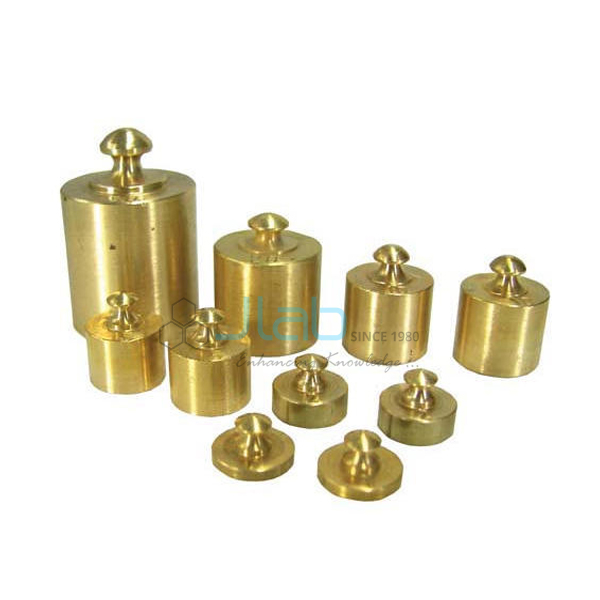
- Analytical Weight Box -1g to 500g — a set of 12 analytical weights in a wooden storage box.
- Spare Physical Gram Weights (Brass C.P) — individual replacement weights for balance sets.
- Chemical Balance — a 0.2 mg beam balance with a lacquered brass beam.
- Physical Balance (7-Stone) — a 2 mg general-purpose balance with hangers for upthrust experiments.
- Physical Balance (3-Stone) — a 5 mg balance with 3-stone agate knife edges.
- Electronic Analytical Balance — a digital alternative with 0.1 mg readability and overload protection.
Browse the full Measuring Instruments range or all Indian Instruments.
Request a Quote
Quotes come direct from the manufacturer. Use the Add To Cart enquiry button on this page, or send the number of balances (minimum 10 units), any weight sets you want with them and your delivery location through the contact page.
Last updated: 9 October 2026