Respiratory System Manufacturer,Supplier and Exporter in India
Product Code : EL-BL-11363
Jlab Export is a leading Respiratory System Manufacturer,and suppliers in India
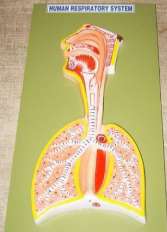
Respiratory System (code EL-BL-11363) is a fibre glass model of the human respiratory system, used to teach the path of air from the nose to the lungs. It shows the nasal septum and concha, the palate and tongue, the trachea, both primary bronchi, a bronchiole, the right and left lungs and the diaphragm, all numbered, on a wooden board. It is made by Jain Laboratory Instruments Pvt Ltd (JLab) at its works in Ambala, India.
Specifications
| Parameter | Detail |
|---|---|
| Model number | JL302/9.12 |
| Type | Human respiratory system model |
| Material | Fibre glass |
| Upper airway | Nasal septum, concha, palate and tongue |
| Airways and lungs | Trachea, right and left primary bronchus, bronchiole, right lung and left lung |
| Breathing muscle | Diaphragm |
| Labelling | All parts numbered for easy identification |
| Mounting | Wooden board |
| Quality check | Each model is visually inspected before dispatch |
| Pack quantity | Each (sold individually) |
| Minimum order quantity | 10 units |
| Dispatch time | Usually 7–10 working days |
| Product code | EL-BL-11363 |
| Manufacturer | Jain Laboratory Instruments Pvt Ltd (JLab) — OEM |
| Country of origin | India (made in Ambala, Haryana) |
What Is the Respiratory System Model Used For?
Teachers use the model to trace a breath step by step: air enters the nose, where the septum divides the nasal cavity and the conchae help warm and moisten it, then passes down the trachea, splits into the right and left primary bronchi and branches into ever smaller bronchioles inside the lungs. Pointing to the diaphragm below the lungs helps explain that it contracts and flattens when we breathe in, enlarging the chest cavity. The model suits the class 10 chapter on life processes, class 11 lessons on breathing and exchange of gases, and introductory physiology in colleges and nursing schools.
What to Specify When Ordering
- Quantity — the minimum order is 10 models.
- Labelling — parts are numbered; tell JLab if a tender asks for a separate key or another language.
- Companion models — the torso, digestive system and circulatory models can be quoted together.
Frequently Asked Questions
Which parts of the respiratory system does the model show?
The nasal septum, concha, palate, tongue, trachea, right and left primary bronchi, a bronchiole, both lungs and the diaphragm, each with its own number.
Why are the palate and tongue included?
They show where the nasal passage sits above the mouth, so students can see how air from the nose reaches the throat before it enters the trachea.
Who manufactures the respiratory system model?
JLab (Jain Laboratory Instruments Pvt Ltd) makes it at its Ambala works and quotes directly.
OEM Manufacturer
JLab is the trading name of Jain Laboratory Instruments Pvt Ltd, an Indian manufacturer of biology models and school laboratory equipment, incorporated in 2017 and working from Hargolal Road, Ambala, Haryana. The model is built at JLab’s own works, not bought from a trader, so buyers get factory-direct supply and repeat orders from the same maker. JLab exports worldwide and ships to buyers in every region — for example Slovakia in Eastern Europe, the Maldives in South Asia, the Philippines in Southeast Asia, Ecuador in South America and South Korea in East Asia.
Related Anatomy Models
- Mini Human Torso — lungs, windpipe, diaphragm and heart shown among the other body organs.
- Digestive System — a life-size digestive tract with a sectioned pharynx.
- Blood Circulatory — a fibre glass model of the main arteries and veins, including the arch of the aorta and the carotid and femoral vessels.
More models are in the Biology Lab range and the Biology Lab Equipment section.
Request a Quote
You get the quote from the manufacturer. Use the Add To Cart button on this page, or send the number of respiratory system models (minimum 10 units), any companion models and the delivery location through the contact page.
Last updated: 8 October 2026