

Glass Rod with Rubbing Material Manufacturer,Supplier and Exporter in India
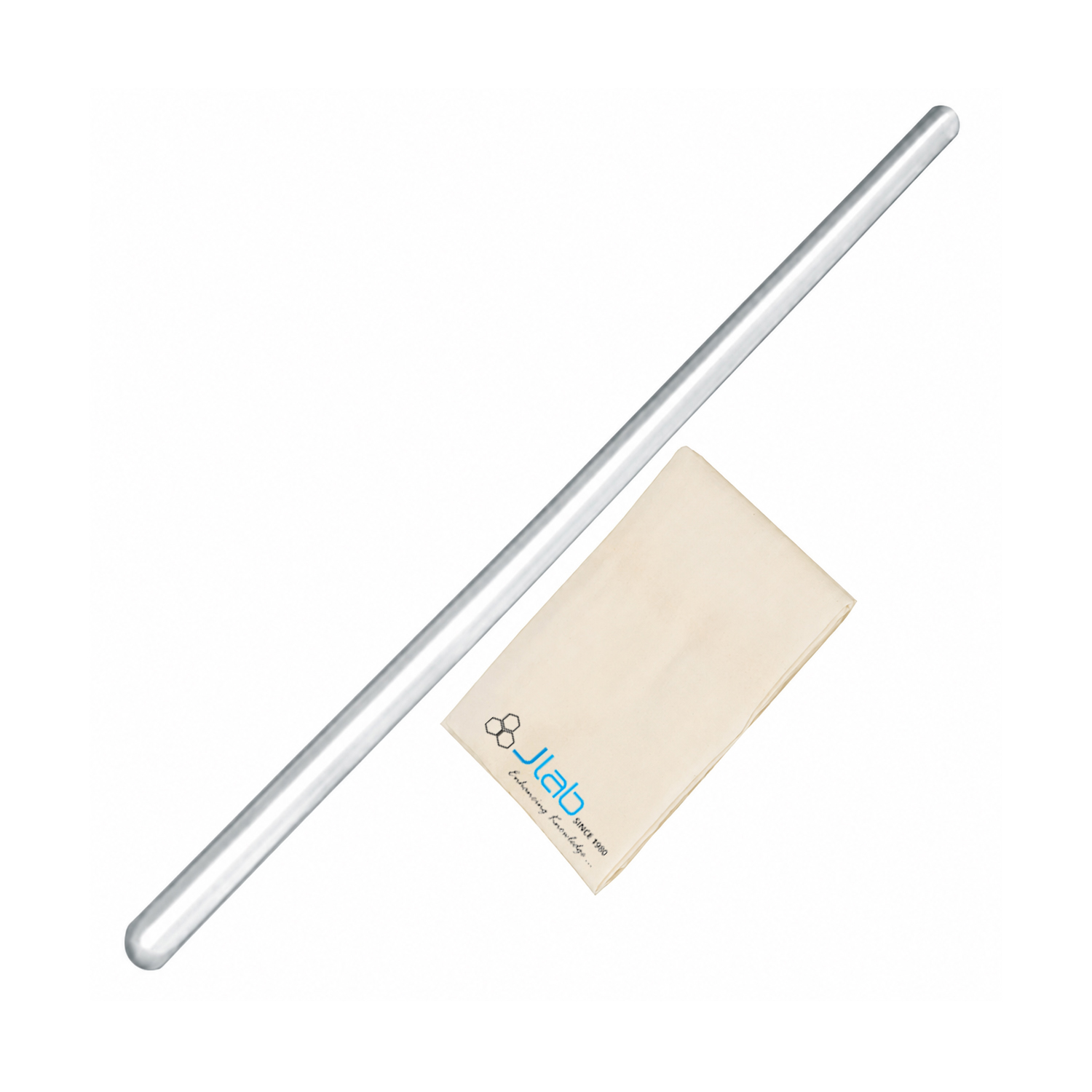
Product Code : EL-CL-13452
Jlab Export is a leading Glass Rod with Rubbing Material Manufacturer,and suppliers in India
Glass Rod with Rubbing Material (code EL-CL-13452) is a glass rod supplied with a piece of cloth, rubbed together to produce static electricity for classroom demonstrations. During rubbing, electrons pass from the glass to the cloth, so the rod becomes positively charged and the cloth negatively charged. The rod and cloth are made by JLab of Ambala, India.
Specifications
| Parameter | Detail |
|---|---|
| Model | JL/IPL-657 |
| Material | Glass rod |
| Supplied with | Piece of cloth for rubbing |
| Charge after rubbing | Rod positive, cloth negative |
| Quality check | Each rod and cloth is visually inspected before dispatch |
| Pack quantity | Each (sold individually) |
| Minimum order quantity | 10 units |
| Dispatch time | Usually 4–6 working days |
| Product code | EL-CL-13452 |
| Manufacturer | Jain Laboratory Instruments Pvt Ltd (JLab) — OEM |
| Country of origin | India (made in Ambala, Haryana) |
Why the Charged Rod Picks Up Paper
Held close to bits of paper or dust, the positive rod draws the negative charges in each piece slightly toward it, so the near side becomes a little negative and the far side a little positive. The attracting charges are closer to the rod than the repelling ones, so the uncharged paper is pulled toward it. Bringing the glass rod near an ebonite rod rubbed with fur, which is negative, shows that unlike charges attract, while two charged glass rods repel each other.
Related Static Electricity Items
- Ebonite Rod — rod with its own rubbing cloth for comparing charges.
- Electroscope with Aluminum Arrow — arrow electroscope for showing whether the rod is charged.
- Friction Rod Kit — glass and ebonite rods with silk cloth and a faux fur pad.
Further electrostatics apparatus is grouped under Chemistry Lab.
Request a Quote
Quote requests can go through Add To Cart or the contact page; please give the number of rods and the delivery destination.
Last updated: 29 October 2026
