Human Knee Joint Model Manufacturer,Supplier and Exporter in India
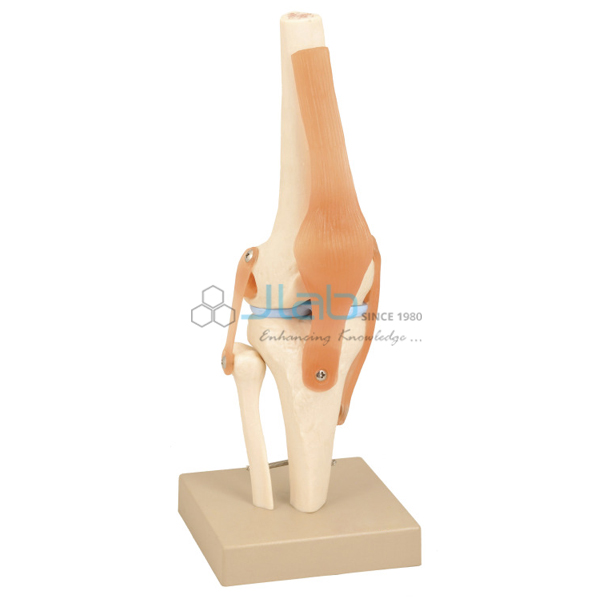
Product Code : EL-HBE-7029
Jlab Export is a leading Human Knee Joint Model Manufacturer,and suppliers in India
Human Knee Joint Model (code EL-HBE-7029) is a model of the human knee joint that shows its essential internal structure and is mounted on a base. It helps students in biology, physical education and anatomy classes understand how the thigh bone, shin bone and kneecap work together at the body’s main weight-bearing hinge. It is made by Jain Laboratory Instruments Pvt Ltd (JLab) at its works in Ambala, India.
Specifications
| Parameter | Detail |
|---|---|
| Model type | Human knee joint model |
| Shows | The essential internal structure of the knee joint |
| Mounting | Mounted on a base |
| Quality check | Each model is visually inspected before dispatch |
| Pack quantity | Each (sold individually) |
| Minimum order quantity | 10 units |
| Dispatch time | Usually 7–10 working days |
| Product code | EL-HBE-7029 |
| Manufacturer | Jain Laboratory Instruments Pvt Ltd (JLab) — OEM |
| Country of origin | India (made in Ambala, Haryana) |
What Is the Knee Joint Model Used For?
The knee is a synovial hinge joint that carries the weight of the body while letting the leg bend and straighten, with a little rotation when it is bent. Inside it, two C-shaped cartilage pads (the menisci) cushion the femur on the tibia, the cruciate ligaments cross in the middle to stop the bones sliding forwards and backwards, and the collateral ligaments brace the sides. Teachers use a mounted model to show these internal parts and to compare the knee with the elbow and the hip. It fits class 6 Science (Body Movements), class 11 Biology (Locomotion and Movement: synovial joints), and physical education, sports science, physiotherapy and nursing courses.
Frequently Asked Questions
What does the Human Knee Joint Model show?
The essential internal structure of the knee joint, mounted on a base. Individual labelled parts are not listed, so ask JLab if your syllabus requires particular ligaments or cartilages to be identified.
Which bones meet at the knee joint?
The femur (thigh bone) and the tibia (shin bone), with the patella (kneecap) gliding over the front of the femur. The fibula runs alongside the tibia but does not form part of the knee joint itself.
Does the model move?
The listing does not say. For a model that demonstrates flexion, extension and rotation with flexible ligaments, see the Knee Joint Life Size listed below.
Who manufactures this knee model?
JLab (Jain Laboratory Instruments Pvt Ltd) makes it at its works in Ambala, Haryana, India, and quotes for it directly.
OEM Manufacturer
JLab is the trading name of Jain Laboratory Instruments Pvt Ltd, a manufacturer of skeletal, anatomy and biology teaching models in India, incorporated in 2017 and based on Hargolal Road, Ambala, Haryana. This knee joint model is produced in JLab’s own works rather than bought in, so schools, colleges, dealers and importers order it factory-direct and each piece is looked over before dispatch. JLab exports worldwide and ships to buyers in every region — including, for example, Singapore in Southeast Asia, Cameroon in Central Africa, Greece in Southern Europe, Morocco in North Africa and Senegal in West Africa.
Related Joint Models
- Human Elbow Joint Model — a matching model of the elbow joint showing its essential internal structure, on a base.
- Knee Joint Life Size — a life-size knee on a stand with flexible artificial ligaments that demonstrates flexion, extension and rotation.
- Sectional Knee Joint Model — a rigid life-size cross-section showing the articular disc, articular cartilage, synovial membrane and capsular ligament.
- Movable Joints Chart — a wall chart of the freely movable (synovial) joints of the human body.
See the Human Biology Equipments range or all Biology Lab Equipment.
Request a Quote
Quotes come direct from the manufacturer. Use the Add To Cart enquiry button on this page, or send the quantity (minimum 10 units), any other joint models and your delivery location through the contact page.
Last updated: 5 October 2026