Pollen and Spores Prepared Slide Manufacturer,Supplier and Exporter in India

Product Code : EL-PS-8176
Jlab Export is a leading Pollen and Spores Prepared Slide Manufacturer,and suppliers in India
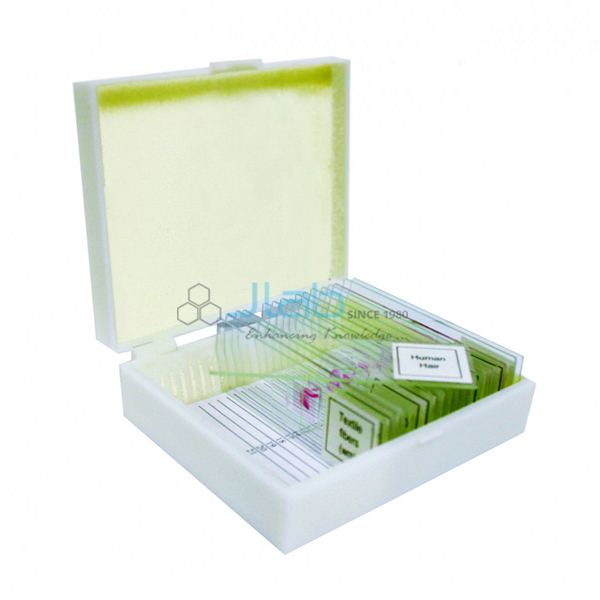
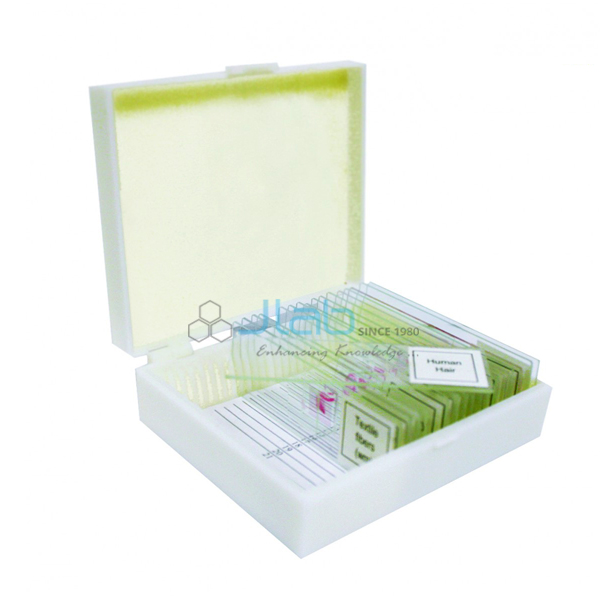
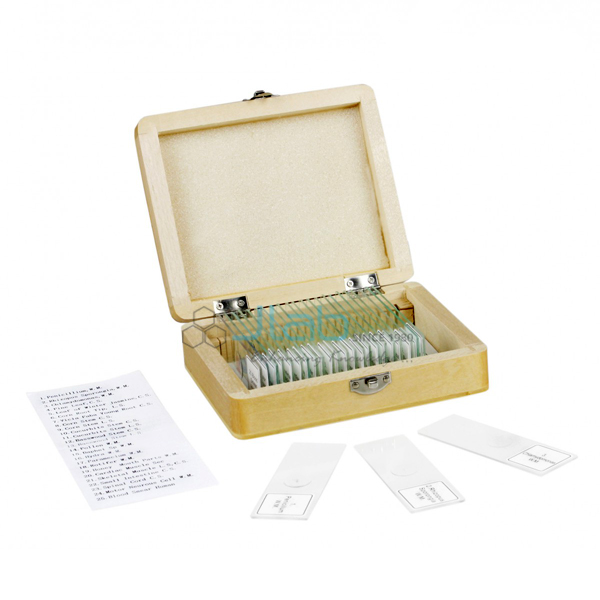
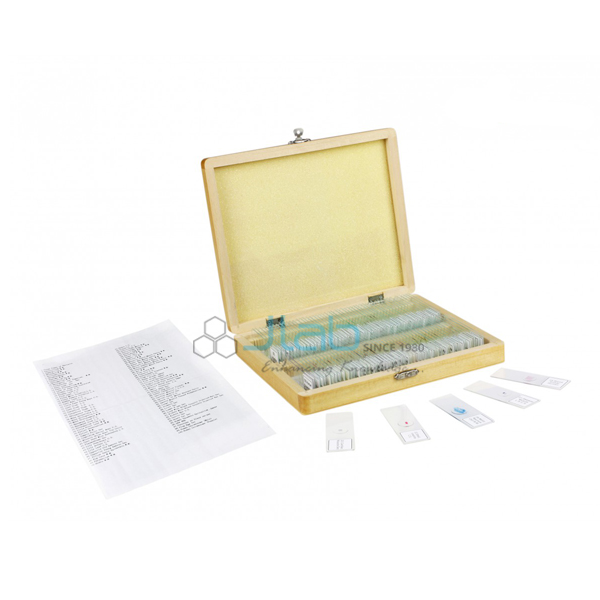
Pollen and Spores Prepared Slide (code EL-PS-8176) is a set of 12 labelled glass slides that puts six kinds of pollen — pine, tulip, lily, chrysanthemum, sunflower and pumpkin — alongside fern and Lycopodium spores and two common moulds, Penicillium notatum and Aspergillus niger. Biology teachers use it to show how seed plants, ferns and fungi spread their reproductive cells. The slides come in a slotted plastic case, made by Jain Laboratory Instruments Pvt Ltd (JLab) at its works in Ambala, India.
Specifications
| Parameter | Detail |
|---|---|
| Set contents | 12 prepared glass slides, each labelled |
| Storage | Slotted plastic case |
| Pollen slides | Pine tree pollen; tulip pollen; lily pollen; chrysanthemum pollen; sunflower pollen; pumpkin pollen |
| Fern and clubmoss spores | Fern spore; Lycopodium spore |
| Moulds | Penicillium notatum; Aspergillus niger |
| Other spore slides (as listed) | Bottlebrush spore; leaf spore |
| Quality check | Each set is visually inspected before dispatch |
| Pack quantity | One set (12 slides in a slotted plastic case) |
| Minimum order quantity | 10 units |
| Dispatch time | Usually 7–10 working days |
| Product code | EL-PS-8176 |
| Manufacturer | Jain Laboratory Instruments Pvt Ltd (JLab) — OEM |
| Country of origin | India (made in Ambala, Haryana) |
What Is the Pollen and Spores Slide Set Used For?
Pollen grains carry the male gametes of seed plants, while spores are the single reproductive cells released by ferns, clubmosses and fungi. Viewing them on one set helps students compare the two. The pollen slides are especially useful for the class 12 chapter on sexual reproduction in flowering plants: pine pollen has two air sacs that keep it afloat on the wind, whereas the spiny pollen of sunflower, chrysanthemum and pumpkin is suited to being carried by insects — a direct link to wind and insect pollination. Tulip and lily pollen give two more examples from monocot flowers.
The fern and Lycopodium slides belong with the pteridophytes in the class 11 plant kingdom chapter, and the two moulds with the fungi in the biological classification chapter. Penicillium notatum is the mould from which penicillin was discovered and Aspergillus niger is used to produce citric acid, so both also appear in the class 12 chapter on microbes in human welfare. After viewing the permanent slides, students can dust fresh pollen from flowers onto a blank slide to make their own temporary mounts.
What to Specify When Ordering
- Number of sets — minimum 10 sets.
- Confirmation of the bottlebrush and leaf spore slides — if your lesson needs a particular species, ask JLab before ordering.
- Companion items — a slide making kit or blank slides and coverslips for pollen mounts made in class.
- Destination and delivery terms for export orders.
Frequently Asked Questions
Which pollen and spore slides are in the set?
Pollen of pine, tulip, lily, chrysanthemum, sunflower and pumpkin; spores of a fern and of Lycopodium; the moulds Penicillium notatum and Aspergillus niger; and two slides listed as bottlebrush spore and leaf spore — 12 slides in all.
What is the difference between pollen and spores?
Pollen is produced by seed plants and carries the male gametes to the female part of a flower or cone. Spores are reproductive cells of plants such as ferns and clubmosses, and of fungi, and each can grow into a new organism or generation without fertilisation.
Why does pine pollen look so different from sunflower pollen?
Pine is wind-pollinated and its pollen has two air sacs that help it float. Sunflower pollen is spiny, which helps it cling to insects that visit the flower.
What are the bottlebrush and leaf spore slides?
They are listed under those names without a species. The common name “bottlebrush” is used for more than one plant, so confirm with JLab which specimen these slides show if your syllabus depends on it.
Do the slides need a high-power microscope?
Most pollen grains and fern spores can be seen at ordinary school magnifications; surface detail such as spines and pores is clearer at higher power.
What should I send for an export quotation?
Quantity, destination country and port or city, the delivery terms you prefer (for example FOB or CIF), packing or labelling needs and any tender reference.
Who makes the Pollen and Spores slide set?
Jain Laboratory Instruments Pvt Ltd, trading as JLab, makes it at its works in Ambala, Haryana, India.
OEM Manufacturer
The set is manufactured by Jain Laboratory Instruments Pvt Ltd (JLab), an educational and laboratory equipment manufacturer in India incorporated in 2017, whose works are on Hargolal Road, Ambala, Haryana. JLab makes its prepared slide sets itself instead of trading in bought-in stock, so schools, colleges, dealers and importers receive them factory-direct, with each set visually checked before packing and repeat orders handled by the manufacturer. It holds MSME Udyam registration UDYAM-HR-01-0003849 (manufacturing enterprise) and Importer-Exporter Code 3317504552. JLab exports worldwide and ships to buyers in every region — for example South Africa in Southern Africa, Belize in Central America and the Caribbean, Serbia in Southern Europe, Ireland in Western Europe and Lebanon in the Middle East. Tender buyers can consult the JLab lab tenders page.
Related Botany and Fungi Slides
- Basic Botany Prepared Slide Set — plant tissue and organ slides, including a fern leaf.
- Microbial World Prepared Slide — Aspergillus, Penicillium and yeast with bacteria, algae and protozoa.
- Introduction to Biology Prepared Slide — a starter set that includes Pinus pollen and moss.
- Microscope Slide Making Kit — blank slides, stains and coverslips for students’ own pollen mounts.
- Microscope Cover Slips — for covering temporary mounts.
More sets are listed in the Prepared Slides range and the Biology Lab Equipment range.
Request a Quote
Get a quotation directly from the manufacturer: click Add To Cart on this page, or use the contact page to send the number of sets (minimum 10), any other slides or kits, and where the order should be delivered.
Last updated: 4 October 2026