Dissection Forceps Sharp Manufacturer,Supplier and Exporter in India
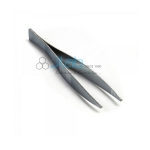
Product Code : EL-SLE-4460
Jlab Export is a leading Dissection Forceps Sharp Manufacturer,and suppliers in India
Dissection Forceps Sharp (code EL-SLE-4460) are 6 in (about 152 mm) dissecting forceps with sharp edges, made from surgical grade steel and used for grasping and holding specimens and small parts during dissection in school, college and university biology labs. They come in a regular and a heavy type. They are made by Jain Laboratory Instruments Pvt Ltd (JLab) at its works in Ambala, India.
Specifications
| Parameter | Detail |
|---|---|
| Type | Dissecting forceps with sharp edges |
| Length | 6 in (about 152 mm) |
| Material | Surgical grade steel |
| Versions | Regular; Heavy (both 6 in long) |
| Use | Grasping and holding objects and specimens |
| Quality check | Each pair of forceps is visually inspected before dispatch |
| Pack quantity | Each (sold individually) |
| Minimum order quantity | 10 units |
| Dispatch time | Usually 7–10 working days |
| Product code | EL-SLE-4460 |
| Manufacturer | Jain Laboratory Instruments Pvt Ltd (JLab) — OEM |
| Country of origin | India (made in Ambala, Haryana) |
How Does It Compare with Other JLab Forceps?
| Model | Tip | Length | Material and pack (as listed) |
|---|---|---|---|
| Dissection Forceps Sharp (EL-SLE-4460) | Sharp edges | 6 in (about 152 mm) | Surgical grade steel; regular or heavy; sold individually |
| Forceps | Sharp, narrow flutes with guide pin | 150 mm | Stainless steel; pack of 10 |
| Forceps, Stainless Steel Straight Fine Point | Straight, fine point | 115 mm | Stainless steel; pack of 10 |
| Forceps, Stainless Steel Blunt Tip | Blunt | 125 mm | Stainless steel; pack of 10 |
Choose these forceps when you want the longest listed pair, a sharp working edge and the option of a heavy version, bought singly. The guide-pin forceps keep their jaws aligned, the shorter fine-point pair suits very small parts, and blunt tips are the gentler choice for separating soft tissue or for younger students.
What Are Sharp Dissection Forceps Used For?
Forceps are the hand tool a student holds most often during a dissection: they pick up, hold back and steady the specimen while a scalpel, scissors or needle does the cutting. A sharp-edged pair grips small or slippery structures securely and can lift a thin membrane or a single plant part away from the rest, which is why it is a standard item in a dissection box for school biology practicals — for example separating the sepals, petals, stamens and carpels of a flower — and in college botany and zoology labs working with preserved specimens. Hold the forceps like a pencil near the tips, work over a dissecting tray, and keep the sharp tips pointed away from your fingers. After use, wash and dry the forceps thoroughly before storing them so that the steel stays clean and the tips stay true.
What to Specify When Ordering
- Version — regular or heavy; both are 6 in long.
- Quantity — the minimum order is 10 units; many schools order one pair per student or per bench pair, plus spares.
- Other instruments — add scissors, dissecting needles, trays or a complete dissection kit to the same enquiry.
- Delivery — destination country, port or city and preferred delivery terms for export orders.
Frequently Asked Questions
What are sharp dissection forceps used for?
Grasping and holding specimens and small parts during a dissection. The sharp edges help to grip fine structures that a blunt pair can slip off.
How long are these forceps?
6 in, which is about 152 mm. Both the regular and the heavy versions are listed at this length.
What is the difference between the regular and heavy types?
The listing names both at 6 in long and gives no further differences. If the choice depends on weight or jaw detail, ask JLab before ordering.
What material are they made from?
Surgical grade steel. Wash and dry them after each practical to keep the tips clean and in good condition.
Should students use sharp or blunt forceps?
It depends on the task. Sharp-edged forceps suit fine work on small parts, while blunt-tip forceps are kinder to soft tissue and are often preferred for younger classes; JLab lists both.
What should an export quotation request include?
Quantity and version, the destination country and port or city, delivery terms such as FOB or CIF, any packing or labelling requirements, and a tender reference if applicable.
Who manufactures these forceps?
Jain Laboratory Instruments Pvt Ltd, trading as JLab, makes them at its works in Ambala, Haryana, India, and quotes directly as the manufacturer.
OEM Manufacturer
JLab is the trading name of Jain Laboratory Instruments Pvt Ltd, a biology and school laboratory equipment manufacturer in India, incorporated in 2017 and based on Hargolal Road, Ambala, Haryana. These forceps are made in JLab’s own works rather than sourced from a trader, so schools, colleges, dealers and importers buy direct from the maker, every pair is checked by eye before packing, and repeat orders are handled by the manufacturer. Its GSTIN is 06AADCJ9848D1ZE and its Legal Entity Identifier is 549300DTGS77DGYD6N03. JLab exports worldwide and can ship to every region — for instance Colombia in South America, Romania in Eastern Europe, Tajikistan in Central Asia, Serbia in Southern Europe and France in Western Europe. For institutional purchasing, see the JLab lab tenders page.
Other Dissection Instruments
- Dissecting Scissors — stainless steel scissors for cutting tissue and plant material.
- Dissecting Needles With Plastic Handles — for separating and exploring the parts of small animals and plants.
- Dissecting Trays — G.I. sheet trays, with or without wax, to work on.
- Dissection Kit With 14 Instruments — a complete set of surgical steel instruments for biology labs.
See the full School Lab Equipment range.
Request a Quote
Quotes come direct from the manufacturer. Use the Add To Cart enquiry button on this page, or send the quantity (minimum 10 units), the version you need (regular or heavy), any other dissection instruments and your delivery location through the contact page.
Last updated: 4 October 2026