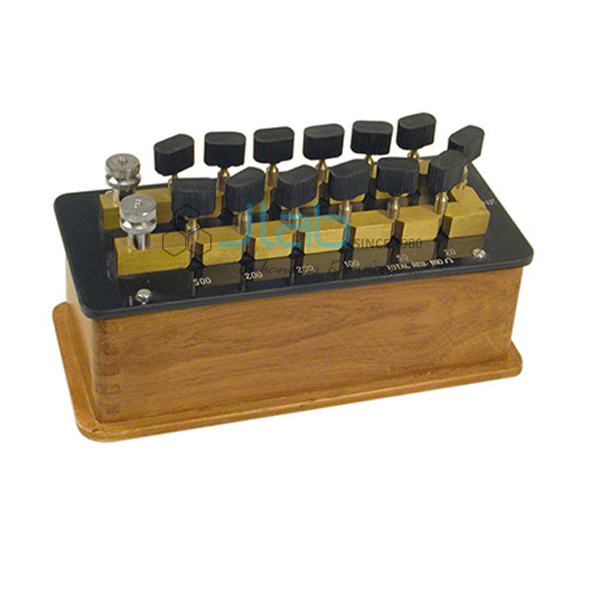
Free Fall Apparatus Manufacturer,Supplier and Exporter in India

Product Code : EL-SLE-4559
Jlab Export is a leading Free Fall Apparatus Manufacturer,and suppliers in India
Free Fall Apparatus (code EL-SLE-4559) is a timing set-up for determining the acceleration due to gravity (g) from the fall of a heavy steel ball, used in school and college physics practicals. An electromagnet held in a moulded plastic case holds the steel ball until it is released, and the apparatus is packed with a digital timer and the other accessories the experiment needs. It is made by Jain Laboratory Instruments Pvt Ltd (JLab) at its works in Ambala, India.
Specifications
| Parameter | Detail |
|---|---|
| Purpose | Determination of gravitational acceleration (g) |
| Release | Electromagnet held in a plastic formed (moulded) case |
| Falling body | Heavy steel ball |
| Timer | Digital timer, packed with the apparatus |
| Accessories | Packed with the other accessories needed for the experiment — ask JLab for the full packing list |
| Set-up | Easy to set up and read |
| Quality check | Each apparatus is visually inspected before dispatch |
| Pack quantity | Each (sold individually) |
| Minimum order quantity | 10 units |
| Dispatch time | Usually 7–10 working days |
| Product code | EL-SLE-4559 |
| Manufacturer | Jain Laboratory Instruments Pvt Ltd (JLab) — OEM |
| Country of origin | India (made in Ambala, Haryana) |
What Is the Free Fall Apparatus Used For?
Measuring g by timing a falling body is a core practical in mechanics, linked to the gravitation chapter of class 9 and to motion in a straight line in class 11, and it is repeated with more care in first-year college physics labs. The steel ball hangs from the electromagnet; switching the magnet off lets it drop without any push, and the digital timer records the time of fall. With the drop height measured carefully, g equals twice the height divided by the square of the fall time. Taking readings at several heights and plotting height against time squared gives a straight line whose gradient is half of g — close to 9.8 m/s² at the Earth’s surface.
A heavy steel ball is used because air resistance is small compared with its weight, so its fall is very close to true free fall. Good practice is to measure the height from the bottom of the ball to the landing point, take several timings at each height and average them, and remember that a little residual magnetism can delay the release by a fraction of a second. Keep the steel ball dry so it does not rust, and switch the electromagnet off between runs, because a coil left on warms up.
What to Specify When Ordering
- Quantity — the minimum order is 10 apparatus; many colleges order one per practical bench.
- Packing list and power — ask JLab to confirm which accessories are packed with the apparatus and what supply the electromagnet and timer use, so nothing is missing on the bench.
- Second method for g — add a simple pendulum to the same enquiry if students compare two methods of measuring g.
Frequently Asked Questions
What does the Free Fall Apparatus measure?
The acceleration due to gravity, g. Students time the fall of the steel ball over a measured height and calculate g from those two readings.
How is g worked out from the readings?
For a body falling from rest, the height fallen equals half of g multiplied by the time squared. So g is twice the height divided by the square of the time, or twice the gradient of a graph of height against time squared.
What comes with the apparatus?
An electromagnet held in a moulded plastic case, a heavy steel ball and a digital timer, packed with the other accessories needed for the experiment. Ask JLab for the full packing list with your quotation.
Why is the ball released by an electromagnet?
Switching off the magnet drops the ball cleanly, with no push from a hand, so it starts from rest at a known instant — important when the timer has to measure fractions of a second.
Why is a heavy steel ball used?
Because air resistance on a dense ball is tiny compared with its weight, so the measured value of g is not noticeably reduced by air drag over a laboratory drop height.
How is this different from the Free Fall Apparatus without Stand?
That listing is an acrylic tube connected to a vacuum pump, used to show that objects of different weights fall at the same rate in a vacuum. This apparatus is for measuring g by timing a falling steel ball.
What information should an export enquiry include?
Quantity, destination country and port or city, preferred delivery terms (for example FOB or CIF), packing or labelling needs, and any tender reference.
Who manufactures the Free Fall Apparatus?
Jain Laboratory Instruments Pvt Ltd, trading as JLab, at its works in Ambala, Haryana, India.
OEM Manufacturer
JLab is the trading name of Jain Laboratory Instruments Pvt Ltd, an Indian manufacturer of physics and mechanics lab equipment, incorporated in 2017 and working from Hargolal Road, Ambala, Haryana. The free fall apparatus is assembled at JLab’s own works instead of being bought from a trader, so schools, colleges, dealers and importers buy it factory-direct, each set is visually inspected before dispatch, and follow-up orders go back to the same manufacturer. JLab exports worldwide and has buyers in every region — for instance South Africa in Southern Africa, Finland in Northern Europe, Switzerland in Western Europe, Morocco in North Africa and Uruguay in South America. Tender details are on the JLab lab tenders page.
Related Gravity and Timing Apparatus
- Free Fall Apparatus — a separate listing for determining g by timing a steel ball over a pre-determined distance.
- Free Fall Apparatus without Stand — an acrylic vacuum tube showing that objects of different weights fall at the same rate in a vacuum.
- Simple Pendulum With Stand — a brass-bob pendulum on a metallic base, for the pendulum method of finding g.
- Digital Timer — a microprocessor-controlled touch-panel timer for other short-interval timing practicals.
See more apparatus in the School Lab Equipment range.
Request a Quote
Ask the manufacturer directly: use the Add To Cart enquiry button on this page, or send the number of sets (minimum 10 units), any extra items such as a pendulum, and your delivery location through the contact page.
Last updated: 4 October 2026