Functional Ear Model Manufacturer,Supplier and Exporter in India
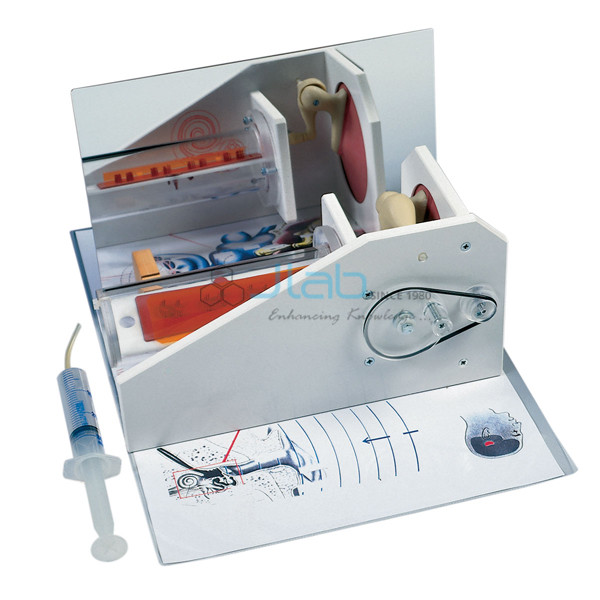
Product Code : EL-HBE-7011
Jlab Export is a leading Functional Ear Model Manufacturer,and suppliers in India
Functional Ear Model (code EL-HBE-7011) is a working demonstration model that shows how the eardrum (tympanic membrane), the ossicles and the cochlea operate together, including the oscillations of the basilar membrane. An enclosed mirror lets several students watch the ear at work from different angles at once. It measures 300 x 150 x 180 mm and is made by Jain Laboratory Instruments Pvt Ltd (JLab) at its works in Ambala, India.
Get a quote: use the Add To Cart enquiry button below, or send your quantity and destination through the contact page.
Specifications
| Parameter | Detail |
|---|---|
| Demonstrates | How the tympanic membrane, the ossicles and the internal ear of the cochlea, with the oscillations of the basilar membrane, operate and interact |
| Group use | Several students can study one model at the same time in an action-oriented learning situation |
| Mirror | Enclosed mirror for studying the ear functions from different angles at the same time |
| Dimensions | 300 x 150 x 180 mm |
| Weight | 1.2 kg |
| Quality check | Each model is visually inspected before dispatch |
| Pack quantity | Each (sold individually) |
| Minimum order quantity | 10 units |
| Dispatch time | Usually 7–10 working days |
| Product code | EL-HBE-7011 |
| Manufacturer | Jain Laboratory Instruments Pvt Ltd (JLab) — OEM |
| Country of origin | India (made in Ambala, Haryana) |
How Does It Compare with Other JLab Ear Models?
| Model | Type | Listed details |
|---|---|---|
| This model (EL-HBE-7011) | Working (functional) model | Shows the eardrum, ossicles, cochlea and basilar membrane in operation; enclosed mirror; 300 x 150 x 180 mm; 1.2 kg |
| Human Ear Model | Anatomical, dissectible | 2 times full size; 3 parts showing the external, middle and internal ear; ossicles and labyrinth removable |
| Ear Left Model | Anatomical, dissectible | About 4 times full size; 5 removable parts; eardrum with malleus and incus removable; labyrinth can be taken out and opened |
Choose the functional model to show how hearing works — the movement of the eardrum, ossicles and basilar membrane — and an anatomical ear model to show where each structure lies. Many departments use one of each.
What Is the Functional Ear Model Used For?
Static ear models show structure; this one shows the sequence of hearing. Sound makes the eardrum vibrate, and the three ossicles — malleus, incus and stapes — pass the vibration on and amplify it to the oval window of the inner ear. That sets the fluid in the cochlea moving, and the basilar membrane vibrates most strongly at different places for different pitches: high notes near its base and low notes near its tip. Hair cells on the membrane turn this movement into signals carried by the auditory nerve to the brain. Seeing the parts move makes it much easier for students to connect the anatomy to the physics of sound.
The model supports the class 9 chapter on sound, which describes the structure of the human ear, and the class 11 chapter on neural control and coordination, and it is used in college physiology, audiology and speech-and-hearing courses. Because one model can be studied by a group at once, it works well as a demonstration station in a practical class.
What to Specify When Ordering
- Quantity — the minimum order is 10 units.
- Anatomical companion — add a dissectible ear model if you also want to teach the structure part by part.
- Destination and delivery terms — needed for an export quotation.
Frequently Asked Questions
What does the Functional Ear Model demonstrate?
How the tympanic membrane, the ossicles, the cochlea and the oscillating basilar membrane work and interact during hearing.
How large and heavy is it?
It measures 300 x 150 x 180 mm and weighs 1.2 kg, so it sits comfortably on a bench for group work.
What is the mirror for?
The enclosed mirror lets students observe the ear functions from different angles at the same time, so several can study one model together.
How is it different from an anatomical ear model?
Anatomical models such as the Human Ear Model and Ear Left Model come apart to show structure; this model is built to show the parts operating.
What is the minimum order and dispatch time?
The minimum order is 10 units. Each model is visually inspected, and orders usually leave within 7–10 working days; export transit depends on the destination.
Who manufactures the Functional Ear Model?
Jain Laboratory Instruments Pvt Ltd (JLab) makes it at its works in Ambala, Haryana, India, and supplies it directly as the manufacturer.
OEM Manufacturer
JLab is the trading name of Jain Laboratory Instruments Pvt Ltd, a manufacturer of science teaching models and laboratory equipment in India, incorporated in 2017 and located on Hargolal Road, Ambala, Haryana. The functional ear model is built at JLab’s own works rather than bought from a trader, so schools, colleges, dealers and importers order factory-direct, every unit is visually inspected before it ships, and repeat orders and spare parts are handled by the maker. JLab exports worldwide and ships to buyers in every region — for example Poland in Eastern Europe, Austria in Western Europe, Bhutan in South Asia, Chad in Central Africa and Mexico in North America. Tender details are on the JLab lab tenders page.
Related Ear and Hearing Items
- Human Ear Model — an enlarged dissectible model of the external, middle and inner ear.
- Ear Left Model — a larger dissectible left ear with a removable labyrinth.
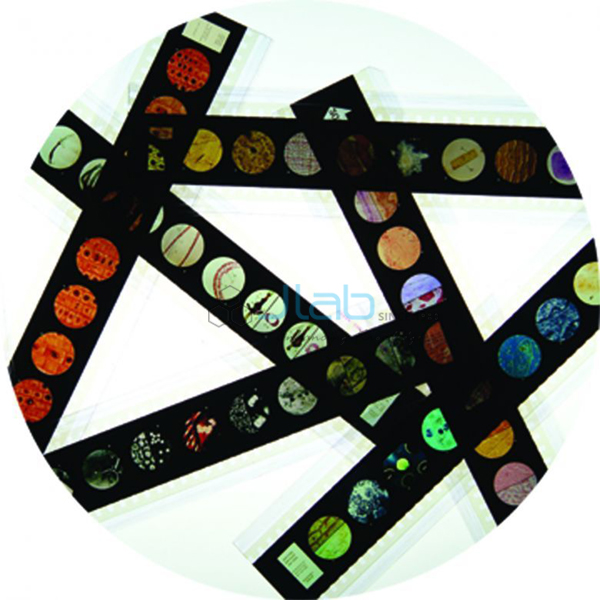
- The Senses Microslide — microscope images that include the cochlea and the organ of Corti.
- Sight and Sound Health — a class kit for investigating sight and hearing.
See all Human Biology Equipments or the full Biology Lab Equipment range.
Request a Quote
Quotes come direct from the manufacturer. Use the Add To Cart enquiry button on this page, or send the quantity (minimum 10 units), any companion ear models and your delivery location through the contact page.
Last updated: 5 October 2026