The Senses Microslide Manufacturer,Supplier and Exporter in India
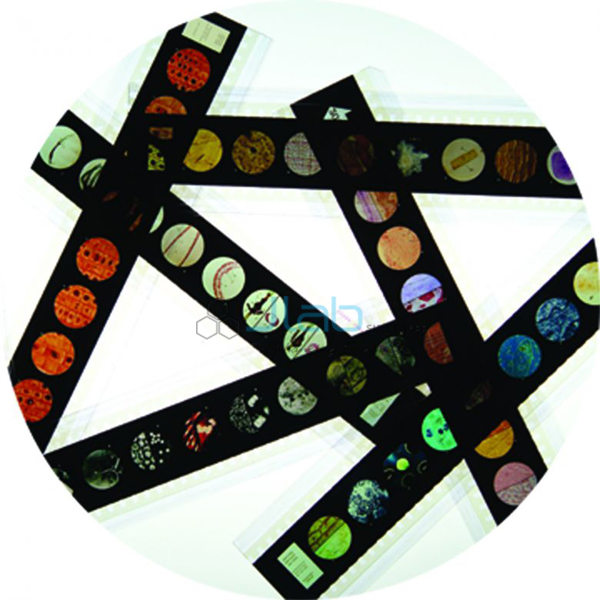
Product Code : EL-HBE-6987
Jlab Export is a leading The Senses Microslide Manufacturer,and suppliers in India
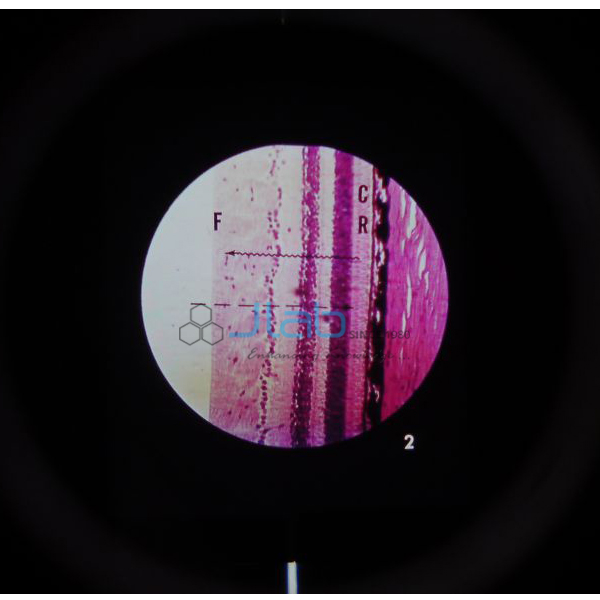
The Senses Microslide (code EL-HBE-6987) is a Microslide set of 35 mm images, photographed through a microscope, that shows the receptors behind touch, smell, taste, sight and hearing — from Pacinian and Meissner’s corpuscles to the organ of Corti, taste buds and the rods and cones of the retina. JLab (Jain Laboratory Instruments Pvt Ltd, Ambala, India) supplies it to schools, colleges and dealers.
Specifications
| Parameter | Detail |
|---|---|
| Format | Microslide: Microslides are described as sets of 8 related 35 mm images photographed through a microscope |
| Subjects (as listed) | Pacinian corpuscles (65x); Meissner’s corpuscles; Pacinian corpuscles (30x); free nerve ending; nasal epithelium; eye; cochlea of the ear; organ of Corti; taste buds; retina; rods and cones |
| Magnifications | 65x and 30x for the two Pacinian corpuscle views; not stated for the other subjects |
| Contents check | The subject list is longer than eight entries, so some images may show more than one feature — ask JLab to confirm the image-by-image contents |
| Labelling | Arrows and callouts help students locate the important features |
| Text folder | Detailed folder designed to stimulate, inform and question students, with a handy pocket to store the Microslide |
| Viewing | Through a Microslide viewer (listed separately) |
| Brand | Microslide |
| Quality check | Each set is visually inspected before dispatch |
| Pack quantity | Each (sold individually) |
| Minimum order quantity | 10 units |
| Dispatch time | Usually 7–10 working days |
| Product code | EL-HBE-6987 |
| Supplied by | Jain Laboratory Instruments Pvt Ltd (JLab), Ambala, India |
What Is The Senses Microslide Used For?
The set lets a class compare the receptors of several senses side by side without cutting or staining tissue. In the skin, Pacinian corpuscles are large, layered capsules lying deep in the dermis that respond to pressure and vibration — shown here at two magnifications — while Meissner’s corpuscles sit just below the epidermis and respond to light touch, and free nerve endings carry pain and temperature. The nasal epithelium lines the nose, and part of it carries the olfactory cells that detect smell; taste buds are clusters of receptor cells on the tongue. In the ear, the coiled cochlea holds the organ of Corti, whose hair cells turn sound vibrations into nerve impulses, and in the eye the retina contains rods, which work in dim light, and cones, which give colour and fine detail.
The images support the class 10 chapter on control and coordination, where receptors for taste and smell are introduced, and later lessons on the eye, the ear and sensory reception in higher-secondary and college physiology and histology classes. As biology teaching aids they work well for revision or for groups sharing one viewer: students find each feature with the arrows and callouts, then answer the questions in the text folder.
What to Specify When Ordering
- Number of sets — the minimum order is 10 units; many schools order one set per viewer.
- Viewers — add Microslide viewers if you need them, as the listing does not say a viewer is included.
- Contents — ask us to confirm the image list if your lesson plan depends on a particular view.
- Companion sets — the nervous system, reflex arc and skin Microslides below extend a unit on the senses.
Frequently Asked Questions
Which sense organs and receptors does this Microslide show?
The listing names Pacinian and Meissner’s corpuscles, a free nerve ending, nasal epithelium, the eye, the cochlea of the ear, the organ of Corti, taste buds, the retina, and rods and cones.
Why are Pacinian corpuscles listed twice?
They appear at 65x and at 30x. Comparing the two views lets students see the corpuscle in its surrounding tissue and then the layered capsule in closer detail.
How many images are in the set?
Microslides are described as sets of 8 related 35 mm images. This listing names more subjects than that, so some images may combine features; ask us to confirm the contents before ordering if it matters for your syllabus.
Is a Microslide viewer included?
The listing does not say so. A Microslide viewer is listed separately and can be added to the same enquiry.
Who supplies The Senses Microslide?
JLab (Jain Laboratory Instruments Pvt Ltd) of Ambala, Haryana, India, which quotes for it directly to schools, colleges, dealers and importers.
Supplier
JLab is the trading name of Jain Laboratory Instruments Pvt Ltd, a science-laboratory equipment company incorporated in 2017 and based on Hargolal Road, Ambala, Haryana. Alongside its own range of biology apparatus and models, it resells Microslide image sets such as this one, so a department can put sets, viewers and lab equipment on one order; each set is checked visually before it is packed. JLab exports worldwide and ships to buyers in every region — for example Botswana in Southern Africa, Chad in Central Africa, Italy in Southern Europe, Qatar in the Middle East and Kenya in East Africa.
Related Microslides, Kits and Models
- Microslide Viewer — designed for viewing Microslides; a white reflector gives enough light in a normally lit classroom, and focusing is by rack and pinion.
- Central Nervous System Microslide — a companion Microslide set on the brain and spinal cord.
- The Reflex Arc Microslide — a Microslide lesson set on the pathway from receptor to response.
- Skin Microslide — a Microslide set on the skin, where the touch receptors lie.
- Sight and Sound Health — a class kit for investigating sight and hearing, with a vision disk, lenses, an eye chart and a pinhole viewer.
- Human Ear Model — a dissectible model showing the external, middle and inner ear.
See all Human Biology Equipments or the full Biology Lab Equipment range.
Request a Quote
Quotes come directly from JLab. Use the Add To Cart enquiry button on this page, or send the number of sets (minimum 10 units), whether you also need viewers, and your delivery location through the contact page.
Last updated: 5 October 2026