

Plastic Pot Manufacturer,Supplier and Exporter in India
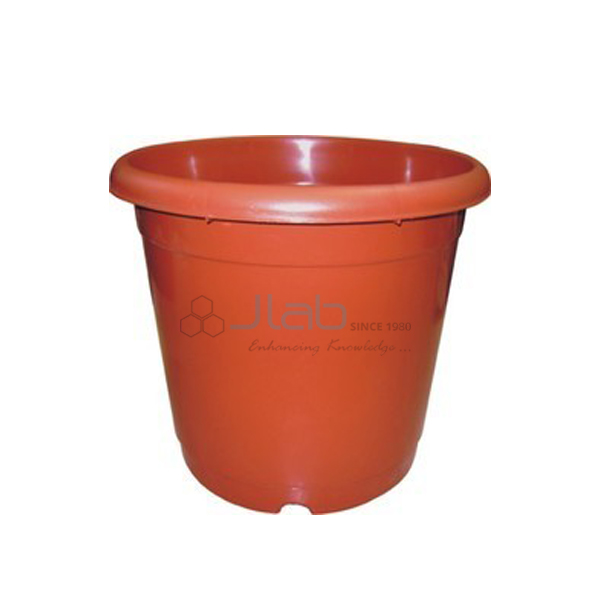
Product Code : EL-ELA-5397
Jlab Export is a leading Plastic Pot Manufacturer,and suppliers in India
Plastic Pot (code EL-ELA-5397) is a durable plastic plant pot used to raise seedlings and potted plants for botany practicals in school and college labs, and for planting in gardens and offices. It comes in a wide variety of styles and in bright colours such as red, green, blue, white, yellow and orange. It is made by Jain Laboratory Instruments Pvt Ltd (JLab) at its works in Ambala, India.
Specifications
| Parameter | Detail |
|---|---|
| Type | Plant pot |
| Material | Durable plastic |
| Colours | Red, green, blue, white, yellow, orange and other colours |
| Range | Wide variety of pots |
| Listed uses | Planting in home gardens and offices; plants in laboratories |
| Quality check | Each pot is visually inspected before dispatch |
| Pack quantity | Each (sold individually) |
| Minimum order quantity | 10 units |
| Dispatch time | Usually 7–10 working days |
| Product code | EL-ELA-5397 |
| Manufacturer | Jain Laboratory Instruments Pvt Ltd (JLab) — OEM |
| Country of origin | India (made in Ambala, Haryana) |
What Is the Plastic Pot Used For?
The pot holds soil around a plant’s roots so that the plant can take up water, natural nutrients and any fertiliser added. In biology lab work it carries the potted plants that many class 6 to class 10 practicals need: watching seeds germinate and seedlings grow, bending shoots towards light, covering a leafy shoot with a polythene bag to show transpiration, and keeping a plant in the dark for a day or two to destarch it before the iodine test that shows light is needed for photosynthesis. Colour-coded pots make it easy to tell treatment and control groups apart. Rinse and dry the pots between experiments so that old soil does not carry over.
What to Specify When Ordering
- Size — give the top diameter or height you need, as the listing does not fix one.
- Colours — one colour or a mix, for example to separate experiment groups.
- Quantity — the minimum order is 10 pots.
Frequently Asked Questions
What colours are available?
Red, green, blue, white, yellow and orange are listed, along with other colours; say which ones you want in your enquiry.
What size are these pots?
The listing does not give sizes. Tell JLab the dimensions you need and the quote will cover them.
Can the pots be used for photosynthesis and germination practicals?
Yes. They hold the soil for seedlings and potted plants used in school germination, growth, tropism, transpiration and photosynthesis experiments.
Who manufactures these pots?
JLab (Jain Laboratory Instruments Pvt Ltd) makes them in Ambala, Haryana, and quotes for them as the manufacturer.
OEM Manufacturer
JLab is the trading name of Jain Laboratory Instruments Pvt Ltd, a biology and botany lab equipment manufacturer in India, incorporated in 2017 and located on Hargolal Road, Ambala, Haryana. The pots are produced at its own works instead of being sourced from traders, so schools, colleges, dealers and importers order factory-direct and every pot is looked over before it is packed. JLab exports worldwide and ships to buyers in every region — for example the Dominican Republic in Central America and the Caribbean, Sri Lanka in South Asia, Georgia in Eastern Europe, Canada in North America and Cameroon in Central Africa. See the lab tenders page for tender enquiries.
Plant Biology Lab Items
- Plantation Pots — moulded polypropylene pots with a downward rim and drain holes.
- Dark Germination Chamber — a wooden case for phototropism experiments with seedlings.
- Plant Growth Chamber — for growing plants under controlled conditions.
- Soil Moisture Meter — a digital meter for checking how wet the soil is.
- Soil pH Test Paper — colour-change paper for checking soil pH.
Browse the full Educational Laboratory Apparatus range or the wider Laboratory Apparatus section.
Request a Quote
Quotes come direct from the manufacturer: use the Add To Cart button, or send the pot size, colours, quantity (minimum 10 units) and delivery location through the contact page.
Last updated: 9 October 2026


