
Stirring Rod Glass Manufacturer,Supplier and Exporter in India
Product Code : EL-SLE-4567
Jlab Export is a leading Stirring Rod Glass Manufacturer,and suppliers in India
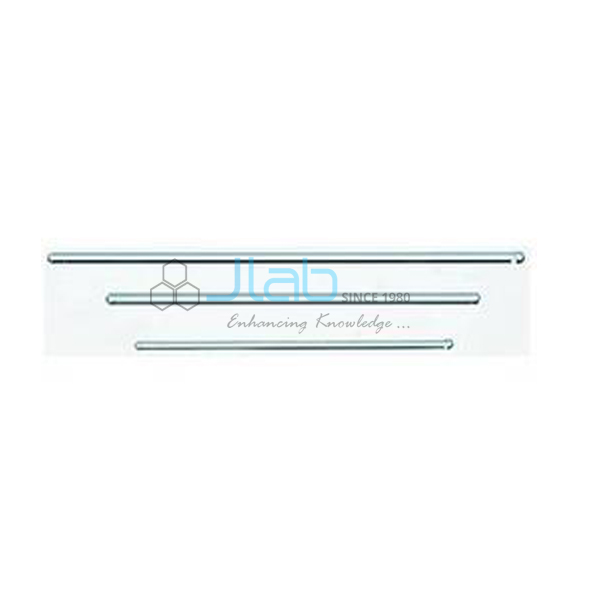
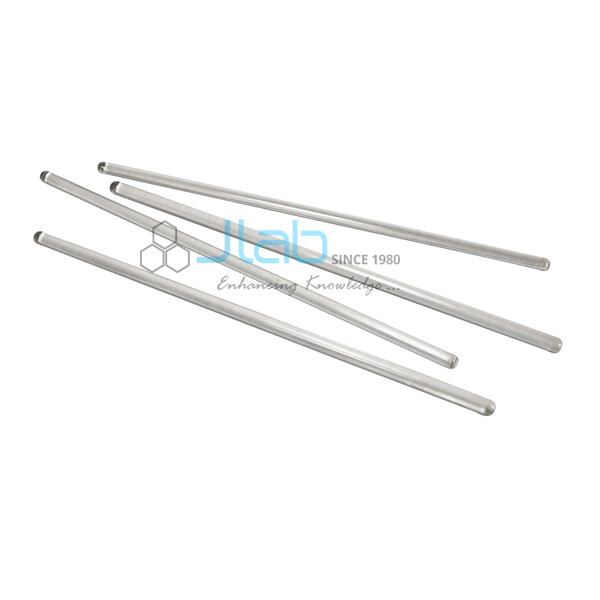
Stirring Rod Glass (code EL-SLE-4567) is a soft-glass stirring rod with rounded ends, 6 inches (about 152 mm) long and 5 mm in diameter, used to stir, mix and pour liquids in school, college and general laboratory work. A basic requirement of any lab, it is the everyday tool for dissolving solids and for guiding a liquid into a filter funnel without splashing. It is made by Jain Laboratory Instruments Pvt Ltd (JLab) at its works in Ambala, India.
Get a quote: use the Add To Cart enquiry button below, or send your quantity and destination through the contact page.
Specifications
| Parameter | Detail |
|---|---|
| Material | Soft glass |
| Ends | Rounded |
| Length | 6 inches (about 152 mm) |
| Diameter | 5 mm |
| Use | Stirring, mixing and pouring liquids in the laboratory |
| Quality check | Each rod is visually inspected before dispatch |
| Pack quantity | Each (sold individually) |
| Minimum order quantity | 10 units |
| Dispatch time | Usually 7–10 working days |
| Product code | EL-SLE-4567 |
| Manufacturer | Jain Laboratory Instruments Pvt Ltd (JLab) — OEM |
| Country of origin | India (made in Ambala, Haryana) |
How Does It Compare with Other JLab Stirring Rods?
| Model | Glass | Size | Listed details |
|---|---|---|---|
| This rod (EL-SLE-4567) | Soft glass | 6 inches (about 152 mm) x 5 mm | Rounded ends |
| Glass Stirring Rod Stir Stick | Borosilicate glass | 25 cm x 5 mm | Heat resistant; chemical resistant; clear |
| Policeman Stirring Rods | Not stated | 6 mm x 245 mm | Flattened ends form two small spatulas; packed 12 pieces |
| Glass Stirring Rods | Solid glass | Not stated | Rounded ends for a safe grip |
Choose this short soft-glass rod for routine stirring in beakers and test-tube work at student benches. The longer borosilicate stir stick suits tall vessels and hot solutions, and the policeman rod doubles as a small spatula for scraping and transferring solids.
What Is a Glass Stirring Rod Used For?
A glass rod is among the first pieces of chemistry lab glassware a student handles. It stirs a solid into water until it dissolves, mixes reagents in a beaker, and keeps a solution moving while crystals form on cooling. In filtration, a liquid is poured down the rod into the filter funnel so it runs gently onto the filter paper instead of splashing — a technique taught with the separation of mixtures in middle school and class 9. In class 10 work on acids, bases and salts, the tip of a clean rod carries a single drop of solution onto litmus or pH paper. Glass is used because it is inert to most school reagents and easy to see through and clean.
The rounded ends protect the inside of beakers and flasks from scratches. Soft glass is generally soda-lime glass, which tolerates sudden temperature changes less well than borosilicate, so do not heat the rod in a flame or plunge a cold rod into a boiling liquid. Stir gently rather than levering against the glass, and rinse the rod between solutions so one test does not contaminate the next.
What to Specify When Ordering
- Quantity — the minimum order is 10 rods; most schools stock one per student place plus spares for breakage.
- Glass type — this soft-glass rod for routine stirring, or the borosilicate stir stick if your work involves hot solutions.
- Beakers and brushes — add beakers and beaker brushes to the same enquiry to complete a bench set.
Frequently Asked Questions
What size is this stirring rod?
It is 6 inches long, about 152 mm, and 5 mm in diameter, with both ends rounded.
What does soft glass mean?
Soft glass usually refers to soda-lime glass, which softens at a lower temperature than borosilicate glass and is less resistant to sudden heating. It is well suited to stirring solutions at room temperature or when warm.
Can I stir hot solutions with it?
Warm solutions are fine, but avoid putting a cold rod straight into a boiling liquid or heating it directly. For hot work, the borosilicate stir stick listed separately is the better choice.
Why are the ends rounded?
Rounded ends do not scratch the inside of beakers and flasks, and they are safer to hold than a sharp cut end.
How is a glass rod used in filtration?
Hold the rod against the lip of the beaker and pour the liquid down it into the filter funnel. The liquid follows the rod and reaches the filter paper without splashing or running down the outside of the beaker.
What is the minimum order and dispatch time?
The minimum order is 10 units, sold individually. Dispatch is usually within 7–10 working days after each rod is visually inspected; transit for export orders is extra.
What should I send for an export quotation?
The quantity, destination country and port or city, delivery terms such as FOB or CIF, packing or labelling needs for glassware, and the tender reference where applicable.
Who manufactures the Stirring Rod Glass?
JLab (Jain Laboratory Instruments Pvt Ltd) makes it at its works in Ambala, Haryana, India.
OEM Manufacturer
JLab is the trading name of Jain Laboratory Instruments Pvt Ltd, a chemistry lab glassware and school lab equipment manufacturer in India, incorporated in 2017 and based on Hargolal Road, Ambala, Haryana. The stirring rod is made at JLab’s own works rather than bought in from a trader, so schools, colleges, dealers and importers order it factory-direct, each rod is visually inspected before packing, and repeat orders go straight back to the manufacturer. JLab exports worldwide and ships to buyers in every region — Belgium in Western Europe, Trinidad and Tobago in Central America and the Caribbean, Greece in Southern Europe, Laos in Southeast Asia and Kuwait in the Middle East are a few of them. Tender buyers can find details on the JLab lab tenders page.
Bench Glassware and Cleaning
- Beaker — transparent polypropylene squat-form beakers in several capacities.
- Beaker Brush — an oval brush for cleaning beakers after stirring.
- Glass Stirring Rod Stir Stick — a longer borosilicate rod for hot solutions.
- Policeman Stirring Rods — stirrers with flattened spatula ends.
See the full School Lab Equipment range for more bench items.
Request a Quote
Quotes come directly from the manufacturer. Use the Add To Cart enquiry button on this page, or send the number of rods (minimum 10 units), any beakers or brushes you also need, and your delivery location through the contact page.
Last updated: 4 October 2026