
Understanding Biotechnology Techniques Manufacturer,Supplier and Exporter in India
Product Code : EL-BE-6717
Jlab Export is a leading Understanding Biotechnology Techniques Manufacturer,and suppliers in India
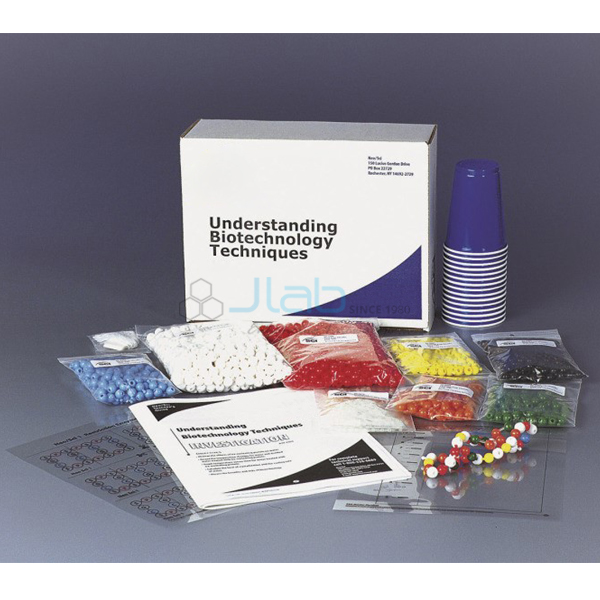
Understanding Biotechnology Techniques (code EL-BE-6717) is a reusable simulation kit used to teach gel electrophoresis and restriction enzymes in school and college biology classes. Students assemble DNA strands from pop-beads, digest them with restriction enzymes and electrophorese them on a paper gel — every step is simulated, so no laboratory equipment is needed. It is made by Jain Laboratory Instruments Pvt Ltd (JLab) at its works in Ambala, India.
Get a quote: use the Add To Cart enquiry button below, or send your quantity and destination through the contact page.
Specifications
| Parameter | Detail |
|---|---|
| Kit type | Simulation activity kit for learning biotechnology techniques |
| Student activities | Assembling DNA strands from pop-beads, digesting them with restriction enzymes and electrophoresing them on a paper gel |
| Topics covered | Principles of electrophoresis; action of restriction enzymes; creation of recombinant organisms; applications of the process in biology and medicine |
| Equipment needed | None — every step of electrophoresis is simulated |
| Prior knowledge needed | None |
| Reusability | Completely reusable |
| Class size | 40 students |
| Quality check | Each kit is visually inspected before dispatch |
| Pack quantity | Each (sold individually) |
| Minimum order quantity | 10 units |
| Dispatch time | Usually 7–10 working days |
| Product code | EL-BE-6717 |
| Manufacturer | Jain Laboratory Instruments Pvt Ltd (JLab) — OEM |
| Country of origin | India (made in Ambala, Haryana) |
What Is the Understanding Biotechnology Techniques Kit Used For?
Restriction enzymes and gel electrophoresis are core ideas in the biotechnology topics of class 12 biology (CBSE and ICSE) and in introductory college courses in biotechnology and molecular biology, yet many schools have no electrophoresis tank, power supply or DNA samples. With this biotechnology lab kit a class of up to 40 students works through the whole process by hand: they build DNA strands from pop-beads, cut them with restriction enzymes and separate the pieces on a paper gel. In a real agarose gel, DNA fragments carry a negative charge and move towards the positive electrode, with smaller fragments travelling further; the paper gel lets students model that separation and see why it works.
The activities then lead on to how recombinant organisms are created and how these techniques are applied in biology and medicine. Because the kit needs no equipment or prior knowledge, it works as a stand-alone lesson where electrophoresis apparatus is not available, or as preparation before students run real gels. After each lesson, count the parts back into the kit so it is complete for the next class.
What to Specify When Ordering
- Number of kits — each kit is listed for a class size of 40 students; the minimum order is 10 kits, which suits dealers and school groups ordering for several schools.
- Wet-lab follow-on — if students will go on to run real gels, add an electrophoresis unit or gel electrophoresis kit (separate items, linked below) to the same enquiry.
- Delivery details — destination country and port or city, preferred delivery terms and any tender reference.
Frequently Asked Questions
What does the Understanding Biotechnology Techniques kit teach?
The principles behind electrophoresis, the action of restriction enzymes and the creation of recombinant organisms, with their applications in biology and medicine — learned by building, cutting and separating pop-bead DNA.
Does it need an electrophoresis tank or power supply?
No. Every step of electrophoresis is simulated and the DNA strands are run on a paper gel, so the kit is used without laboratory equipment. Electrophoresis units for real agarose gels are separate JLab items.
How many students can one kit serve?
The kit is listed for a class size of 40 students; for several sections or schools, tell JLab the total number of students when you enquire.
Can the kit be used again with the next class?
Yes. It is completely reusable — nothing is consumed in the activities, which are carried out with pop-beads and a paper gel.
What is the minimum order and dispatch lead time?
The minimum order is 10 units, supplied as individual kits. Orders are usually dispatched within 7–10 working days after each kit has been visually inspected; transit time for export orders depends on the destination and shipping method.
What information is needed for an export quotation?
Send the number of kits, the destination country and port or city, your preferred delivery terms (for example FOB or CIF), any packing or labelling needs, and the tender reference if the purchase is for a tender.
Who manufactures this kit?
Jain Laboratory Instruments Pvt Ltd, trading as JLab, makes it at its works in Ambala, Haryana, India, and supplies it directly as the manufacturer.
OEM Manufacturer
JLab is the trading name of Jain Laboratory Instruments Pvt Ltd, an educational laboratory equipment manufacturer in India, incorporated in 2017 and based on Hargolal Road, Ambala, Haryana. Its biology and biotechnology teaching kits are produced at the company’s own works rather than bought in from a trader, so schools, colleges, dealers and importers buy them factory-direct; every kit is visually inspected before dispatch, and repeat orders are handled by the manufacturer itself. JLab exports worldwide and ships to buyers in every region — for example Gambia in West Africa, Kenya in East Africa, Lesotho in Southern Africa, the USA in North America and Tajikistan in Central Asia. Education departments buying through tenders will find details on the JLab lab tenders page.
Related Biotechnology Teaching Kits
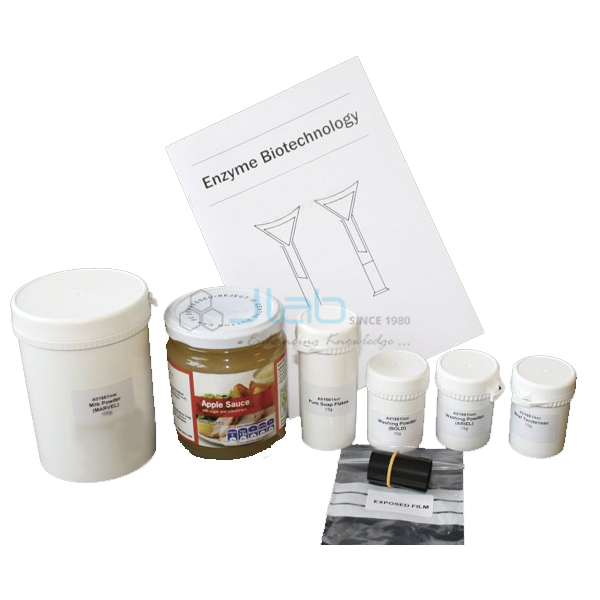
- Enzyme Biotechnology Kit — experiments on industrial enzymes such as rennet in cheese production and pectinase in fruit juice production.
- Recombinant DNA Technology Model — a teaching model of how a gene is joined into a vector such as a plasmid and introduced into a host cell.
- Electrophoresis Classroom Kit — a working electrophoresis unit with a UV-transparent acrylic chamber and casting trays, for running real gels.
- Gel Electrophoresis Kit — listed for at least 8 groups of students, for the step from paper simulation to real gels.
- DNA Fingerprinting Classroom Kit — a wet-lab kit with DNA samples, restriction enzyme and agarose for a crime-scene fingerprinting practical.
See the full Biotechnology Equipments range or the wider Biology Lab Equipment range.
Request a Quote
Quotes come direct from the manufacturer. Use the Add To Cart enquiry button on this page, or send the number of kits (minimum 10 units), any electrophoresis apparatus or companion kits you want quoted with them, and your delivery location through the contact page.
Last updated: 4 October 2026