Absorption in Packed Column Manufacturer,Supplier and Exporter in India
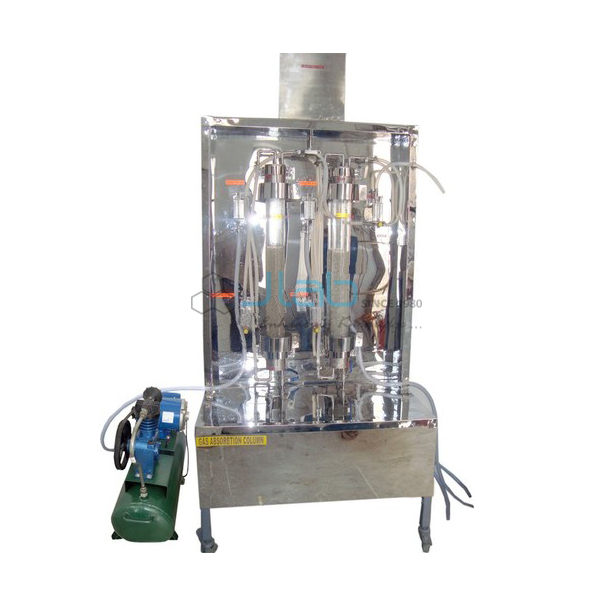
Product Code : EL-TWL-9103
Jlab Export is a leading Absorption in Packed Column Manufacturer,and suppliers in India
Gas and liquid meet in a glass packed column in this absorption unit, so students can watch the liquid spread over the packing as the flows change. Work centres on the pressure drop across the packed bed, the figure used to size a column diameter. The unit also handles humidification and stripping runs and needs no further development work before use.
Specifications
| Column | Glass, packed bed |
| Process | Mass transfer between absorbing liquid and feed gas |
| Hydraulic study | Pressure drop across the packed bed |
| Studies | Gas absorption, humidification, stripping |
| Viewing | Whole process visible through the glass |
| Use | Teaching, project and research work |
| Minimum order quantity | 1 unit |
| Dispatch time | Usually 14–18 working days |
| Manufacturer | JLab (Jain Laboratory Instruments Pvt Ltd), Ambala, India |
Pressure Drop and Absorption Experiments
The first run is pressure drop. At a fixed liquid rate, students raise the gas flow in steps and read the pressure drop across the bed on a U Tube Manometer. On a log plot of pressure drop against gas rate they mark the loading point, where the slope rises. They also mark the flooding point, where liquid builds up above the packing.
Absorption runs follow at gas rates below flooding. Liquid samples from the foot of the column are titrated from a Burette to compare how much gas is taken up at different liquid rates. A stripping run reverses the process. In a humidification run with air and water, a Digital Stem Thermometer shows how the outlet air temperature changes with liquid rate.
Frequently Asked Questions
What is the flooding point?
As gas flow rises at a fixed liquid rate, the gas starts to hold liquid up in the packing. At flooding, liquid gathers above the bed and the pressure drop climbs steeply. Columns are run well below this point, and the measured value helps set the column diameter.
Why measure the dry bed first?
A dry run gives the pressure drop of the packing alone. Wet runs at set liquid rates then show how the held-up liquid narrows the gas path. The gap between the dry and wet lines widens as loading begins.
What can be studied besides absorption?
Humidification, where air picks up water vapour from the liquid, and stripping, where a dissolved gas leaves the liquid for the gas stream. The glass column keeps every run in view, which suits project and research work too.
How does it differ from a wetted wall column?
Here the liquid spreads over packing, which gives a large contact area and real column hydraulics with loading and flooding. A wetted wall column runs a thin film down a plain tube of known area and is used for basic mass transfer coefficients.
Other Absorption and Mass Transfer Units
- Gas Absorption Column (wetted wall column with oxygen probes)
- Gas-Liquid Absorption Column
- Sieve Plate Distillation Column
For a quote, use Add To Cart or send us a message through the contact page.
Last updated: 6 November 2026