Ball and Ring Apparatus Manufacturer,Supplier and Exporter in India
Product Code : EL-SLE-4805
Jlab Export is a leading Ball and Ring Apparatus Manufacturer,and suppliers in India
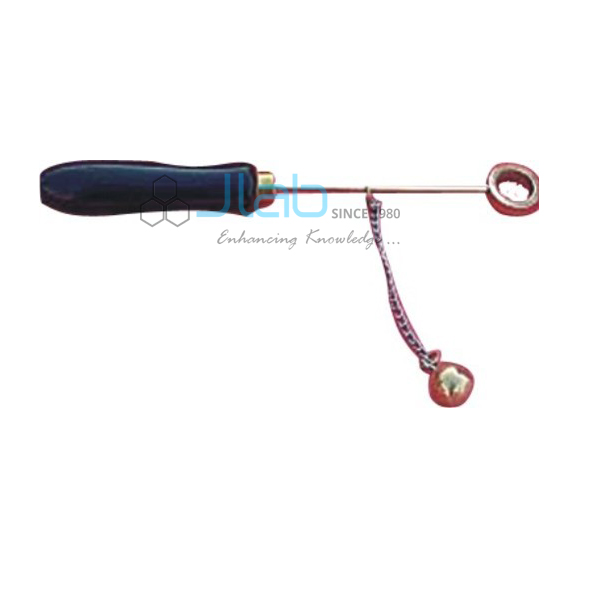
Ball and Ring Apparatus (code EL-SLE-4805) is a demonstration set for showing the thermal expansion of a solid: a 19 mm brass ball on a plastic handle, joined by a chain to a brass ring. Once heated, the ball will no longer pass through the ring, and when it cools it passes through again — a quick, visible result for school science and physics lessons on heat. It is made by Jain Laboratory Instruments Pvt Ltd (JLab) at its works in Ambala, India.
Specifications
| Parameter | Detail |
|---|---|
| Purpose | Demonstrating thermal expansion |
| Ball | Brass, 19 mm |
| Handle | Plastic |
| Ring | Brass, attached to the ball by a chain |
| Quality check | Each apparatus is visually inspected before dispatch |
| Pack quantity | Each (sold individually) |
| Minimum order quantity | 10 units |
| Dispatch time | Usually 7–10 working days |
| Product code | EL-SLE-4805 |
| Manufacturer | Jain Laboratory Instruments Pvt Ltd (JLab) — OEM |
| Country of origin | India (made in Ambala, Haryana) |
How Does It Compare with Other JLab Ball and Ring Sets?
| Model | Ball and ring | Mounting |
|---|---|---|
| This apparatus (EL-SLE-4805) | 19 mm brass ball and a brass ring | Ball on a plastic handle; ring attached to the ball by a chain |
| Ball and Ring Physics | Brass ball and brass ring | Each part individually mounted on a brass rod with a wooden handle |
Choose this chained set when you want the ball and ring kept together so neither part goes missing between lessons. The Ball and Ring Physics set mounts the ring on its own rod and wooden handle, which makes it easier to heat the ring as well as the ball.
What Is the Ball and Ring Apparatus Used For?
At room temperature the brass ball slips through the ring. The teacher then heats the ball in a Bunsen flame and tries again: the ball rests on the ring and will not pass, because the metal has expanded in every direction. Left to cool — or cooled in water — it contracts and drops through once more. The demonstration introduces the expansion of solids in middle-school science, supports the thermal properties of matter in class 11 physics, and opens discussion of why engineers leave gaps in rails and bridges and why a tight metal lid loosens under hot water.
Heat only the brass ball and keep the plastic handle well out of the flame. Let students observe from a short distance, place the hot ball on a heat-resistant mat rather than the bench, and dry the parts after cooling them in water so the brass stays clean and the fit stays consistent.
What to Specify When Ordering
- Quantity — the minimum order is 10 units, enough for a demonstration set plus sets for group work.
- Style — this chained set with a plastic handle, or the Ball and Ring Physics set with separate wooden-handled rods.
- Other heat apparatus — add bar and gauge sets, Bunsen burners or heat-resistant mats to the same enquiry.
Frequently Asked Questions
How does the ball and ring experiment work?
The cold ball passes through the ring. After heating, the ball has expanded and no longer fits; when it cools it contracts and passes through again, showing that solids expand on heating and contract on cooling.
What size is the ball?
The brass ball is 19 mm. The listing does not give the ring’s dimensions, so ask JLab if you need them for a tender schedule.
Can the ring be heated instead of the ball?
Heating a ring enlarges its hole, so a heated ring lets the ball pass more easily. In this set the ring is joined to the ball by a chain, so the ball is the part normally heated; the Ball and Ring Physics set gives the ring its own handle.
Why are the ball and ring made of brass?
Brass expands noticeably when heated, more than iron or steel, and it does not rust, so the parts keep a clean, consistent fit through repeated heating and cooling.
Can the plastic handle be held in the flame?
No. Heat only the brass ball and keep the plastic handle away from the flame and from hot surfaces.
Who manufactures the ball and ring apparatus?
Jain Laboratory Instruments Pvt Ltd (JLab) produces it in Ambala, Haryana, India, and sells it direct as the manufacturer.
OEM Manufacturer
JLab is the trading name of Jain Laboratory Instruments Pvt Ltd, an Indian maker of school laboratory and physics teaching equipment, incorporated in 2017 and based on Hargolal Road, Ambala, Haryana. This apparatus comes from JLab’s own works rather than from a trader, which means schools, colleges, dealers and importers buy it at source, every unit is visually inspected before it ships, and follow-up orders go straight back to the manufacturer. JLab exports worldwide and ships to buyers in every region — for example Kazakhstan in Central Asia, New Zealand in Oceania, Honduras in Central America and the Caribbean, Germany in Western Europe and Canada in North America.
More Heat and Expansion Apparatus
- Ball and Ring Physics — a brass ball and ring, each on a brass rod with a wooden handle.
- Bar and Gauge Apparatus (Aluminium) — an aluminium bar and brass-plated gauge on insulated handles for linear expansion.
- Bar and Gauge Physics — a mild-steel bar and brass gauge set.
- Bar Breaking Apparatus — shows the force exerted when a heated bar contracts.
- Bunsen Burner with a Spare Jet — a gas burner for heating the ball.
See the full School Lab Equipment range.
Request a Quote
Quotes come direct from the manufacturer. Use the Add To Cart enquiry button on this page, or send the quantity (minimum 10 units), any other heat apparatus you need, and your delivery location through the contact page.
Last updated: 4 October 2026