Leaf Model Manufacturer,Supplier and Exporter in India
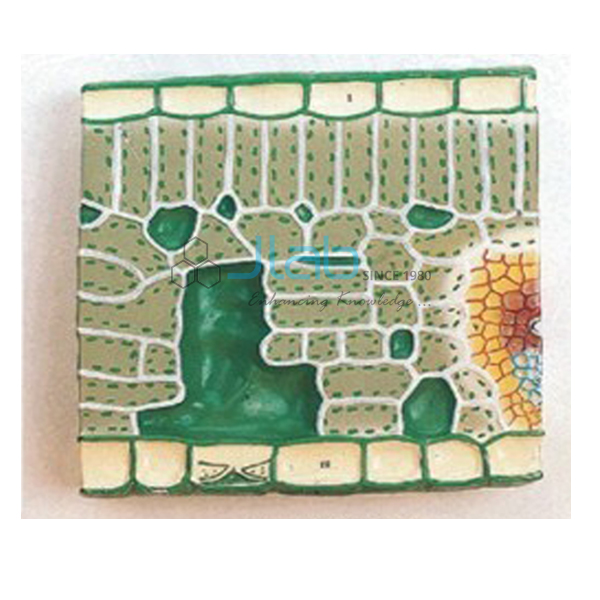
Product Code : EL-SLE-5586
Jlab Export is a leading Leaf Model Manufacturer,and suppliers in India
Leaf Model (code EL-SLE-5586) is a large-size teaching model of the internal structure of a leaf, used in school biology and college botany classes to show how the tissues inside a leaf are arranged for photosynthesis and gas exchange. Its large size lets a teacher demonstrate it to a whole class at once. It is made by Jain Laboratory Instruments Pvt Ltd (JLab) at its works in Ambala, India.
Specifications
| Parameter | Detail |
|---|---|
| Subject | Internal structure of a leaf |
| Size | Large |
| Quality check | Each model is visually inspected before dispatch |
| Pack quantity | Each (sold individually) |
| Minimum order quantity | 10 units |
| Dispatch time | Usually 7–10 working days |
| Product code | EL-SLE-5586 |
| Manufacturer | Jain Laboratory Instruments Pvt Ltd (JLab) — OEM |
| Country of origin | India (made in Ambala, Haryana) |
How Does It Compare with Other JLab Leaf Models?
| Model | What it shows | Listed details |
|---|---|---|
| This Leaf Model (EL-SLE-5586) | Internal structure of a leaf | Large size |
| Dicot Leaf TS | Internal structure of a dicot leaf in transverse section | On a board, with a numbered key card |
| Monocot Leaf TS | Internal structure of a monocot leaf in transverse section | On a board, with a numbered key card |
| Lima Bean Leaf Structure Model | Transverse and longitudinal sections, upper and lower epidermis, palisade and spongy mesophyll | Plastic model, magnified from a lima bean leaf |
Choose this model when you want one large general model of leaf structure for classroom demonstration. If your syllabus compares dicot and monocot leaves, the two TS models with numbered key cards are listed for that, and the lima bean model is the one whose listing details both sections and the mesophyll layers.
What Is the Leaf Model Used For?
Inside a leaf, an upper and a lower epidermis covered by a waxy cuticle enclose the mesophyll — tightly packed palisade cells rich in chloroplasts above, loosely arranged spongy cells with air spaces below — while veins carry xylem and phloem, and stomata bordered by guard cells let carbon dioxide in and water vapour out. A model makes these layers visible at a size no microscope slide can match for a whole class. It supports class 7 science on nutrition in plants, class 10 lessons on photosynthesis and stomata, and class 11 biology on the anatomy of flowering plants, including the difference between dorsiventral (dicot) and isobilateral (monocot) leaves. In botany lab equipment for colleges it sits alongside prepared slides, so students can match what they see under the microscope to a large model.
The listing does not name the labelled tissues, so check them against your syllabus when you enquire. Keep the model out of direct sunlight, dust it with a soft cloth, and store it in a closed cupboard between lessons.
What to Specify When Ordering
- Leaf type — say whether you need a general, dicot or monocot leaf structure; separate dicot and monocot TS models are also listed.
- Labelling — ask whether a key card or labels come with this model if students will use it for self-study.
- Quantity — the minimum order is 10 models, which suits a group of schools or a dealer stocking several labs.
- Matching slides and charts — add stomata slides or a leaf section chart to the same enquiry for a complete leaf-anatomy lesson.
Frequently Asked Questions
What does the Leaf Model show?
The internal structure of a leaf, made in a large size for classroom demonstration. The listing does not specify the plant or whether the leaf is dicot or monocot.
Which classes use a leaf structure model?
It fits class 7 and class 10 science lessons on photosynthesis and stomata, class 11 biology on plant anatomy, and introductory college botany.
Is it a dicot or a monocot leaf?
The listing does not say. JLab also lists a Dicot Leaf TS and a Monocot Leaf TS model, each on a board with a numbered key card, so state which you need when you ask for a quote.
How is it different from the lima bean leaf structure model?
The lima bean model is listed as a plastic model showing transverse and longitudinal sections, both epidermal layers and the palisade and spongy mesophyll. This listing gives its subject and large size only; ask JLab if you need the two compared in detail.
What should I include in an export enquiry?
The quantity, destination country and port or city, delivery terms such as FOB or CIF, any packing or labelling instructions, and the tender reference where relevant.
Who manufactures this leaf model?
Jain Laboratory Instruments Pvt Ltd, trading as JLab, at its works in Ambala, Haryana, India; it quotes for the model directly.
OEM Manufacturer
JLab is the trading name of Jain Laboratory Instruments Pvt Ltd, a manufacturer of botany and biology teaching models and school lab apparatus in India, incorporated in 2017 and based on Hargolal Road, Ambala, Haryana. The leaf model is produced in JLab’s own works rather than bought from a trader, so schools, colleges, dealers and importers buy it factory-direct; each model is inspected by eye before dispatch, and follow-up orders come from the same manufacturer. JLab exports worldwide and ships to buyers in every region — for example Uganda in East Africa, the USA in North America, Vietnam in Southeast Asia, Bolivia in South America and Portugal in Southern Europe. Tender buyers can find details on the JLab lab tenders page.
Leaf Anatomy Teaching Aids
- Stomata Leaf Prepared Slide — shows the structure of leaf stomata under the microscope.
- T.S Leaf - Monocot Chart — a laminated botany wall chart of a monocot leaf in transverse section.
- Dicot Leaf TS — a dicot leaf section model on a board with a numbered key card.
- Lima Bean Leaf Structure Model — a plastic model showing both sections and the mesophyll layers.
Find more models and apparatus in the School Lab Equipment range.
Request a Quote
Quotes come direct from the manufacturer. Use the Add To Cart enquiry button on this page, or send the quantity (minimum 10 units), the leaf type you need, any slides or charts to add, and your delivery location through the contact page.
Last updated: 4 October 2026