Beranger Balance Manufacturer,Supplier and Exporter in India
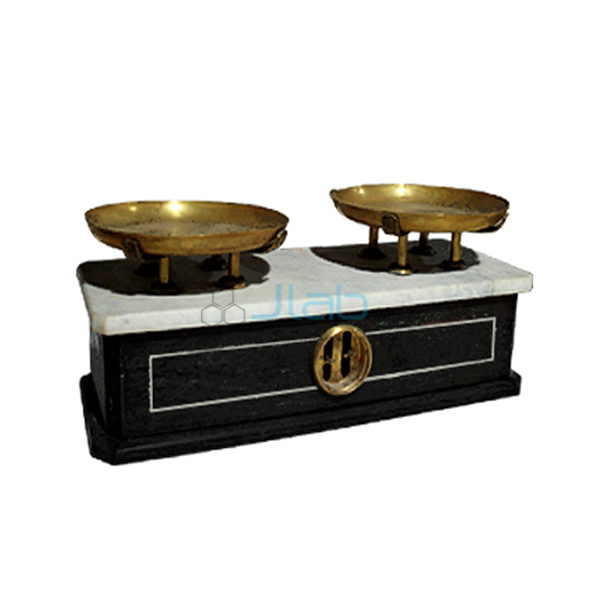
Product Code : EL-ELA-5237
Jlab Export is a leading Beranger Balance Manufacturer,and suppliers in India
Beranger Balance (code EL-ELA-5237) is a two-platform weighing balance — one platform carries the weight plate and the other the weighing pan — used to measure materials against weight blocks in school and general laboratories. It is easily portable and is described as needing no maintenance. It is made by Jain Laboratory Instruments Pvt Ltd (JLab) at its works in Ambala, India.
Specifications
| Parameter | Detail |
|---|---|
| Type | Two-platform balance |
| Platforms | One carries the weight plate, the other the weighing pan |
| Weighing method | Materials are measured with the help of different weight blocks |
| Portability | Easily portable |
| Maintenance | Described as needing no maintenance |
| Quality check | Each balance is visually inspected before dispatch |
| Pack quantity | Each (sold individually) |
| Minimum order quantity | 10 units |
| Dispatch time | Usually 7–10 working days |
| Product code | EL-ELA-5237 |
| Manufacturer | Jain Laboratory Instruments Pvt Ltd (JLab) — OEM |
| Country of origin | India (made in Ambala, Haryana) |
What Is the Beranger Balance Used For?
It works by comparison: the material goes on the weighing pan and weight blocks go on the weight plate until the two platforms balance, and the total of the blocks then gives the mass of the material. Because the student adds the weights by hand, it teaches what mass measurement actually means better than a digital readout, which makes it useful in primary and middle-school science and maths lessons on mass as well as for everyday weighing of materials in a lab or store room. Being portable, it can move between classrooms; place it on a level surface, check that the empty platforms balance before weighing, and lower the weights gently rather than dropping them.
What to Specify When Ordering
- Quantity — the minimum order is 10 units.
- Capacity — tell JLab the heaviest load you need to weigh.
- Weight blocks — ask whether weights are supplied, or add a weight box to the same enquiry.
Frequently Asked Questions
How does a Beranger balance work?
The material sits on the weighing pan and weight blocks are placed on the weight plate until the platforms balance; the sum of the blocks is the mass of the material.
Are the weight blocks included?
The listing does not say. Ask JLab when you enquire, or order a separate weight box with the balance.
Is it easy to move and maintain?
Yes. It is easily portable and is described as needing no maintenance, which suits schools that share one balance between rooms.
Who manufactures the Beranger Balance?
Jain Laboratory Instruments Pvt Ltd (JLab), at its works in Ambala, Haryana, India.
OEM Manufacturer
JLab is the trading name of Jain Laboratory Instruments Pvt Ltd, a manufacturer of school science and laboratory equipment in India, incorporated in 2017 and based on Hargolal Road, Ambala, Haryana. The balance is produced in JLab’s own works rather than bought from a trader, so schools, dealers and importers order it factory-direct and every unit is visually checked before dispatch. JLab exports worldwide and ships to buyers in every region — for example Uruguay in South America, Sudan in North Africa, Mongolia in East Asia, Tanzania in East Africa and Cameroon in Central Africa.
Weights and Other Balances
- Physical Weight Boxes (Brass C.P) — chrome-plated brass weights in a polished teak box with forceps and fraction weights.
- Double Beam Balance — a mechanical two-pan balance with two centre-reading beams.
- Triple Beam Balance — a single-pan mechanical balance with sliding masses on three beams.
- Digital Electronic Balances — power-operated balances with automatic calibration and a backlit LCD.
More equipment is in the Educational Laboratory Apparatus range and the wider Laboratory Apparatus section.
Request a Quote
JLab quotes as the manufacturer. Use the Add To Cart enquiry button or the contact page with the quantity (minimum 10 units), the capacity you need and your delivery location.
Last updated: 9 October 2026