Clinostat Electric Manufacturer,Supplier and Exporter in India
Product Code : EL-PE-7535
Jlab Export is a leading Clinostat Electric Manufacturer,and suppliers in India
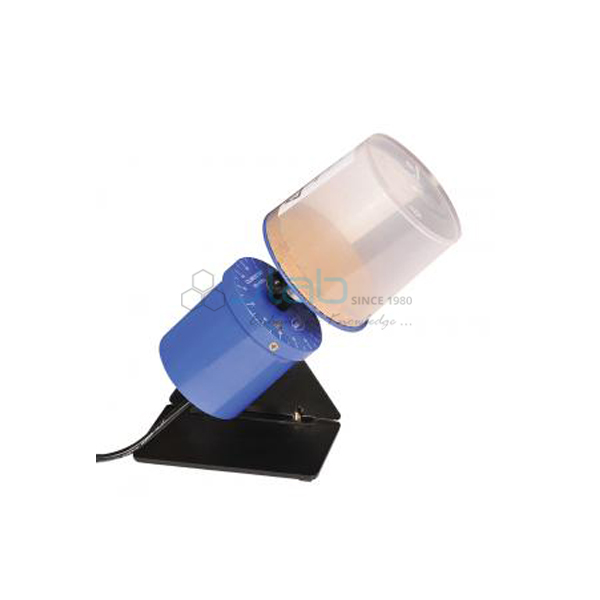
Clinostat Electric (code EL-PE-7535) is a motor-driven clinostat for studies of geotropism and phototropism on seedlings, cut shoots and small potted plants in school and college biology labs. Its motor turns a cork-faced disc at 5 revolutions per hour on 220 V, 50 Hz mains, and the angle is adjustable by a thumb screw. It is made by Jain Laboratory Instruments Pvt Ltd (JLab) at its works in Ambala, India.
Get a quote: use the Add To Cart enquiry button below, or send your quantity and destination through the contact page.
Specifications
| Parameter | Detail |
|---|---|
| Drive | Electric motor |
| Rotation speed | 5 revolutions per hour (one turn every 12 minutes) |
| Power supply | 220 V, 50 Hz |
| Cable | Supplied complete with 3-core cable |
| Height | 300 mm |
| Specimen holder | Cork-lined (cork-faced) disc on which seedlings are pinned, with a fitting to take a specimen tube |
| Disc diameter | Confirm with JLab — the listing gives two different figures |
| Angle adjustment | By thumb screw; clear plastic cover |
| Suitable for | Seedlings, cut shoots and small potted plants |
| Quality check | Each clinostat is visually inspected before dispatch |
| Pack quantity | Each (sold individually) |
| Minimum order quantity | 10 units |
| Dispatch time | Usually 7–10 working days |
| Product code | EL-PE-7535 |
| Manufacturer | Jain Laboratory Instruments Pvt Ltd (JLab) — OEM |
| Country of origin | India (made in Ambala, Haryana) |
How Does It Compare with the Clock-Type Clinostat?
| Model | Drive | Rotation | Other listed details |
|---|---|---|---|
| This clinostat (EL-PE-7535) | Electric motor, 220 V, 50 Hz | 5 revolutions per hour | Angle adjustable by thumb screw; cork-faced disc for pinned seedlings; fitting for a specimen tube |
| Clinostat Clock Type | Hand-wound clock mechanism, no mains needed | One revolution every hour, for 24 hours | Works horizontal or vertical; plant in a pot; solid metal base |
Choose the electric clinostat for a lab with mains power that wants continuous, faster rotation and an adjustable angle for pinned seedlings; the clock-type model suits rooms without a reliable supply.
What Is the Electric Clinostat Used For?
A clinostat cancels a one-sided stimulus by turning the plant slowly so that the stimulus acts on every side in turn. With seedlings pinned to the rotating cork disc and the axis set horizontal, gravity no longer acts from one fixed direction, so the shoots and roots grow straight on instead of curving; a second set of seedlings left stationary on its side curves upward and downward as a control. The same idea works for light: rotating a shoot evenly in one-sided light removes the bending seen in a stationary plant. The experiment supports tropism lessons in class 10 biology (control and coordination in plants), class 11 plant growth and development, and college plant physiology.
Pin soaked seedlings firmly to the cork, keep them moist, and run the clinostat and the control side by side for the same time before comparing them. Connect the 3-core cable only to an earthed 220 V socket, keep water away from the motor, and switch off at the mains before adjusting the angle or changing specimens.
What to Specify When Ordering
- Quantity — the minimum order is 10 clinostats.
- Disc size — ask JLab to confirm the disc diameter supplied, as the listing gives two figures.
- Mains supply — the unit is listed for 220 V, 50 Hz; state your supply if it differs.
- Companion apparatus — add a clock-type clinostat or a dark germination chamber for phototropism work if needed.
Frequently Asked Questions
How fast does the electric clinostat turn?
The motor rotates 5 revolutions per hour, which is one complete turn every 12 minutes — slow enough not to disturb the seedlings but fast enough to spread the gravity or light stimulus evenly.
What power supply does it need?
220 V, 50 Hz mains. It is supplied complete with a 3-core cable, so use an earthed socket.
Can the angle of rotation be changed?
Yes. The angle is adjustable by a thumb screw, so the disc can be set to the position your experiment needs, such as a horizontal axis for geotropism work.
What is the disc diameter?
The listing gives two figures for the cork-faced disc, so the size is not confirmed here. Ask JLab to state the disc diameter in your quotation.
How does it differ from the clock-type clinostat?
This model is driven by an electric motor at 5 revolutions per hour with an adjustable angle and a cork disc for pinned seedlings. The clock-type clinostat is hand-wound, turns once an hour for 24 hours, and carries a potted plant on a metal base.
What is the minimum order and dispatch lead time?
The minimum order is 10 units, supplied individually. Orders usually leave within 7–10 working days after each clinostat is visually inspected; export transit time depends on the destination.
Who manufactures the Clinostat Electric?
Jain Laboratory Instruments Pvt Ltd, trading as JLab, makes it at its works in Ambala, Haryana, India, and quotes directly as the manufacturer.
OEM Manufacturer
JLab is the trading name of Jain Laboratory Instruments Pvt Ltd, a plant physiology and biology lab apparatus manufacturer in India, incorporated in 2017 and based on Hargolal Road, Ambala, Haryana. This clinostat is built at JLab’s own works rather than sourced from a trader, so schools, colleges, dealers and importers get it factory-direct, each unit is inspected before dispatch, and spare parts and repeat orders come from the maker. JLab exports worldwide and ships to buyers in every region — for example South Africa in Southern Africa, Hungary in Eastern Europe, Malta in Southern Europe, Norway in Northern Europe and Argentina in South America. Institutions buying by tender can see the JLab lab tenders page.
Related Plant Physiology Apparatus
- Clinostat Clock Type — a hand-wound clinostat that needs no mains supply.
- Dark Germination Chamber — a three-chambered wooden case for phototropism experiments with seedlings.
- Auxanometer — an instrument for measuring the growth in height of plants.
- Plant Hormones Set — experiments on how plant hormones affect growth and development.
See the full Plant Equipment and Biology Lab Equipment ranges.
Request a Quote
Quotes come direct from the manufacturer. Use the Add To Cart enquiry button on this page, or send the quantity (minimum 10 units), your mains supply, any companion apparatus, and your delivery location through the contact page.
Last updated: 4 October 2026