Demonstration Coloured Television Manufacturer,Supplier and Exporter in India
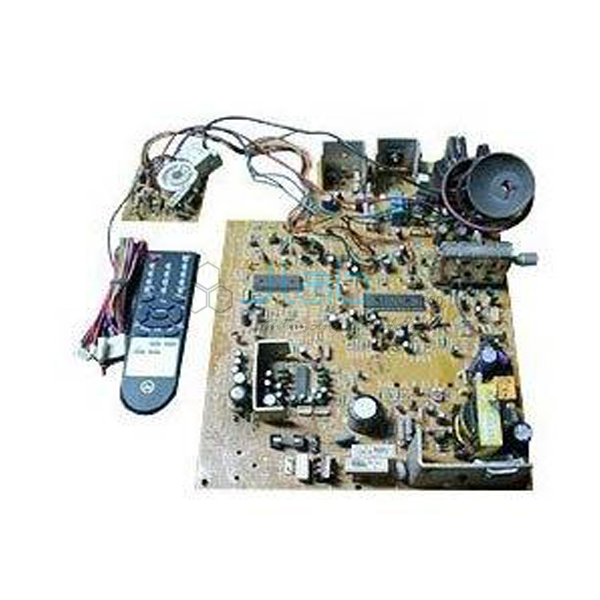
Product Code : EL-DM-1116
Jlab Export is a leading Demonstration Coloured Television Manufacturer,and suppliers in India
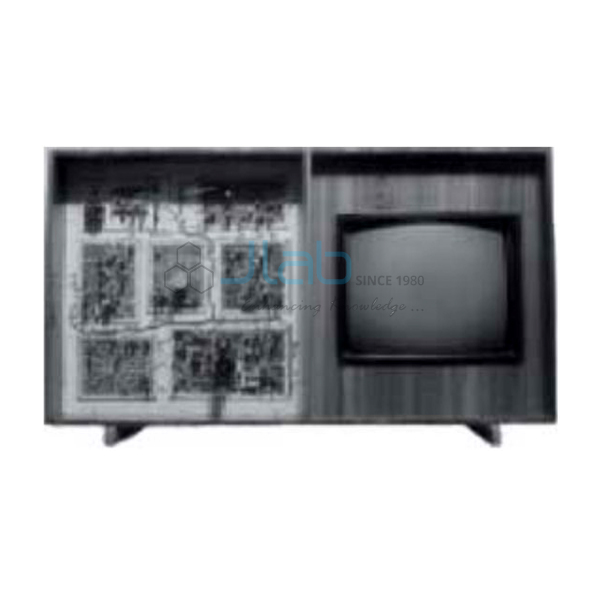
Demonstration Coloured Television (code EL-DM-1116) is a colour TV demonstration kit with a colour CRT, used to teach how a colour television receiver works in electronics and TV-servicing labs. Its listing describes it as the same kind of kit as JLab’s black-and-white TV demonstrator, with a colour picture tube instead. It is made by Jain Laboratory Instruments Pvt Ltd (JLab) at its works in Ambala, India.
Specifications
| Parameter | Detail |
|---|---|
| Type | Colour TV demonstration kit |
| Picture tube | Colour CRT |
| Based on | Listed as the same kit as the Demonstration Television Black and White (CRT and PCB cabinet, complete circuit diagram, 4 mm fault-creation sockets) — confirm these details in your quotation |
| Quality check | Each kit is visually inspected before dispatch |
| Pack quantity | Each (sold individually) |
| Minimum order quantity | 10 units |
| Dispatch time | Usually 7–10 working days |
| Product code | EL-DM-1116 |
| Manufacturer | Jain Laboratory Instruments Pvt Ltd (JLab) — OEM |
| Country of origin | India (made in Ambala, Haryana) |
What Is the Colour TV Demonstration Kit Used For?
A colour receiver does everything a monochrome set does and adds a colour-decoding stage, while its CRT uses three electron beams for the red, green and blue phosphors on the screen. The kit lets ITI and TVET TV-servicing classes, polytechnic electronics labs and B.Sc. electronics students study these stages on a working set, usually after the black-and-white receiver. The picture tube runs at high voltage, so change connections only with the power off.
What to Specify When Ordering
- Colour or black-and-white — this colour-CRT kit, or the B/W demonstrator for introductory courses.
- Quantity — the minimum order is 10 units.
- Fault-finding details — ask JLab to confirm the fault provision and circuit diagram supplied with the colour kit.
Frequently Asked Questions
How does the coloured TV demonstrator differ from the black-and-white model?
Its listing describes it as the same kit with a colour CRT, so it adds colour picture reproduction to the receiver study. Choose the B/W model for the basics and this kit when the course covers colour television.
Does the colour kit have fault-creation sockets?
The B/W model it is based on has 4 mm sockets for fault creation, but the colour listing does not repeat the detail, so ask JLab to confirm it in your quotation.
Who manufactures it?
Jain Laboratory Instruments Pvt Ltd (JLab) makes the kit at its works in Ambala, Haryana, India.
OEM Manufacturer
JLab is the trading name of Jain Laboratory Instruments Pvt Ltd, a scientific instrument and electronics trainer manufacturer in India, incorporated in 2017 with its works on Hargolal Road, Ambala, Haryana. The kit comes from JLab’s own works rather than a trader, so institutes, dealers and importers deal directly with the maker, and each unit is visually inspected before dispatch. The company is registered under CIN U29309HR2017PTC069123 and holds MSME Udyam registration UDYAM-HR-01-0003849 as a manufacturing enterprise. JLab exports worldwide, shipping to every region — for example Guyana in South America, Morocco in North Africa, South Africa in Southern Africa, Malawi in East Africa and Mexico in North America. For tenders, see the JLab lab tenders page.
Related TV and Electronics Trainers
- Demonstration Television Black and White — the B/W demonstrator with 4 mm fault sockets.
- Demonstration Model of Transistor Cassette Player and Recorder Trainer Kit Two in One — for MW receiver, cassette player and tape recorder fault study.
- Dual Trace Oscilloscope — a dual-channel oscilloscope for observing receiver signals.
Browse the Demonstration Models category or the Scientific Instrument range.
Request a Quote
Quotes come direct from the manufacturer. Use the Add To Cart button, or send the quantity (minimum 10 units) and delivery location through the contact page.
Last updated: 9 October 2026