

Scientific Instrument Manufacturer, Suppliers and Exporter in India
Jlabexport is a leading Scientific Instrument Manufacturer,and suppliers in India, United States, Indonesia, Brazil, Bangladesh, Mexico, Japan, Egypt, Philippines, Democratic Republic of the Congo, Vietnam, Iran, Turkey, Tanzania, United Kingdom, France, South Africa, Italy, Kenya, Colombia, Sudan, Uganda, South Korea, Argentina, Afghanistan, Yemen, Angola, Morocco, Poland, Uzbekistan, Mozambique, Malaysia, Ghana, Saudi Arabia, Peru, Madagascar, Côte d’Ivoire, Cameroon, Niger, Venezuela, Australia, Syria, Mali, Burkina Faso, Sri Lanka, Malawi, Zambia, Chad, Kazakhstan, Somalia, Chile, Senegal, Ecuador, Cambodia, Zimbabwe, Guinea, Benin, Rwanda, Burundi, Bolivia, South Sudan, Tunisia, Haiti, Belgium, Dominican Republic, Jordan, United Arab Emirates, Honduras, Tajikistan, Papua New Guinea, Portugal, Togo, Sierra Leone, Belarus, Laos, Turkmenistan, Libya, Kyrgyzstan, Nicaragua, Paraguay, Bulgaria, Serbia, Republic of the Congo, Lebanon, Liberia, Central African Republic, Palestine, Oman, Mauritania, New Zealand, Costa Rica, Kuwait, Panama, Croatia, Georgia, Eritrea, Mongolia, Uruguay, Qatar, Namibia, Bosnia and Herzegovina, Moldova, Armenia, Gambia, Jamaica, Lithuania, Albania, Gabon, Botswana, Lesotho, Guinea-Bissau, Slovenia, Equatorial Guinea, Latvia, North Macedonia, Bahrain, Trinidad and Tobago, Timor-Leste, Cyprus, Estonia, Eswatini, Mauritius, Djibouti, Fiji, Comoros, Solomon Islands, Guyana, Bhutan, Luxembourg, Suriname, Montenegro, Malta, Maldives, Cabo Verde, Brunei, Belize, Bahamas, Iceland, Vanuatu, Barbados, São Tomé and Príncipe, Samoa, Saint Lucia, Kiribati, Seychelles, Grenada, Saint Vincent and the Grenadines, Antigua and Barbuda.
Last updated: 13 November 2026
What Does the Scientific Instrument Range Cover?
The Scientific Instrument range is the JLab hub for electrical measurement and electronics practicals. Physics departments, engineering colleges, polytechnics and senior schools use it to measure resistance, inductance, capacitance and voltage, and to run solid-state and circuit experiments. It holds 22 subranges with 220 items, from semiconductor panels to digital trainers. It also lists 76 instruments directly: Wheatstone, Kelvin and AC bridges, resistance, condenser and inductance boxes, potentiometers, supplies, rheostats, meters and accessories. JLab (Jain Laboratory Instruments Pvt Ltd), Ambala, India, makes the 76 instruments listed here.
Request a quotation | Compare the instruments | See the practicals covered
Which Ranges and Instruments Are in the Scientific Instrument Category?
The first 22 rows are the subranges, each with its own page. The last nine rows group the 76 instruments listed directly on this page.
| Group | Items | What it covers |
|---|---|---|
| Test and Measuring Instruments | 20 | Sound level meter, stroboscope, Q meter, distortion factor meter, A.F. and R.F. oscillators, dual trace oscilloscope, L.C.R. bridge and signal tracer. |
| Digital Measuring Instruments | 14 | Digital R.P.M., frequency, capacitance, lux and pH meters, a digital potentiometer, a digital gauss meter and a digital L.C.R. meter. |
| Nuclear Physics | 3 | Digital G.M. counter, radioactive source and scintillation counter for nuclear physics practicals. |
| Optoelectronic Devices | 14 | Photo cell, LDR, LED, photodiode, phototransistor and solar cell apparatus, Planck's constant set-ups and a photomultiplier tube. |
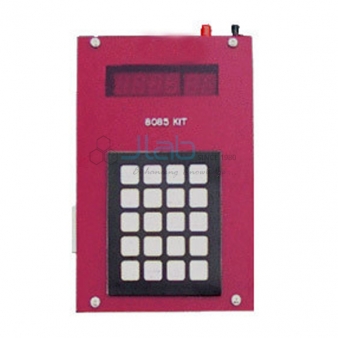
| Microprocessors | 1 | An 8085 microprocessor training kit. |
| e/m Apparatus | 5 | e/m of the electron by the Thomson, helical, magnetron and magnetic focusing methods, and Millikan's oil drop apparatus. |
| Characteristics of Vacuum Tubes | 8 | Diode, triode, tetrode, pentode, thyratron and VR tube characteristics, Richardson's equation and the ionization potential of mercury; it also holds an op-amp bread board kit. |
| Semiconductor Devices | 14 | Diode, zener, band gap, transistor, FET, h-parameter, SCR, diac and triac panels, with ultrasonic and dielectric set-ups. |
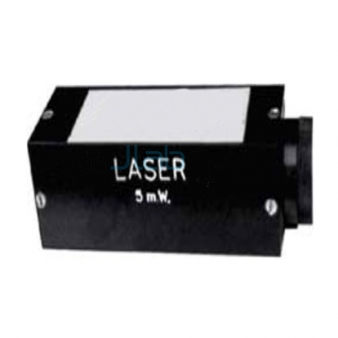
| Laser Experiment | 3 | Helium neon laser, laser accessories and a Michelson interferometer. |
| Verification of Various Laws and Conservation of Signal | 13 | Ohm's law, series and parallel resistances, condenser charging, RC transients, BH curve, galvanometer conversion, rectifiers, clipping and clamping, and Stefan's law. |
| Demonstration Models | 5 | Demonstration television, cassette player, MW radio and CRO models for teaching how the circuits work. |
| Amplifier Kits | 7 | Transistor and FET amplifier trainers: biasing, negative feedback, push-pull and two-stage RC coupled amplifiers. |
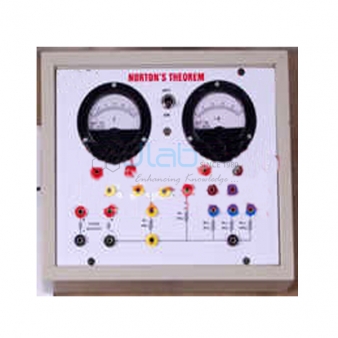
| Verification of Network Theorems | 7 | Superposition, Thevenin, Norton, reciprocity and maximum power transfer theorem panels. |
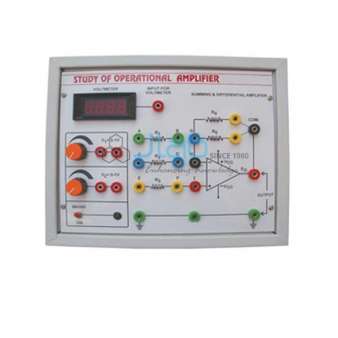
| Characteristics Operational Amplifiers | 14 | IC op-amp trainers: inverting and non-inverting amplifiers, adder, integrator, differentiator, Schmitt trigger, comparator, wave converters, instrumentation and logarithmic amplifiers. |
| Study of Multivibrators | 8 | Astable, monostable and bistable multivibrators on the IC 555 or on transistors. |
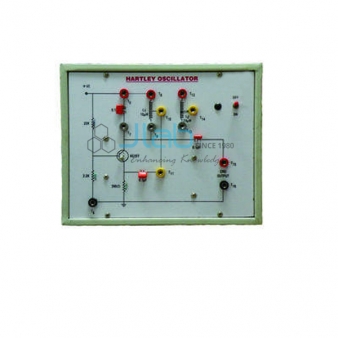
| Oscillators | 4 | Hartley, Colpitts, phase shift and IC 741 Wien bridge oscillators. |
| Digital Electronic Experiments Computer Principles | 36 | Logic gates, adders and subtractors, counters, shift registers, flip-flops, multiplexers, decoders, RAM, and A/D and D/A converters. |
| Training Kits for Communication Lab | 6 | Fibre optic link, AM, PAM, PPM and PWM modulation, and a phase locked loop trainer. |
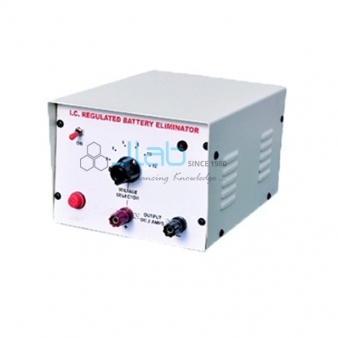
| Power Supplies and Transformers | 18 | Valve experiment supplies, IC regulated and dual power supplies, a high voltage supply, battery chargers and eliminators, transformers and a dimmerstat. |
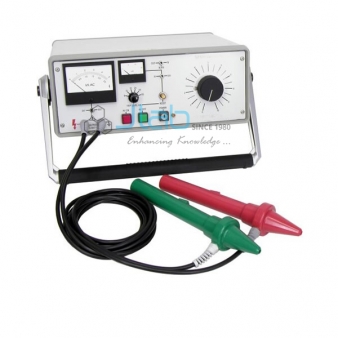
| Switchboard Panel, Ammeters, Voltmeters, Rectifier Type | 5 | Switchboard ammeters and voltmeters, DC meters, galvanometers and a high voltage test set. |
| Electrical Measuring Instruments | 8 | Portable meter, D'Arsonval, ballistic and spot reflecting galvanometers, insulation testers and ohm meters. |
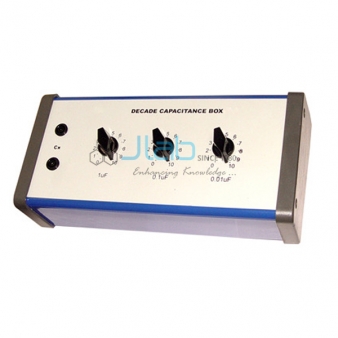
| Decade Box | 7 | Resistance boxes and coils, slide wire rheostats, a standard resistance, and decade resistance, capacitance and inductance boxes. |
| Semiconductor, Magnetism and Circuit Experiments | 11 | Hall effect, four probe, FeCl3 susceptibility, thermistor, UJT and MOSFET set-ups, LCR resonance, a BCD counter, FM, the electrical vibrator and induction coils. |
| Signal Sources, Oscilloscope and Detectors | 5 | A 1 Hz to 250 kHz audio oscillator, a fixed 1 kHz bridge oscillator, a 10 MHz oscilloscope, a null detector and a headphone. |
| Wheatstone, Kelvin and Other DC Bridges | 6 | Portable Wheatstone bridges, one with loop tests, two Kelvin double bridges, a self inductance bridge and the Callender and Griffiths bridge. |
| AC Bridges | 8 | Anderson, Maxwell, Owen, Hay, Schering and Wien bridges, most with a built-in 1 kHz source and digital null detector. |
| Resistance, Condenser and Inductance Boxes | 12 | P.O. boxes, decade and dial resistance boxes, a substitution box, a high meg box, and condenser and inductance boxes. |
| Potentiometers and Standards | 8 | Wire, dial and Crompton potentiometers, a volt ratio box, a meter calibration panel and a standard cell. |
| Power Supplies, Rheostats and Loads | 11 | Fixed and variable supplies, a 0–10 A current source, rheostats, a variac, a rheostat bank and a lamp load. |
| Panel, Demonstration and Test Meters | 7 | Digital panel meters, external shunts, power factor and frequency meters, a cell tester, a demonstration meter and a wood moisture meter. |
| Jockeys, Leads and Experiment Accessories | 8 | Spare jockey and lead, conductivity accessories, a temperature coefficient coil, a water bath, a thermocouple and a steam boiler. |
Compare the Scientific Instruments by Specification
Each table sets the instruments of one group side by side, with values taken from each product page. Not listed means the product page does not give that value.
Semiconductor, Magnetism and Circuit Experiments (11)
| Apparatus | Experiment | Main parts | Supply |
|---|---|---|---|
| Hall Effect Experiment | Hall voltage and Hall coefficient of a germanium crystal | 7.5 kG (0.75 T) electromagnet, mounted Ge crystal, two digital meters, digital gauss meter with Hall probe | Magnet 0–100 V, 4 A; crystal constant current 0–20 mA |
| Resistivity of Semiconductors by Four Probe Method at Different Temperatures and Determination of Band-Gap | Resistivity of a semiconductor against temperature, and its band gap | Four probe unit, mounted Ge crystal, oven to 200 °C, 0–200 °C thermometer, 3½ digit LED display | Constant current supply, built in |
| Susceptibility of FeCl3 Solution | Susceptibility of an FeCl3 solution in a strong magnetic field | 7.5 kG (0.75 T) electromagnet, digital gauss meter, graduated capillary tube with stand | Magnet 0–100 V, 4 A |
| Thermistor Characteristics Apparatus | Resistance against temperature of an NTC thermistor | Thermistor, oven, thermometer, two meters | DC regulated, built in |
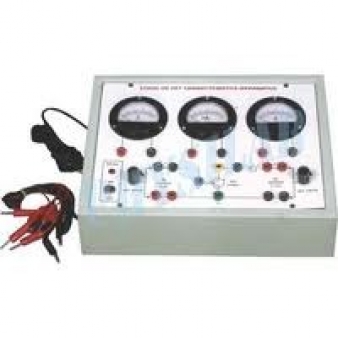
| UJT Characteristics Apparatus | V-I characteristics and interbase resistance of a UJT | UJT 2N2646, three round meters, 15 x 8 x 4 in panel | Two DC regulated, one 0–10 V, 30 mA |
| Mosfet Characteristics Apparatus | Drain characteristics of a MOSFET | One MOSFET, three meters, 11 x 8 x 4 in panel | Two DC: 0–10 V, 10 mA and 0–5 V |
| LCR Resonance Apparatus Series and Parallel | Frequency against current of series and parallel LCR circuits | One R, one C and one L, two AC moving coil meters, 10 x 8 x 3 in panel | A.F. function generator TE-93 |
| Study of 4 Bit BCD Counter and Decimal to Binary Encoder using IC 7490 | 4-bit BCD counting and decimal to binary encoding | IC 7490, 1 Hz clock, four output indicators | DC regulated, built in |
| Study of Frequency Modulation and Demodulation | FM modulation index, sideband frequencies and demodulated signal | Circuit panel with 1 kHz square wave oscillator | DC, built in |
| Electrical Vibrator | Frequency of the AC mains with a vibrating string | Magnetised steel rod, small solenoid, horseshoe magnet on a base board | AC mains through a lamp resistance |
| Self and Mutual Inductance Coils | Self and mutual induction | 3000-turn primary; 1000, 2000 and 3000-turn secondaries | Not listed |
Signal Sources, Oscilloscope and Detectors (5)
| Instrument | Type | Frequency or bandwidth | Output or indication |
|---|---|---|---|
| A.F. Oscillator Bridge Experiments | Solid-state IC oscillator: sine, square and triangular | 1 Hz to 250 kHz in 6 steps | 0–10 V, coarse and fine; 50 ohm |
| Bridge Oscillator | Op-amp Wien bridge oscillator, pure sine | Fixed 1 kHz | 0–10 V RMS, variable |
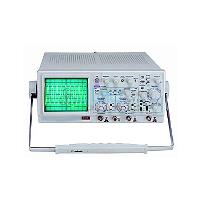
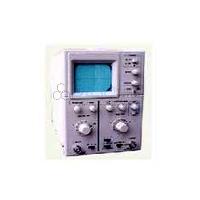
| Oscilloscope | Single beam, solid state | DC to 10 MHz vertical | 8 x 8 cm screen; up to 50 V/cm |
| Null Detector | Solid-state amplifier for AC bridges | Not listed | Meter |
| Head Phone | Flexible, high-resistance receivers | Not listed | Tone heard by ear |
Wheatstone, Kelvin and Other DC Bridges (6)
| Bridge | Method | Range | Galvanometer |
|---|---|---|---|
| Portable Wheatstone Bridge | Wheatstone; 4 decades and 7 multipliers | 0.001 ohm to 11.1 megohm | Built in, 10 µA per division |
| Portable Wheatstone Bridge with Loop Test | Wheatstone with Murray and Varley loop and conductance tests | 7 multipliers, plus 3 Murray loop factors | Built in, as on the Portable Wheatstone Bridge |
| Double Portable Bridge | Portable Kelvin double bridge, four terminals | 0.00001 to 110 ohm | Built in, or external by selector switch |
| Industrial Double Bridge | Kelvin double bridge for low resistance | 2 micro-ohm to 11 ohm | External, on panel terminals |
| Self Inductance Bridge | Self inductance, also usable as a Wheatstone bridge | Ratio dials 1–1000 ohm; arm decades 0.1, 1 and 10; slide wire in 170 parts | External, through the double key |
| Callender & Griffith Bridge | Callender and Griffiths bridge, Carey Foster bridge and potentiometer in one | 14 coils of 1 ohm; 50 cm, 1 ohm slide wire in 100 parts | Separate item |
AC Bridges (8)
| Bridge | Measures | AC source | Null detector |
|---|---|---|---|
| Self Inductance Anderson Bridge | Self-inductance against a standard capacitor | Built-in 1 kHz sine | Built-in, digital |
| Maxwell Inductance Bridge | Inductance against a standard inductance | Built-in 1 kHz sine | Built-in, digital |
| Maxwell Inductance Capacitance Bridge | Inductance against a standard capacitance | Built-in 1 kHz sine | Built-in, digital |
| Owen Bridge | Inductance from capacitance and resistance | Built-in 1 kHz sine | Built-in, digital |
| Hay Bridge | Inductance of high-Q coils | Built-in 1 kHz sine | Built-in, digital |
| Schering Bridge | Capacitance and dissipation factor (tan δ) | Built-in 1 kHz sine | Built-in, digital |
| Wien Series Resistance Bridge | Capacitance; five unknowns on a rotary switch | Built-in 1 kHz sine | Digital, or a small speaker on some units |
| Frequency Wien Bridge | Unknown frequency of a bridge oscillator | Not listed | Digital, or a small speaker on some units |
Resistance, Condenser and Inductance Boxes (12)
| Box | Type | Values or range | Element | Accuracy |
|---|---|---|---|---|
| Resistance P.O. Box | Plug-type P.O. box | Not listed | Constantan coils; 12 mm brass blocks | Not listed |
| Resistance P.O. Box 4 | Plug-type P.O. box | Not listed | Manganin coils; 14 mm brass blocks | Not listed |
| P.O. Box Ratio Constantan Coil | Plug-type P.O. box | Not listed | Constantan coils; 14 mm brass blocks | Within ±0.1% |
| P.O. Box Ratio Manganin Coil | Plug-type P.O. box | Not listed | Manganin coils; 14 mm brass blocks | Not listed |
| Resistance Box Constantan & Manganin | Decade box, eleven-position switches | Not listed | Manganin (Grade A) or constantan (Grade B), non-inductive | ±0.02% to ±0.05% (A); ±0.05% to ±0.1% (B) |
| Economical Resistance Box Dial Type | Dial box, two, three or four dials | Not listed | Metal film resistors | 1% |
| Resistance Substitution Box | Rotary switch, 12 preferred values | 100 ohm to 470 kilo-ohm | Radio-type resistors | Not listed |
| High Meg Resistance Box | Four-dial box | 1 to 11111 megohm | Not listed | ±1% |
| Fixed Condenser Boxes | Fixed boxes, two 4 mm sockets | 0.01 to 2 mfd (250 V); 5 to 40 mfd (350 V) | Paper polyester; electrolytic for the high values | Not listed |
| Four Dial Condenser Box | Four-dial decade box | 10 x 0.001 to 10 x 1 mfd | Not listed | Not listed |
| Fixed Inductance Boxes | Fixed boxes | Not listed | Air-cored coils | ±2.5% |
| Three Dial Inductance Box | Three-dial box | Not listed | Not listed | Not listed |
Potentiometers and Standards (8)
| Item | Type | Wire, dials or range | Reading and extras |
|---|---|---|---|
| Potentiometer with Pencil Jockey | Slide wire, 4 wires | Four 1 m constantan wires, 24 SWG; 1.12 m long overall | Two metre scales; pencil jockey and lead |
| Potentiometer with Spring Type Press Jockey | Slide wire, 4 or 10 wires | Wires tightened by pulleys | Spring-type press jockey; raised scale with Perspex pointer |
| Potentiometer Single wire | Slide wire, 1 wire | One constantan wire, 0.56 mm (about 24 SWG) | Metre scale in mm; pencil jockey and lead |
| Potentiometer Dial Pattern | Dial coils plus slide wire | 10, 14 or 22 dial coils; 50 cm slide wire in 500 parts | Knife-edge jockey |
| Crompton Potentiometer | Crompton pattern, voltage dials and slide wire | Working current about 125 mA | 1/2 mV per division; self-standardisation circuit |
| Volt Ratio Box | Range extender for the Crompton potentiometer | 1.5 to 750 V (37,500 ohm) or 1.5 to 300 V (15,000 ohm) | Tappings in multiples of 1.5 V |
| Calibration of Voltmeter & Ammeter | Potentiometer calibration panel | 0–12 V DC, 1 A supply built in | Three digital panel meters; standard cell built in |
| Standard Cell | Voltage reference | Accurate between 10 °C and 40 °C | Small steel cabinet |
Power Supplies, Rheostats and Loads (11)
| Item | Type | Output or rating | Used for |
|---|---|---|---|
| Power Supply for Millikan's Oil Drop App. | IC regulated supply | 0–300 V DC to the plates; 6 V AC, 3 A to the lamp | Millikan's oil drop apparatus |
| Fixed Voltage Stabilized Power Supply | Fixed stabilized supply | 2 V, 200 mA | Meter bridge experiments |
| Stabilized Power Supply | Solid-state regulated supply | 0–5 V, 1 A | Potentiometer experiments |
| Adjustable D.C. Current Source | Variac, transformer and bridge rectifier | 0–10 A DC, about 0–10 V | Double bridge test current, ammeter and shunt checks |
| Rheostat Single Tube | Single tube, vitreous enamelled steel | 4.4 cm or 5.6 cm tube | Setting current, or as a potential divider |
| Groove Type Rheostat Tube | Grooved porcelain or cement former, Eureka wire | Not listed | Smooth current control with a brass slider |
| Higher Range Rheostat | Grooved former, Kanthal wire | Not listed | Higher resistance than the Eureka-wire tube |
| Potentiometer Wire | Wire-wound, knob control | 3 W | Potential divider through three 4 mm sockets |
| Variac Single & Three Phase | Autotransformer, single or three phase | 0–240 V; 0–270 V on over-voltage connection | Variable AC supply |
| Rheostat Bank Single Phase | Porcelain tube rheostats in a ventilated frame | 250 V AC, 50 Hz; three-phase 415 V version | Load tests on machines and supplies |
| Lamp Load Single Phase | Trolley lamp load, lamps not included | 4 kW or 6 kW, in 200 W steps | Resistive load in known steps |
Panel, Demonstration and Test Meters (7)
| Meter | Measures | Range | Display or scale |
|---|---|---|---|
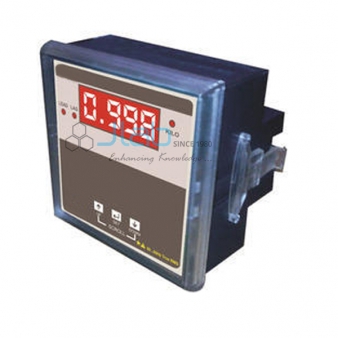
| Digital Panel Meters | One of DC volts, AC volts, DC amps or AC amps | ±199.9 mV to ±1000 V; ±1.999 mA to ±19.99 A | 3.5-digit LED |
| External Shunts with 50 mV or 75 mV Drop | Current, as a 50 mV or 75 mV drop | 1 A to 2000 A | Read on a millivolt meter |
| Power Factor Meter | Power factor, electro-dynamic, 3 elements | 440 V, 50 Hz | 6 in scale, flush round case |
| Frequency Meter | Frequency, electro-dynamic | 30–100 Hz, ±1% | 110 mm scale |
| Cell Tester | Voltage of cells | Not listed | 65 mm Bakelite case |
| Demonstration Joint Meter | AC and DC volts and current, or galvanometer, by plug-in dials | Not listed | 180 mm scale, read from both sides |
| Moisture Meter For Wood | Moisture in timber | 8–32% | 2-pin probe; battery operated |
Jockeys, Leads and Experiment Accessories (8)
| Item | Used with | Main detail |
|---|---|---|
| Spare Pencil Jockey | Wheatstone bridges and potentiometers | Bakelite handle, brass contact; supplied without lead |
| Spare Lead | Jockey to potentiometer or Wheatstone bridge | 1.5 m, U-shape brass clips at both ends |
| Conductivity Cell Dip Type | Conductivity bridge | Dip type, platinum electrode |
| Conductivity attachment | Double bridges | 50 cm between potential points; ½ in rod down to 42 SWG wire |
| Temperature Co-efficient Resistance Coil | Meter bridge or P.O. box | Copper coil of about 7–10 ohm in a glass tube for paraffin oil |
| Special Water Bath | Experiments needing a heated liquid | Brass reservoir with a 100 ml borosilicate beaker |
| Copper Constantan Thermocouple | Potentiometer and water bath | Copper and constantan on a Bakelite strip, two terminals |
| Steam Boiler Element | Callender & Griffith Bridge | 2 to 3 litre boiler with heating element |
How to Choose Scientific Instruments for a Physics or Electrical Lab
- Wheatstone or Kelvin bridge. The Portable Wheatstone Bridge reads from 0.001 ohm to 11.1 megohm with its own galvanometer and battery. For resistances below about one ohm, choose a Kelvin bridge: the Double Portable Bridge reads down to 0.00001 ohm, and the Industrial Double Bridge down to 2 micro-ohm with an external supply such as the Adjustable D.C. Current Source.
- Plug box or dial box. P.O. boxes build the whole Wheatstone bridge into one case and suit the class 12 practical. Dial boxes avoid loose plugs. Choose manganin coils for precision work and constantan coils for routine benches.
- Built-in AC source or separate one. The Anderson, Maxwell, Owen, Hay and Schering bridges carry a 1 kHz source and a digital null detector. For other bridge boards, add the Bridge Oscillator for a fixed 1 kHz, or the A.F. Oscillator Bridge Experiments when the practical needs another frequency.
- Wire potentiometer or Crompton. Slide-wire potentiometers teach the balance-length method in school and first-year labs. The Crompton Potentiometer with the Volt Ratio Box and the Standard Cell suits electrical measurement courses that need readings to 1/2 mV and up to 750 V.
- Rheostat, variac or load bank. Tube rheostats set the current in bench circuits. The Variac Single & Three Phase gives a smooth AC voltage without rheostat losses. The Rheostat Bank Single Phase and the Lamp Load Single Phase load machines and supplies in electrical labs.
- Count the spares. Jockeys and leads wear out first on bridge and potentiometer benches. Order the Spare Pencil Jockey and the Spare Lead with the main instruments.
Practicals Covered by the Scientific Instrument Range
Who Uses the Scientific Instrument Range?
Physics departments, electrical and electronics engineering labs, polytechnics and ITIs use the bridges, boxes, potentiometers and meters for measurement practicals. Senior school physics labs use the P.O. boxes, wire potentiometers, resistance boxes and spare jockeys for the class 12 electricity practicals.
Ordering, Minimum Quantity and Dispatch
| Point | Detail |
|---|---|
| Minimum order quantity | 10 units of each instrument, as shown on its product page |
| Pack quantity | Each instrument is sold individually |
| Dispatch time | Usually 7–10 working days |
| How to enquire | Use Add To Cart on a product page, or send the instrument names and quantities through the contact page |
| Tenders and OEM supply | Send the schedule through the tender enquiry page |
| Manufacturer | JLab (Jain Laboratory Instruments Pvt Ltd), Ambala, India |
Related Ranges in Indian Instruments and Electronics
Scientific Instrument is one of the ranges of the Indian Instruments category. These ranges equip the rest of the same physics and electronics labs.
| Range | How it relates |
|---|---|
| Measuring Instruments | Vernier calipers, screw gauges, spherometers, stop clocks, physical and chemical balances and weight boxes for the mechanics side of the physics lab. |
| Analog Electronics Trainer | Training boards for diodes, transistors, SCR, triac and MOSFET, with Anderson, De Sauty, Wien and Schering bridge trainers. |
| Power Electronics Trainers | SCR and triac phase control, firing circuits, converters and inverters, the next step after thyristor characteristics. |
| Basic Electronics | Analog and digital circuit development platforms, with op-amp, diode, transistor and rectifier experiment boards. |
| Meters | A 4½ digit digital multimeter, clamp meters, a single phase watt meter, a gauss and tesla meter and panel meters. |
Frequently Asked Questions
When is a Kelvin double bridge needed instead of a Wheatstone bridge?
For resistances below about one ohm, such as a short length of thick wire. In a Wheatstone bridge the leads and contacts add their own resistance to the unknown. A Kelvin double bridge uses four terminals: current enters through one pair and the voltage is sensed across the other, so lead and contact resistance drop out.
Should an AC bridge be balanced with a headphone or a null detector?
Either works. With a headphone the student listens for the 1 kHz tone to fade, which is hard to judge in a noisy lab and varies from ear to ear. A null detector amplifies the out-of-balance signal and shows it on a meter, so the minimum is read rather than heard. Most AC bridges in this range have a digital null detector built in.
Why is a potentiometer standardised against a standard cell first?
A potentiometer measures voltage by comparison, so the voltage per unit length or per dial step must be known. The standard cell gives a stable reference e.m.f. The working current is adjusted with the rheostat until the standard cell balances, and later readings use that setting. At balance no current flows from the cell under test, so its internal resistance does not affect the reading.
Why should the balance point lie near the middle of the wire?
Near the ends, the resistance at the clamps and any error in reading the length form a larger share of the measured length. A balance near the middle keeps that share small. Choose the known resistance so the null falls near the centre, tap the jockey gently instead of dragging it, and open the key between readings so the wire does not heat up.
Is a plug-type P.O. box or a dial resistance box easier for students?
A P.O. box gives a complete Wheatstone bridge in one case, as the class 12 practical needs, but loose or dirty plugs add contact resistance. Dial boxes avoid plugs. The Resistance Box Constantan & Manganin uses eleven-position switches with contact resistance of the order of 0.0015 ohm per decade, and the Economical Resistance Box Dial Type uses 1% metal film resistors.
What is the difference between manganin and constantan coils?
Manganin, an alloy of copper, manganese and nickel, changes its resistance very little with temperature and gives only a small thermo-e.m.f. against copper, so it suits precision boxes. Constantan, a copper-nickel alloy, is used for working boxes and potentiometer wires.
Request a Quote
Name each instrument and the number of units you need, for example ten Resistance P.O. Box and ten Potentiometer with Pencil Jockey. For boxes, potentiometers and rheostats, say which version you need. Then send the request from the contact page.

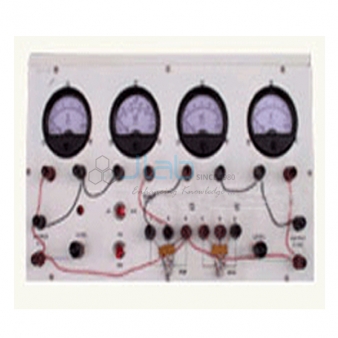
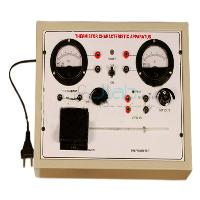
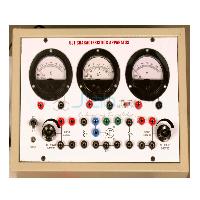
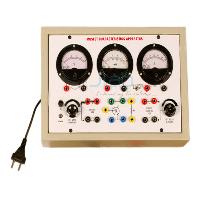
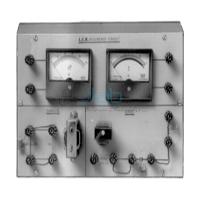
LCR Resonance Apparatus Series and Parallel
Product Code : EL-SI-1109
Apparatus to plot current against frequency for series and parallel LCR circuits, with R, L and C brought out to terminals, two AC meters and an audio frequency function generator.
View Details
Study of 4 Bit BCD Counter and Decimal to Binary Encoder using IC 7490
Product Code : EL-SI-1174
View Details
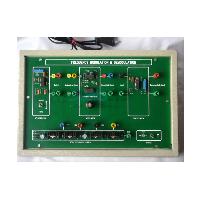
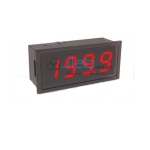
Digital Panel Meters
Product Code : EL-SI-1228
3.5 digit LED digital panel meters, mains operated, each for one parameter: DC or AC voltage (199.9 mV to 1000 V ranges) or DC or AC current (1.999 mA to 19.99 A ranges).
View Details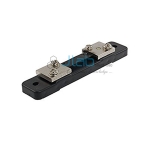
External Shunts with 50 mV or 75 mV Drop
Product Code : EL-SI-1230
Range 1 to 50 Amp., 75 Amps., 100 Amps, 150 Amps, 200 Amps, 250 Amps., 300 Amps, 500 Amps, 1000 Amps, 1500 Amps, 2000 Amps.
View Details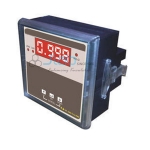
Power Factor Meter
Product Code : EL-SI-1231
Electro-dynamic power factor meter with 3 elements, rated 440 V, 50 Hz; 6 inch scale, round flush mounting type.
View Details