Laser Experiment Manufacturer, Suppliers and Exporter in India
Jlabexport is a leading Laser Experiment Manufacturer,and suppliers in India, United States, Indonesia, Brazil, Bangladesh, Mexico, Japan, Egypt, Philippines, Democratic Republic of the Congo, Vietnam, Iran, Turkey, Tanzania, United Kingdom, France, South Africa, Italy, Kenya, Colombia, Sudan, Uganda, South Korea, Argentina, Afghanistan, Yemen, Angola, Morocco, Poland, Uzbekistan, Mozambique, Malaysia, Ghana, Saudi Arabia, Peru, Madagascar, Côte d’Ivoire, Cameroon, Niger, Venezuela, Australia, Syria, Mali, Burkina Faso, Sri Lanka, Malawi, Zambia, Chad, Kazakhstan, Somalia, Chile, Senegal, Ecuador, Cambodia, Zimbabwe, Guinea, Benin, Rwanda, Burundi, Bolivia, South Sudan, Tunisia, Haiti, Belgium, Dominican Republic, Jordan, United Arab Emirates, Honduras, Tajikistan, Papua New Guinea, Portugal, Togo, Sierra Leone, Belarus, Laos, Turkmenistan, Libya, Kyrgyzstan, Nicaragua, Paraguay, Bulgaria, Serbia, Republic of the Congo, Lebanon, Liberia, Central African Republic, Palestine, Oman, Mauritania, New Zealand, Costa Rica, Kuwait, Panama, Croatia, Georgia, Eritrea, Mongolia, Uruguay, Qatar, Namibia, Bosnia and Herzegovina, Moldova, Armenia, Gambia, Jamaica, Lithuania, Albania, Gabon, Botswana, Lesotho, Guinea-Bissau, Slovenia, Equatorial Guinea, Latvia, North Macedonia, Bahrain, Trinidad and Tobago, Timor-Leste, Cyprus, Estonia, Eswatini, Mauritius, Djibouti, Fiji, Comoros, Solomon Islands, Guyana, Bhutan, Luxembourg, Suriname, Montenegro, Malta, Maldives, Cabo Verde, Brunei, Belize, Bahamas, Iceland, Vanuatu, Barbados, São Tomé and Príncipe, Samoa, Saint Lucia, Kiribati, Seychelles, Grenada, Saint Vincent and the Grenadines, Antigua and Barbuda.
Last updated: 13 November 2026
What Is Laser Experiment Apparatus Used For?
Laser Experiment apparatus is the light source and optics that physics students use for wave-optics practicals with a laser beam. The range has three items. The first is a 2 mW helium neon laser that mounts on an optical bench. The second is a set of laser accessories: a diffraction grating, Young's double slit, hand micrometer, grating stand, filter and a demonstration kit of slits and patterns. The third is a Michelson interferometer with its own laser. Colleges, universities and senior school labs use them for wavelength, diffraction and interference work. JLab (Jain Laboratory Instruments Pvt Ltd), Ambala, India, makes the 3 items listed here.
Request a quotation | Compare the apparatus | See the practicals covered
Which Items Are in the Laser Experiment Range?
| Group | Items | What it covers |
|---|---|---|
| Laser and Accessories | 2 | A bench-mounted 2 mW helium neon laser with a built-in power supply, and the grating, double slit, micrometer, stand, filter and demonstration pieces for diffraction and interference on an optical bench. |
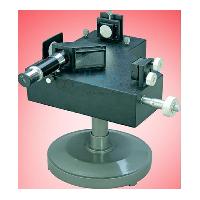
| Interferometer | 1 | A Michelson interferometer with a fitted laser and micro measurement, for the wavelength of sodium or laser light from fringes. |
Compare Laser Experiment Items by Function
Each table sets the items of one group side by side, as stated on each product page.
Laser and Accessories (2)
| Item | Role on the bench | Main parts | Power | Mounting |
|---|---|---|---|---|
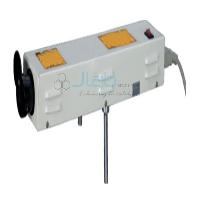
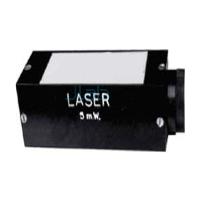
| Helium Neon Laser He.Ne. Lasers | Light source, 2 mW output, for continuous working | Helium neon gas tube in a rugged mechanical set-up | Built-in supply, 220 V AC, 50 Hz | Mounts on an optical bench, with up-down beam motion |
| Laser Accessories | Optics placed in the beam | Low-line diffraction grating, Young's double slit, hand micrometer, laser filter and a demonstration kit of slits, holes, mesh and grid | None needed | Grating stand |
Interferometer (1)
| Item | Experiment | Optics | Light source | Measurement |
|---|---|---|---|---|
| Michelson Interferometer | Wavelength of sodium light or laser light | Polished plane slabs parallel at 45° and mirrors at right angles | Laser with power supply fitted | Arrangement for micro measurement; fringes seen on a wall or paper |
How to Choose Laser Experiment Apparatus for Your Lab
- Start from the practicals. Grating, double slit and single slit work need the laser and the accessories on an optical bench. The Michelson interferometer is a separate set-up with its own laser.
- Laser and accessories together. The accessories do not include a laser, and the laser does not include the optics. Order both, with an optical bench, for a complete diffraction bench.
- Check your mains supply. The helium neon laser runs on 220 V AC, 50 Hz through its built-in supply. Tell JLab if your lab uses another voltage or plug.
- Sodium or laser light in the interferometer. The Michelson interferometer has a laser fitted. Add a sodium lamp if your syllabus asks for the sodium wavelength as well.
- Class demonstration or bench work. The interferometer throws its fringes on a wall or paper, so a whole class can watch. The laser and accessories suit students working in pairs at each bench.
Practicals Covered by the Laser Experiment Range
| Practical | Apparatus |
|---|---|
| Wavelength of laser light with a diffraction grating | Helium Neon Laser He.Ne. Lasers; Laser Accessories |
| Interference fringes with Young's double slit | Helium Neon Laser He.Ne. Lasers; Laser Accessories |
| Single-slit diffraction with a taper slit | Helium Neon Laser He.Ne. Lasers; Laser Accessories |
| Diffraction patterns of holes, a circular spot, a mesh and a grid | Helium Neon Laser He.Ne. Lasers; Laser Accessories |
| Width of a fine wire or slit from its diffraction pattern | Helium Neon Laser He.Ne. Lasers; Laser Accessories |
| Divergence of a laser beam | Helium Neon Laser He.Ne. Lasers |
| Wavelength of sodium or laser light with a Michelson interferometer | Michelson Interferometer |
Who Uses Laser Experiment Apparatus?
Physics laboratories of colleges and universities use the laser, accessories and interferometer for degree-level optics practicals. Senior school labs use the laser and grating to measure the wavelength of light.
Ordering, Minimum Quantity and Dispatch
| Point | Detail |
|---|---|
| Minimum order quantity | 10 units of each item, as shown on its product page |
| Pack quantity | The laser and the interferometer are sold individually; the demonstration kit of the accessories comes as a set |
| Dispatch time | Usually 7–10 working days |
| How to enquire | Use Add To Cart on a product page, or send the item names and quantities through the contact page |
| Tenders and OEM supply | Send the schedule through the tender enquiry page |
| Manufacturer | JLab (Jain Laboratory Instruments Pvt Ltd), Ambala, India |
Related Ranges in Scientific Instruments
Laser Experiment is one of 22 subcategories of the Scientific Instrument range. These neighbouring ranges hold other light and modern physics practicals.
| Range | How it relates |
|---|---|
| Optoelectronic Devices | Photo cells, photodiode, phototransistor, LED and solar cell apparatus, and Planck's constant apparatus. |
| Training Kits for Communication Lab | Includes a fiber optics transmitter and receiver trainer, with modulation and PLL kits. |
| Semiconductor Devices | Includes the ultrasonic diffraction grating experiment, where sound waves in a liquid act as a grating for light. |
| e/m Apparatus | e/m of the electron by four methods and Millikan's oil drop apparatus. |
| Nuclear Physics | A digital G.M. counter, a scintillation counter and a radioactive source. |
Frequently Asked Questions
How should students work safely with the 2 mW laser?
Never look into the beam or at its reflection from a mirror, watch face or shiny bench fitting. Keep the beam at bench height, below eye level, and end it on a screen or wall. Switch the laser off when no one is taking readings.
Why must the laser beam fall normally on the grating?
The grating equation, d sin(theta) = n lambda, assumes the beam meets the grating at right angles. If the grating is tilted, the orders on the two sides are no longer at equal distances. Set the grating so the reflected spot goes back towards the laser.
When can the small-angle formula be used for the grating?
Only when the spot distance on the screen is much smaller than the grating-to-screen distance. For wider orders find the angle from tan(theta) = x/L first, then use the grating equation. This is why a low-line grating is used with a laser.
Why is a low-line grating used with a laser?
A laser beam is narrow and bright, so even a coarse grating gives sharp spots. With few lines per millimetre the orders sit close enough to fit several on one screen, and their spacing is easy to measure with a metre scale.
What wavelength does a helium neon laser give?
The red line of a helium neon laser is about 632.8 nm. Students use it as a known wavelength to check a grating, or treat it as the unknown in the grating practical and compare their value with it.
How does the Michelson interferometer give the wavelength?
One mirror is moved with the micro measurement arrangement while students count the fringes that pass a reference mark. Each fringe means the mirror moved half a wavelength, so the wavelength is twice the mirror movement divided by the number of fringes.
Request a Quote
Name each item and the number of sets you need, for example ten Helium Neon Laser He.Ne. Lasers with ten sets of Laser Accessories. Then send the request from the contact page.
Laser Accessories
Product Code : EL-LE-1099
Single Taper Slit, Holes A, B, C, D, Gray Filter, Multiple slit, Circular Opaque spot, Mesh, Multiple Slit 5, Grid Pattern, Multiple Slit
View Details