Nuclear Physics Manufacturer, Suppliers and Exporter in India
Jlabexport is a leading Nuclear Physics Manufacturer,and suppliers in India, United States, Indonesia, Brazil, Bangladesh, Mexico, Japan, Egypt, Philippines, Democratic Republic of the Congo, Vietnam, Iran, Turkey, Tanzania, United Kingdom, France, South Africa, Italy, Kenya, Colombia, Sudan, Uganda, South Korea, Argentina, Afghanistan, Yemen, Angola, Morocco, Poland, Uzbekistan, Mozambique, Malaysia, Ghana, Saudi Arabia, Peru, Madagascar, Côte d’Ivoire, Cameroon, Niger, Venezuela, Australia, Syria, Mali, Burkina Faso, Sri Lanka, Malawi, Zambia, Chad, Kazakhstan, Somalia, Chile, Senegal, Ecuador, Cambodia, Zimbabwe, Guinea, Benin, Rwanda, Burundi, Bolivia, South Sudan, Tunisia, Haiti, Belgium, Dominican Republic, Jordan, United Arab Emirates, Honduras, Tajikistan, Papua New Guinea, Portugal, Togo, Sierra Leone, Belarus, Laos, Turkmenistan, Libya, Kyrgyzstan, Nicaragua, Paraguay, Bulgaria, Serbia, Republic of the Congo, Lebanon, Liberia, Central African Republic, Palestine, Oman, Mauritania, New Zealand, Costa Rica, Kuwait, Panama, Croatia, Georgia, Eritrea, Mongolia, Uruguay, Qatar, Namibia, Bosnia and Herzegovina, Moldova, Armenia, Gambia, Jamaica, Lithuania, Albania, Gabon, Botswana, Lesotho, Guinea-Bissau, Slovenia, Equatorial Guinea, Latvia, North Macedonia, Bahrain, Trinidad and Tobago, Timor-Leste, Cyprus, Estonia, Eswatini, Mauritius, Djibouti, Fiji, Comoros, Solomon Islands, Guyana, Bhutan, Luxembourg, Suriname, Montenegro, Malta, Maldives, Cabo Verde, Brunei, Belize, Bahamas, Iceland, Vanuatu, Barbados, São Tomé and Príncipe, Samoa, Saint Lucia, Kiribati, Seychelles, Grenada, Saint Vincent and the Grenadines, Antigua and Barbuda.
Last updated: 13 November 2026
What Is Nuclear Physics Apparatus Used For?
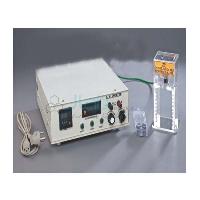
Nuclear Physics apparatus lets students detect and count ionising radiation and compare alpha, beta and gamma rays in college and university practicals. The range has three items: a digital G.M. counter set with its tube, stand, timer and one source; radioactive sources in beta, gamma and alpha versions; and a scintillation counter that detects the light flashes radiation makes in a scintillator. B.Sc. and M.Sc. physics laboratories use them for counting, plateau and absorption work. JLab (Jain Laboratory Instruments Pvt Ltd), Ambala, India, makes all three.
Request a quotation | Compare the apparatus | See the practicals covered
Which Apparatus Are in the Nuclear Physics Range?
| Group | Items | What it covers |
|---|---|---|
| Radiation Counters | 2 | A Geiger–Müller counting set with a 6-digit counter and presettable timer, and a scintillation counter that counts light pulses from a scintillator. |
| Radioactive Sources | 1 | Beta, gamma and alpha source versions for counting, absorption and penetration experiments. |
Compare Nuclear Physics Apparatus by Detector and Supply
Each table sets one group side by side, with the details given on each product page; a gap is marked Not listed.
Radiation Counters (2)
| Apparatus | Detector | Counter | Timer | Supplied with |
|---|---|---|---|---|
| G.M. Counter Digital | G.M. tube, with built-in tube supply | 6-digit digital, with reset, start and stop | Presettable, 3-digit display and thumbwheel switch | G.M. tube, stand and one radioactive source |
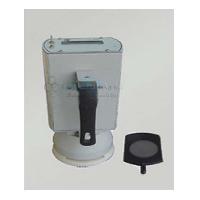
| Scintillation Counter | Scintillator; the light pulses are detected | Not listed | Not listed | Not listed |
Radioactive Sources (1)
| Item | Versions | Used with | Pack |
|---|---|---|---|
| Radioactive Source | Beta, gamma and alpha | G.M. counter or scintillation counter | Each, sold individually |
How to Choose Nuclear Physics Apparatus for Your Lab
- Start with the G.M. counter set. The G.M. Counter Digital covers the standard counting practicals on its own, because it comes with the tube, a stand, a timer and one source. One set for each student group keeps the benches working together.
- Add sources by experiment. Absorption in aluminium needs a beta source, the inverse square law is usually done with a gamma source, and penetration comparisons need all three versions. Say which version you need, as the set includes only one source.
- G.M. tube or scintillator. A G.M. tube gives the same size of pulse for every particle, so it counts but does not sort by energy. A scintillation counter gives pulses that depend on the energy deposited, so it suits work that goes beyond counting.
- Check local rules before ordering sources. Rules for receiving and holding radioactive material differ by country. Give the destination country in the enquiry so the paperwork can be settled before dispatch.
Practicals Covered by the Nuclear Physics Range
| Practical | Apparatus |
|---|---|
| Characteristic curve of a G.M. tube, plateau and operating voltage | G.M. Counter Digital |
| Count rate over a preset time and background count | G.M. Counter Digital |
| Absorption of beta particles in aluminium sheets | G.M. Counter Digital; Radioactive Source |
| Penetrating power of alpha, beta and gamma radiation | G.M. Counter Digital; Radioactive Source |
| Inverse square law with a gamma source | G.M. Counter Digital; Radioactive Source |
| Detection of gamma and beta radiation by scintillation | Scintillation Counter; Radioactive Source |
Who Uses Nuclear Physics Apparatus?
Physics departments of colleges and universities use the counters and sources in B.Sc. and M.Sc. nuclear physics practicals. Only trained staff should hold and issue the sources.
Ordering, Minimum Quantity and Dispatch
| Point | Detail |
|---|---|
| Minimum order quantity | 10 units of each item, as shown on its product page |
| Pack quantity | The G.M. Counter Digital is one set of counter, tube, stand and source; the source and the scintillation counter are sold individually |
| Dispatch time | Usually 7–10 working days |
| How to enquire | Use Add To Cart on a product page, or send the item names, source versions, quantities and destination country through the contact page |
| Tenders and OEM supply | Send the schedule through the tender enquiry page |
| Manufacturer | JLab (Jain Laboratory Instruments Pvt Ltd), Ambala, India |
Related Ranges in Scientific Instruments
Nuclear Physics is one of 22 subcategories of the Scientific Instrument range. These ranges cover the other modern physics and measurement practicals.
| Range | How it relates |
|---|---|
| e/m Apparatus | Millikan’s oil drop apparatus and e/m set-ups by the Thomson, helical, magnetron and magnetic focusing methods. |
| Characteristics of Vacuum Tubes | Valve characteristics, the work function and Richardson’s equation kit, and the ionization potential of mercury. |
| Laser Experiment | He-Ne lasers, laser accessories and a Michelson interferometer. |
| Power Supplies and Transformers | Regulated and high-voltage power supply models for valve and other experiments. |
| Test and Measuring Instruments | Pulse generator, oscillators and bench meters for electronics practicals. |
| Digital Measuring Instruments | Digital frequency, LCR, pH, lux and gauss meters. |
Frequently Asked Questions
How is the operating voltage of a G.M. tube chosen?
Raise the tube voltage in small steps and record the count rate at each step. The count rate rises, then stays nearly level over a range called the plateau. Set the operating voltage near the middle of the plateau, and never run the tube in the discharge region above it.
Why must the background count be measured first?
A G.M. tube also counts cosmic rays and natural radioactivity in the room, even with no source on the stand. Count without the source for a preset time, work out the background rate and subtract it from every reading.
Why do the counts change so much when the source is moved?
The count rate falls quickly with distance, roughly with the square of the distance for a gamma source. Alpha and beta particles are also absorbed by the air in between. Keep the source in a fixed position on the stand and use the same preset counting time for every reading.
Can a G.M. counter tell alpha, beta and gamma rays apart?
No. The tube gives one pulse for each particle whatever its kind. Students identify the radiation by the absorber that stops it: paper stops alpha particles, thin aluminium stops beta particles, and gamma rays are only reduced by thick lead.
How should radioactive sources be stored and handled in a teaching lab?
Keep sealed sources in a locked, labelled store and record each issue and return in a register. Handle them with tongs, never by hand, and keep them only for the time an experiment needs. Check your national radiation rules before buying, storing or disposing of a source.
Request a Quote
Name each item and the number of units you need, for example ten G.M. Counter Digital sets and ten beta versions of the Radioactive Source, and give the destination country. Then send the request from the contact page.