Characteristics of Vacuum Tubes Manufacturer, Suppliers and Exporter in India
Jlabexport is a leading Characteristics of Vacuum Tubes Manufacturer,and suppliers in India, United States, Indonesia, Brazil, Bangladesh, Mexico, Japan, Egypt, Philippines, Democratic Republic of the Congo, Vietnam, Iran, Turkey, Tanzania, United Kingdom, France, South Africa, Italy, Kenya, Colombia, Sudan, Uganda, South Korea, Argentina, Afghanistan, Yemen, Angola, Morocco, Poland, Uzbekistan, Mozambique, Malaysia, Ghana, Saudi Arabia, Peru, Madagascar, Côte d’Ivoire, Cameroon, Niger, Venezuela, Australia, Syria, Mali, Burkina Faso, Sri Lanka, Malawi, Zambia, Chad, Kazakhstan, Somalia, Chile, Senegal, Ecuador, Cambodia, Zimbabwe, Guinea, Benin, Rwanda, Burundi, Bolivia, South Sudan, Tunisia, Haiti, Belgium, Dominican Republic, Jordan, United Arab Emirates, Honduras, Tajikistan, Papua New Guinea, Portugal, Togo, Sierra Leone, Belarus, Laos, Turkmenistan, Libya, Kyrgyzstan, Nicaragua, Paraguay, Bulgaria, Serbia, Republic of the Congo, Lebanon, Liberia, Central African Republic, Palestine, Oman, Mauritania, New Zealand, Costa Rica, Kuwait, Panama, Croatia, Georgia, Eritrea, Mongolia, Uruguay, Qatar, Namibia, Bosnia and Herzegovina, Moldova, Armenia, Gambia, Jamaica, Lithuania, Albania, Gabon, Botswana, Lesotho, Guinea-Bissau, Slovenia, Equatorial Guinea, Latvia, North Macedonia, Bahrain, Trinidad and Tobago, Timor-Leste, Cyprus, Estonia, Eswatini, Mauritius, Djibouti, Fiji, Comoros, Solomon Islands, Guyana, Bhutan, Luxembourg, Suriname, Montenegro, Malta, Maldives, Cabo Verde, Brunei, Belize, Bahamas, Iceland, Vanuatu, Barbados, São Tomé and Príncipe, Samoa, Saint Lucia, Kiribati, Seychelles, Grenada, Saint Vincent and the Grenadines, Antigua and Barbuda.
Last updated: 13 November 2026
What Are Characteristics of Vacuum Tubes Apparatus?
Characteristics of Vacuum Tubes apparatus are panel units on which students plot the curves of thermionic valves and gas-filled tubes in physics and electronics practicals. Each unit carries its own supplies, and most have meters and the valve circuit on the panel. The range covers the diode valve, work function by Richardson's equation, triode, tetrode and pentode characteristics, the thyratron, the ionization potential of mercury and the VR tube. It also holds one op amp breadboard trainer. JLab (Jain Laboratory Instruments Pvt Ltd), Ambala, India, makes the 8 items listed here.
Request a quotation | Compare the apparatus | See the practicals covered
Which Apparatus Are in the Characteristics of Vacuum Tubes Range?
| Group | Items | What it covers |
|---|---|---|
| Diode Valve and Thermionic Emission | 2 | Plate V-I curve of a vacuum diode with a 0–300 V regulated supply, and the work function of a diode cathode by Richardson's equation. |
| Triode, Tetrode and Pentode Valves | 2 | Plate and mutual characteristics of an ECC82 triode, and plate and screen characteristics of a 6SJ7 tetrode and pentode valve. |
| Gas-Filled Tubes | 3 | Thyratron characteristics at various grid voltages, the ionization potential from a thyratron curve, and the voltage regulator (VR) tube. |
| Op Amp Breadboard Trainer | 1 | A breadboard kit with variable and ±15 V supplies, a signal source and meters for building op amp circuits. |
Compare Vacuum Tube Apparatus by Valve and Supply
Each table sets the items of one group side by side, as stated on each product page. Sizes are in inches; 10 x 8 x 4 in is about 25 x 20 x 10 cm and 18 x 7.5 x 5.5 in is about 46 x 19 x 14 cm.
Diode Valve and Thermionic Emission (2)
| Apparatus | Experiment | Valve | Built-in supplies | Meters | Size (in) |
|---|---|---|---|---|---|
| Diode Valve Characteristics Apparatus | V-I characteristics of a diode valve | Diode valve | 0–300 V DC / 30 mA regulated; 6.3 V AC / 1 A | Two | 10 x 8 x 4 |
| Work Function of Diode and Richardson's Equation Kit | Work function of a diode cathode by Richardson's equation | Diode valve, supplied | Power supply, supplied with the kit | Three | Not listed |
Triode, Tetrode and Pentode Valves (2)
| Apparatus | Experiment | Valve | Built-in supplies | Meters | Size (in) |
|---|---|---|---|---|---|
| Triode Valve Characteristics Apparatus with Stabilized Power Supply | V-I characteristics of a triode at various grid voltages | ECC82 | Type TE-3: 0–300 V DC / 30 mA; 0–25 V; 6.3 V AC / 1 A | Three round | 11 x 7.5 x 5.5 |
| Tetrode and Pentode Valve Characteristics Apparatus with Stabilized Power Supply | Plate and screen characteristics of tetrode and pentode valves | 6SJ7 | 0–300 V / 50 mA; 25 V DC / 25 mA; 6.3 V AC / 1 A | Five round | 18 x 7.5 x 5.5 |
Gas-Filled Tubes (3)
| Apparatus | Experiment | Valve | Built-in supplies | Meters | Size (in) |
|---|---|---|---|---|---|
| Thyratron Valve Characteristics Apparatus | V-I characteristics of a thyratron at various grid voltages | Thyratron | Two regulated: 10 V / 300 µA; 0–25 V DC / 250 mA | Not listed | 11 x 8 x 4 |
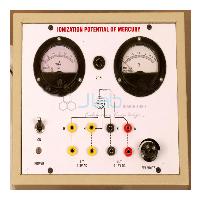
| Ionization Potential of Mercury | Ionization potential from the V-I curve of a thyratron | Thyratron | 0–3 V DC / 50 mA; 6.3 V AC; 0–25 V / 500 mA | Two | 13 x 8 x 5 |
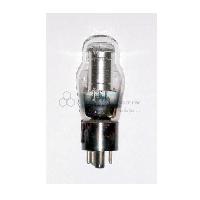
| V R Tube Characteristics | Characteristics of a voltage regulator tube | Cold-cathode VR tube on a base | Power supply, supplied | Not listed | Not listed |
Op Amp Breadboard Trainer (1)
| Kit | Variable DC supplies | Fixed DC supply | Signal outputs | Breadboard | Meters |
|---|---|---|---|---|---|
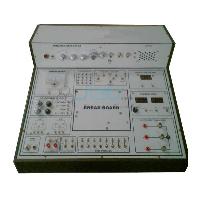
| Operational Amplifier kit BREAD BOARD TYPE | Three, 0–5 V DC regulated | ±15 V DC regulated | Sine, square and triangular | Two main strips and two distribution strips | Two dual-range |
How to Choose Vacuum Tube Apparatus for Your Lab
- Start from the practical list. Each panel serves one valve experiment. Match each practical in the syllabus to a panel in the practicals table, then plan one panel for each student group.
- Diode curve or work function. The diode valve apparatus plots the plate V-I curve with its own 0–300 V supply and two meters. The Richardson's equation kit has three meters for saturation current and cathode temperature work.
- Triode or multi-grid valve. The triode panel uses an ECC82 and three meters for plate and mutual curves. The tetrode and pentode panel uses a 6SJ7 and five meters, so plate and screen currents can be read together.
- Vacuum or gas-filled. The thyratron, ionization potential and VR tube units use gas-filled tubes. Choose them when the course covers firing voltage, ionization or voltage regulation rather than amplification.
- Fixed panel or breadboard. The valve units have the circuit fixed on the panel. The op amp kit is a breadboard trainer for building a series of op amp circuits; panel op amp trainers sit in a separate range.
Practicals Covered by the Characteristics of Vacuum Tubes Range
| Practical | Apparatus |
|---|---|
| Plate V-I characteristics of a diode valve, space charge and saturation regions | Diode Valve Characteristics Apparatus |
| Dynamic plate resistance of a diode valve | Diode Valve Characteristics Apparatus |
| Work function of a cathode by Richardson's equation | Work Function of Diode and Richardson's Equation Kit |
| Plate and mutual characteristics of a triode | Triode Valve Characteristics Apparatus with Stabilized Power Supply |
| Plate resistance, transconductance and amplification factor of a triode | Triode Valve Characteristics Apparatus with Stabilized Power Supply |
| Plate and screen characteristics of a tetrode and a pentode | Tetrode and Pentode Valve Characteristics Apparatus with Stabilized Power Supply |
| Characteristics of a thyratron at various grid voltages | Thyratron Valve Characteristics Apparatus |
| Ionization potential from a thyratron V-I curve | Ionization Potential of Mercury |
| Characteristics of a voltage regulator tube | V R Tube Characteristics |
| Op amp inverting and non-inverting amplifiers, adder, integrator and comparator | Operational Amplifier kit BREAD BOARD TYPE |
Who Uses Vacuum Tube Apparatus?
Physics departments of colleges and universities use the valve panels in degree-level electronics and thermionic emission practicals. Polytechnics and engineering institutes use them to teach how valves and gas-filled tubes work before moving to semiconductor devices.
Ordering, Minimum Quantity and Dispatch
| Point | Detail |
|---|---|
| Minimum order quantity | 10 units of each item, as shown on its product page |
| Pack quantity | Each item is sold individually |
| Dispatch time | Usually 7–10 working days |
| How to enquire | Use Add To Cart on a product page, or send the apparatus names and quantities through the contact page |
| Tenders and OEM supply | Send the schedule through the tender enquiry page |
| Manufacturer | JLab (Jain Laboratory Instruments Pvt Ltd), Ambala, India |
Related Ranges in Scientific Instruments
Characteristics of Vacuum Tubes is one of 22 subcategories of the Scientific Instrument range. These neighbouring ranges carry on from the valve practicals.
| Range | How it relates |
|---|---|
| Semiconductor Devices | The solid-state versions of the same curves: diode, zener, transistor, FET, SCR, diac and triac panels. |
| E M Apparatus | e/m of the electron by Thomson, helical, magnetic focusing and magnetron methods, and Millikan's oil drop apparatus. |
| Power Supplies and Transformers | Includes power supplies for diode, triode, and tetrode and pentode valve experiments, and a high voltage power supply. |
| Characteristics Operational Amplifiers | Panel op amp trainers for inverting and non-inverting amplifiers, comparators, converters and instrumentation amplifiers. |
| Optoelectronic Devices | Photo cells, Planck's constant apparatus and a photo multiplier tube for photoelectric practicals. |
| Verification of Various Laws and Conservation of Signal | Includes flashing and quenching of a neon lamp, another gas discharge practical. |
Frequently Asked Questions
What are the three triode constants and how are they related?
Plate resistance is the change in plate voltage per change in plate current at fixed grid voltage. Transconductance is the change in plate current per change in grid voltage. The amplification factor equals plate resistance multiplied by transconductance, which students check from their own curves.
Why does the diode valve curve level off at high plate voltage?
At low plate voltage the cloud of electrons near the cathode, the space charge, limits the current. As the voltage rises the plate collects every electron the cathode emits, and the current saturates. A hotter cathode gives a higher saturation current.
Why should students wait after changing the filament setting?
The cathode takes time to reach a steady temperature, and emission changes sharply with temperature. Readings taken too soon drift. In the work function practical, change the cathode temperature in small steps and note the saturation current only when the meter has settled.
Why does the tetrode plate curve show a dip?
At low plate voltage, electrons striking the plate knock out secondary electrons, and the more positive screen grid collects them. The plate current falls while the screen current rises. In a pentode the suppressor grid returns these electrons to the plate, so the dip disappears.
How does a gas-filled tube behave differently from a vacuum valve?
A vacuum valve controls its current smoothly. In a thyratron the grid only sets the voltage at which the gas ionizes and the tube fires; after that the grid loses control. A VR tube conducts at a set voltage and then holds that voltage nearly steady as the current changes.
What precautions protect the valves during practicals?
Run the heater only at its rated 6.3 V, keep plate current within the meter range, and raise the plate voltage in steps. Switch off before changing connections, because the plate supply reaches 300 V. Let a hot valve cool before handling it.
Request a Quote
Name each apparatus and the number of sets you need, for example ten Triode Valve Characteristics Apparatus and ten Thyratron Valve Characteristics Apparatus. Then send the request from the contact page.
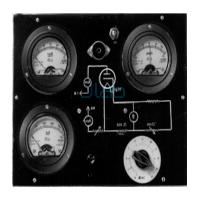
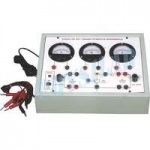
Work Function of Diode and Richardson's Equation Kit
Product Code : EL-COVT-1072
Complete with power supply, Three Meters, Diode valve, circuit diagram printed on front panel.
View Details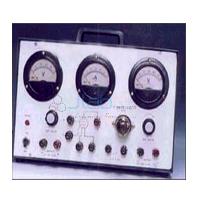
Triode Valve Characteristics Apparatus with Stabilized Power Supply
Product Code : EL-COVT-1073
View Details
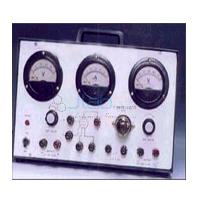
Tetrode and Pentode Valve Characteristics Apparatus with Stabilized Power Supply
Product Code : EL-COVT-1074
View Details