e/m Apparatus Manufacturer, Suppliers and Exporter in India
Jlabexport is a leading e/m Apparatus Manufacturer,and suppliers in India, United States, Indonesia, Brazil, Bangladesh, Mexico, Japan, Egypt, Philippines, Democratic Republic of the Congo, Vietnam, Iran, Turkey, Tanzania, United Kingdom, France, South Africa, Italy, Kenya, Colombia, Sudan, Uganda, South Korea, Argentina, Afghanistan, Yemen, Angola, Morocco, Poland, Uzbekistan, Mozambique, Malaysia, Ghana, Saudi Arabia, Peru, Madagascar, Côte d’Ivoire, Cameroon, Niger, Venezuela, Australia, Syria, Mali, Burkina Faso, Sri Lanka, Malawi, Zambia, Chad, Kazakhstan, Somalia, Chile, Senegal, Ecuador, Cambodia, Zimbabwe, Guinea, Benin, Rwanda, Burundi, Bolivia, South Sudan, Tunisia, Haiti, Belgium, Dominican Republic, Jordan, United Arab Emirates, Honduras, Tajikistan, Papua New Guinea, Portugal, Togo, Sierra Leone, Belarus, Laos, Turkmenistan, Libya, Kyrgyzstan, Nicaragua, Paraguay, Bulgaria, Serbia, Republic of the Congo, Lebanon, Liberia, Central African Republic, Palestine, Oman, Mauritania, New Zealand, Costa Rica, Kuwait, Panama, Croatia, Georgia, Eritrea, Mongolia, Uruguay, Qatar, Namibia, Bosnia and Herzegovina, Moldova, Armenia, Gambia, Jamaica, Lithuania, Albania, Gabon, Botswana, Lesotho, Guinea-Bissau, Slovenia, Equatorial Guinea, Latvia, North Macedonia, Bahrain, Trinidad and Tobago, Timor-Leste, Cyprus, Estonia, Eswatini, Mauritius, Djibouti, Fiji, Comoros, Solomon Islands, Guyana, Bhutan, Luxembourg, Suriname, Montenegro, Malta, Maldives, Cabo Verde, Brunei, Belize, Bahamas, Iceland, Vanuatu, Barbados, São Tomé and Príncipe, Samoa, Saint Lucia, Kiribati, Seychelles, Grenada, Saint Vincent and the Grenadines, Antigua and Barbuda.
Last updated: 14 November 2026
What Is e/m Apparatus Used For?
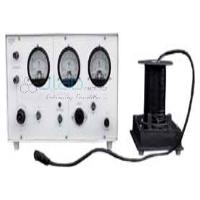
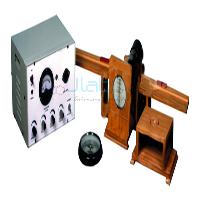
e/m Apparatus is the range of bench set-ups on which students measure e/m, the charge-to-mass ratio of the electron, in modern physics practicals. The name is the symbol of that ratio, also called the specific charge of the electron. Four units cover the Thomson bar magnet method, the helical method, the magnetic focusing method and the short solenoid (magnetron) method. A fifth item, Millikan's oil drop apparatus, measures the charge on the electron, so the two results together give the electron mass. College and university physics labs use them. JLab (Jain Laboratory Instruments Pvt Ltd), Ambala, India, makes the 5 items listed here.
Request a quotation | Compare the apparatus | See the practicals covered
Which Apparatus Are in the e/m Apparatus Range?
| Group | Items | What it covers |
|---|---|---|
| e/m Ratio Apparatus | 4 | Specific charge of the electron by Thomson's crossed fields with bar magnets, by focusing a CRT beam in a solenoid field, and by the magnetron cut-off in a solenoid. |
| Electron Charge Apparatus | 1 | Charge on the electron by Millikan's oil drop method, with a condenser, light source, atomizer and measuring microscope on one cast iron stand. |
Compare e/m Apparatus by Method and Parts
Each table sets the items of one group side by side, as stated on each product page. Sizes are in inches; 11 x 7 x 4 in is about 28 x 18 x 10 cm and 13 x 7 x 7 in is about 33 x 18 x 18 cm.
e/m Ratio Apparatus (4)
| Apparatus | Method | Electron source | Magnetic field from | Meters | Size (in) |
|---|---|---|---|---|---|
| e and m By Thomson Bar Magnet Method | Thomson's method: electric and magnetic deflections balanced | Cathode ray tube on a wooden frame with a centimetre scale | A pair of bar magnets, measured with the deflecting magnetometer supplied | Moving coil meters for the deflecting voltage | Not listed |
| e and m by Helical Method Solenoid Method | Helical method | Cathode ray tube that moves inside the solenoid | Multi-layer solenoid on a wooden base, coarse and fine current control | High-resistance voltmeter and solenoid ammeter | Not listed |
| e and m by Magnetic Focusing Method | Magnetic focusing method | 3-inch CRT on a teak wood stand | Ring-type solenoid that slides over the CRT | Two: acceleration voltage and solenoid current | 11 x 7 x 4 |
| e and m by Short Solenoid Method Magnetron Method | Short solenoid (magnetron) method | Magnetron valve that slides into the solenoid pipe | One mounted solenoid | Two: anode voltage and solenoid current | 13 x 7 x 7 (power supply) |
Electron Charge Apparatus (1)
| Apparatus | Experiment | Main parts | Support | Microscope |
|---|---|---|---|---|
| Millikan's Oil Drop Apparatus | Charge on the electron by the oil drop method | Specially designed condenser, light source and atomizer | Heavy cast iron base with a steel pillar | Measuring microscope with micrometer scale and slow-motion screws |
How to Choose e/m Apparatus for Your Lab
- Start from the method in your syllabus. Each e/m unit is built for one method: Thomson, helical, magnetic focusing or magnetron. Match the method named in the practical list, then count the student groups in one batch.
- Bar magnets or a coil current. The Thomson apparatus takes its field from two bar magnets and measures it with the deflecting magnetometer. The three solenoid units take the field from a measured coil current.
- Tube inside the coil or coil over the tube. The helical unit moves the CRT inside a multi-layer solenoid. The magnetic focusing kit slides a ring solenoid over a 3-inch CRT and has intensity, focus and X and Y deflection controls on one supply.
- CRT or valve. The magnetron kit uses a valve instead of a CRT, and the reading is the solenoid current at which the anode current falls. Its meters read anode voltage and solenoid current, so plan how you will read the anode current.
- Add the oil drop apparatus for the electron mass. e/m alone does not give the mass. Pair any e/m unit with Millikan's oil drop apparatus when the course asks for the charge and the mass of the electron.
Practicals Covered by the e/m Apparatus Range
| Practical | Apparatus |
|---|---|
| e/m of the electron by Thomson's method (bar magnet method) | e and m By Thomson Bar Magnet Method |
| Magnetic field of the bar magnets with a deflection magnetometer | e and m By Thomson Bar Magnet Method |
| e/m of the electron by the helical method | e and m by Helical Method Solenoid Method |
| e/m of the electron by magnetic focusing of a CRT beam | e and m by Magnetic Focusing Method |
| e/m of the electron by the short solenoid (magnetron) method | e and m by Short Solenoid Method Magnetron Method |
| Charge on the electron by Millikan's oil drop method | Millikan's Oil Drop Apparatus |
| Mass of the electron from e and e/m | Millikan's Oil Drop Apparatus with any e/m apparatus |
Who Uses e/m Apparatus?
Physics departments of colleges and universities use these set-ups in degree-level modern physics practicals on the electron. Teacher training colleges use them to show the specific charge of the electron and charge quantization.
Ordering, Minimum Quantity and Dispatch
| Point | Detail |
|---|---|
| Minimum order quantity | 10 units of each apparatus, as shown on its product page |
| Pack quantity | Each apparatus is sold individually |
| Dispatch time | Usually 7–10 working days |
| How to enquire | Use Add To Cart on a product page, or send the apparatus names and quantities through the contact page |
| Tenders and OEM supply | Send the schedule through the tender enquiry page |
| Manufacturer | JLab (Jain Laboratory Instruments Pvt Ltd), Ambala, India |
Related Ranges in Scientific Instruments
e/m Apparatus is one of 22 subcategories of the Scientific Instrument range. These neighbouring ranges hold the other electron and modern physics practicals.
| Range | How it relates |
|---|---|
| Characteristics of Vacuum Tubes | Diode, triode, tetrode, pentode and thyratron valve apparatus, with a work function kit and the ionization potential of mercury. |
| Optoelectronic Devices | Planck's constant apparatus, photo cells, solar cells and a photo multiplier tube for photoelectric practicals. |
| Nuclear Physics | A digital G.M. counter, a scintillation counter and a radioactive source. |
| Laser Experiment | A helium neon laser, laser accessories and a Michelson interferometer. |
| Demonstration Models | Includes a demonstration cathode ray oscilloscope for teaching how a CRT display works. |
| Digital Measuring Instruments | Includes a digital flux meter and gauss meter for magnetic field readings. |
Frequently Asked Questions
Can these set-ups measure e and m separately?
No. Deflection or focusing of an electron beam depends only on the ratio e/m, so the four e/m units give the ratio. Millikan's oil drop apparatus measures the charge e. Dividing e by the measured e/m gives the electron mass, about 9.1 x 10^-31 kg.
What value of e/m should students expect?
The accepted value is about 1.76 x 10^11 C/kg. A student result within a few percent is a good reading on teaching apparatus. Larger differences usually come from the field value, the voltage reading or the distance read on the scale.
Why does the beam shrink to a spot in the helical and magnetic focusing methods?
Electrons leave the gun with a small sideways speed and follow helical paths in the axial field. At one value of solenoid current each electron makes exactly one turn before it reaches the screen, so all paths meet and the line on the screen closes to a sharp spot.
Does the Earth's magnetic field affect the reading?
Yes. It adds a small field to the one from the magnets or the solenoid. Set the tube in the direction the practical manual gives, usually along the magnetic north-south line, and keep loose magnets, steel stands and other coils away from the bench.
What mistakes spoil e/m readings?
Reading the spot on the scale at an angle, which gives parallax error. Taking the field from a solenoid current that is still drifting. Leaving a magnet or steel tool near the tube. Using a low-accuracy voltmeter for the accelerating voltage. Repeat each setting and average the readings.
What precautions apply to the high voltage supply?
Complete the wiring before switching on, because the tube supply runs at high voltage; the Thomson apparatus uses an 800 V DC EHT supply. Raise voltages and currents slowly, switch off before changing connections, and work in a dim room so the spot is easy to see.
Request a Quote
Name each apparatus and the number of sets you need, for example ten e/m units by the magnetic focusing method and ten Millikan's oil drop sets. Then send the request from the contact page.
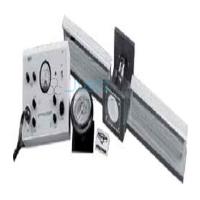
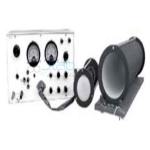
e and m by Helical Method Solenoid Method
Product Code : EL-EMA-1066
Having three major parts to measure electron for e/m by Helical Method, i.e. Standard Solenoid of multi-turned layers fitted on wooden base.
View Details