e and m by Helical Method Solenoid Method Manufacturer,Supplier and Exporter in India
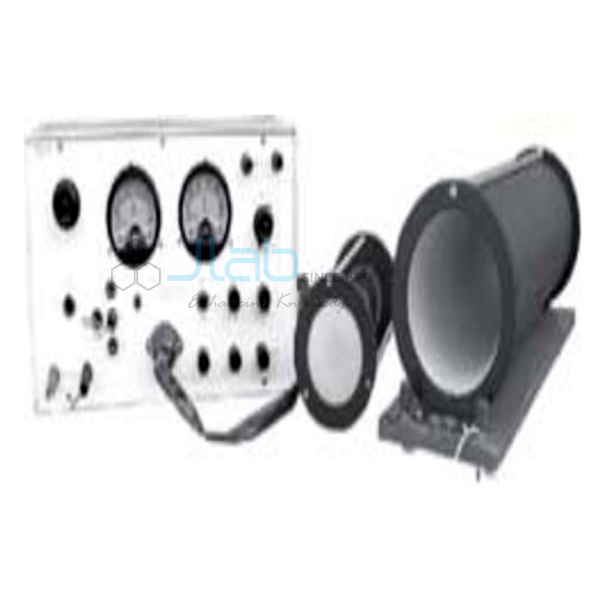
Product Code : EL-EMA-1066
Jlab Export is a leading e and m by Helical Method Solenoid Method Manufacturer,and suppliers in India
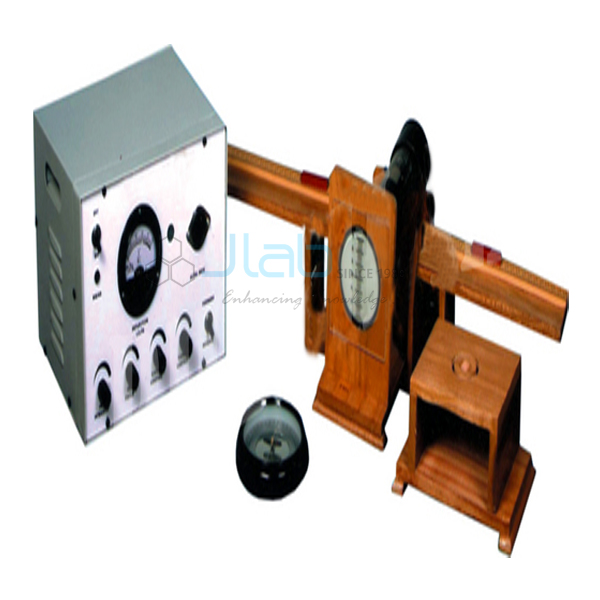
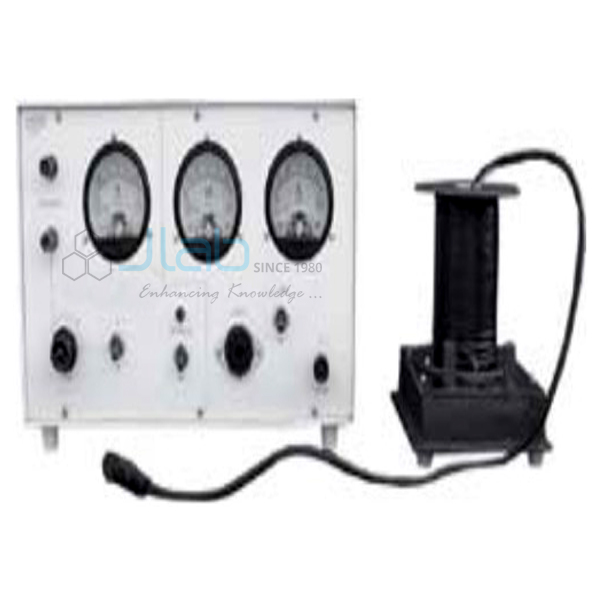
e and m by Helical Method Solenoid Method (code EL-EMA-1066) is an apparatus for finding e/m of the electron by the helical method, in which an axial magnetic field focuses the electron beam of a cathode ray tube. The tube can be moved inside a standard multi-layer solenoid on a wooden base, with a solenoid supply under coarse and fine control. It is made by Jain Laboratory Instruments Pvt Ltd (JLab) at its works in Ambala, India.
Specifications
| Parameter | Detail |
|---|---|
| Experiment | To measure e/m of the electron by the helical method |
| Solenoid | Standard solenoid of multi-turn layers, fitted on a wooden base |
| Cathode ray tube | Mounted so that it can be moved inside the standard solenoid |
| Tube power supply | Power supply for the cathode voltage of the CRT |
| Voltmeter | High-resistance voltmeter provided |
| Solenoid supply | With coarse and fine control arrangement |
| Ammeter | Measures the current passing through the solenoid |
| Quality check | Each apparatus is visually inspected before dispatch |
| Pack quantity | Each (sold individually) |
| Minimum order quantity | 10 units |
| Dispatch time | Usually 7–10 working days |
| Product code | EL-EMA-1066 |
| Manufacturer | Jain Laboratory Instruments Pvt Ltd (JLab) — OEM |
| Country of origin | India (made in Ambala, Haryana) |
What Is the Helical Method e/m Apparatus Used For?
It is used for the specific charge electron experiment in undergraduate physics labs, where the helical (magnetic focusing) method is a common alternative to Thomson’s crossed-field method. Electrons leaving the gun with a small sideways component of velocity follow helical paths around the axis of the solenoid. As the solenoid current is raised, the trace on the screen turns and shrinks, and at a critical field it collapses to a sharp spot, because each electron completes exactly one turn of its helix in the time it takes to reach the screen. With the accelerating voltage read on the high-resistance voltmeter, the focusing current read on the ammeter (which, with the solenoid’s turns per unit length, gives the field) and the distance travelled to the screen, students calculate e/m.
The coarse control brings the current close to focus quickly and the fine control lets students find the sharpest spot, which is where most of the judgement in this experiment lies. Repeating the reading with the current reversed, and averaging, is a good habit. Keep the apparatus away from steel benches and other magnetic fields, let the tube warm up before taking readings, and switch off the supply before touching any connection, since the CRT works at high voltage.
What to Specify When Ordering
- Quantity — the minimum order is 10 units, usually one per practical bench.
- Solenoid data — the listing does not give the number of turns or the solenoid length, so ask for the values your students will need in the calculation.
- Mains supply — state your lab’s voltage and plug type so the quotation can confirm the power supply.
- Companion apparatus — add the Thomson, magnetic focusing or magnetron e/m units, or Millikan’s oil drop apparatus, if your course covers them.
Frequently Asked Questions
How does the helical method measure e/m?
By magnetic focusing. The solenoid’s axial field makes the electrons spiral, and at one value of solenoid current they all return to the axis on reaching the screen, focusing the trace to a point. That current, the accelerating voltage and the tube geometry give e/m.
Which meters and controls are provided?
A high-resistance voltmeter and an ammeter that measures the current through the solenoid. The solenoid supply has a coarse and fine control arrangement, and a separate power supply provides the cathode voltage for the CRT.
Why does the solenoid supply need coarse and fine control?
Focus happens at one particular current, and the spot changes quickly near it. The coarse control gets close and the fine control lets students settle on the sharpest spot, which gives a more consistent reading.
How is it different from the e/m by magnetic focusing apparatus?
Both rely on focusing by an axial magnetic field. In this unit the tube sits inside a standard multi-layer solenoid; the magnetic focusing unit, listed separately, uses a ring-type solenoid that slides over a 3-inch CRT on a teak wood stand and has intensity, focus and X and Y deflection controls.
What should I send for an export quotation?
The quantity, destination country and port or city, preferred delivery terms such as FOB or CIF, any packing or labelling requirements, and the tender reference where the purchase is part of a tender.
Who manufactures the helical method apparatus?
JLab — Jain Laboratory Instruments Pvt Ltd — makes it at its works in Ambala, Haryana, India, and supplies it directly as the manufacturer.
OEM Manufacturer
JLab is the trading name of Jain Laboratory Instruments Pvt Ltd, a physics lab equipment manufacturer in India, incorporated in 2017, with its works on Hargolal Road, Ambala, Haryana. The solenoid, tube mounting and power supply of this apparatus are built at JLab’s own works and not bought in from a trader, so universities, colleges, dealers and importers order factory-direct, each unit is visually inspected before dispatch, and repeat orders or service questions return to the same maker. JLab exports worldwide and ships to buyers in every region — for example Samoa in Oceania, Guinea in West Africa, Eswatini in Southern Africa, the USA in North America and Armenia in Eastern Europe. For institutional purchases, see the JLab lab tenders page.
Other Electron e/m and Charge Apparatus
- e and m by Magnetic Focusing Method — the same focusing principle with a ring-type solenoid sliding over a CRT.
- e and m By Thomson Bar Magnet Method — e/m by crossed electric and magnetic fields, with bar magnets and a deflecting magnetometer.
- e and m by Short Solenoid Method Magnetron Method — e/m from the magnetron cut-off in a solenoid’s field.
- Millikan’s Oil Drop Apparatus — measures the electron’s charge, the other half of the electron-mass calculation.
Browse the full E M Apparatus range or all Scientific Instrument products.
Request a Quote
Quotes come straight from the manufacturer. Use the Add To Cart enquiry button on this page, or send the quantity (minimum 10 units), your mains voltage, any solenoid data you need for the calculation and the delivery location through the contact page.
Last updated: 9 October 2026