e and m by Short Solenoid Method Magnetron Method Manufacturer,Supplier and Exporter in India
Product Code : EL-EMA-1069
Jlab Export is a leading e and m by Short Solenoid Method Magnetron Method Manufacturer,and suppliers in India
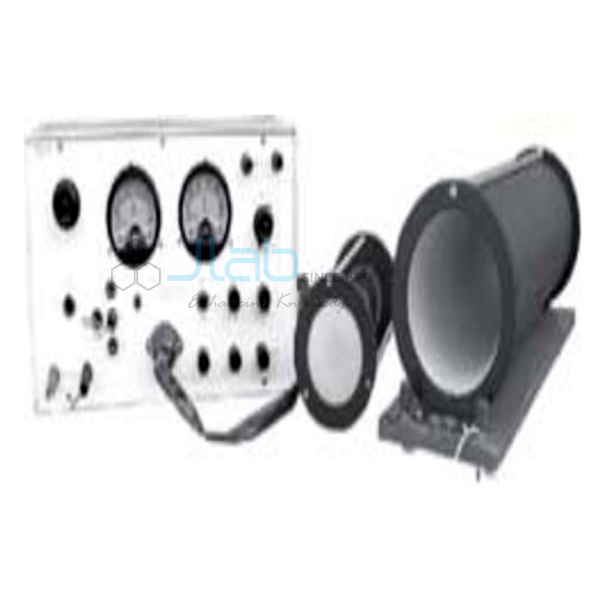
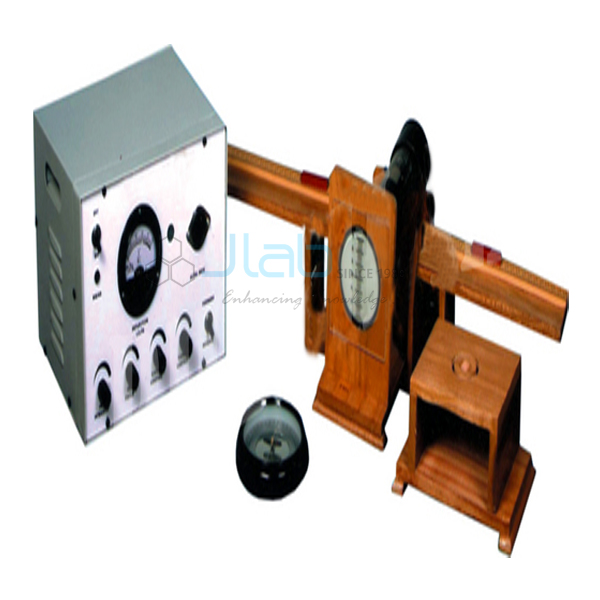
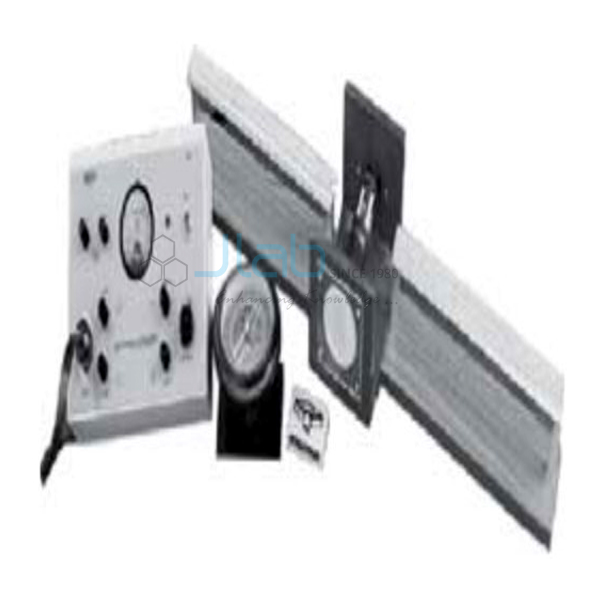
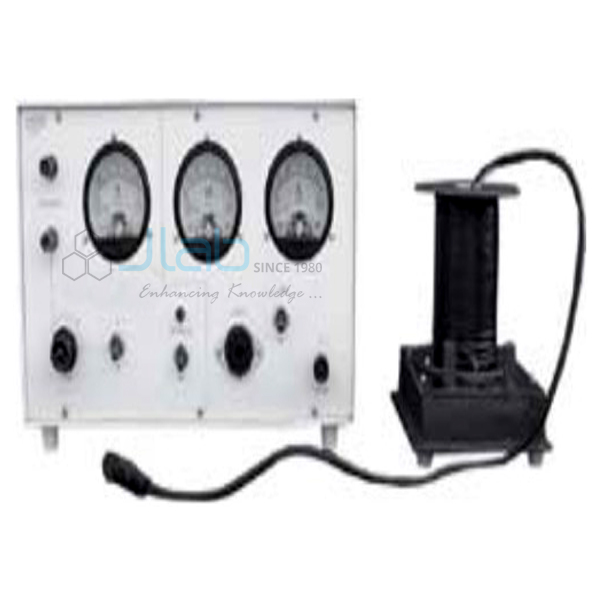
e and m by Short Solenoid Method Magnetron Method (code EL-EMA-1069) is a kit for studying the charge of the electron, as e/m, by the short solenoid (magnetron) method. A magnetron slides into the pipe of a mounted solenoid, and the kit supplies the filament voltage, a variable high voltage and the solenoid current, with meters for anode voltage and solenoid current. It is made by Jain Laboratory Instruments Pvt Ltd (JLab) at its works in Ambala, India.
Specifications
| Parameter | Detail |
|---|---|
| Experiment | To study the charge of an electron (e/m) by the short solenoid method |
| Power supply | Low-voltage DC power supply with filament voltage, variable high voltage and solenoid current source |
| Meters | Two: anode voltage and solenoid current |
| Solenoid | One solenoid, mounted so that the magnetron can slide into the solenoid pipe |
| Power supply dimensions | 13 x 7 x 7 in (about 33 x 18 x 18 cm) |
| Quality check | Each kit is visually inspected before dispatch |
| Pack quantity | Each (sold individually) |
| Minimum order quantity | 10 units |
| Dispatch time | Usually 7–10 working days |
| Product code | EL-EMA-1069 |
| Manufacturer | Jain Laboratory Instruments Pvt Ltd (JLab) — OEM |
| Country of origin | India (made in Ambala, Haryana) |
What Is the Magnetron e/m Kit Used For?
The magnetron method is a neat way to find e/m with a valve rather than a cathode ray tube. A magnetron is a diode with a straight filament cathode on the axis of a cylindrical anode; electrons leave the heated filament and travel outward to the anode. When the magnetron sits inside the solenoid, the solenoid’s axial field bends those paths into curves. As the solenoid current rises, the curves tighten until, at a critical field, the electrons only just graze the anode and the anode current falls sharply — the cut-off. From the anode voltage at which this happens, the critical field worked out from the solenoid current, and the anode radius of the valve, students calculate e/m.
It is used in B.Sc. physics practicals and engineering physics and electronics labs, often alongside a CRT-based e/m method so students can compare two independent results. A typical run fixes the anode voltage, raises the solenoid current in small steps and records the anode current at each step, then plots the curve and reads off the critical current from its steepest fall. Allow the filament to warm up before reading, keep the set-up clear of steel and other magnets, and turn the high voltage down to zero before sliding the magnetron in or out of the solenoid.
What to Specify When Ordering
- Quantity — the minimum order is 10 units, normally one kit per bench.
- Anode current reading — the listing names meters for anode voltage and solenoid current only, so state in the enquiry how you plan to read the anode current, or ask for a suitable meter.
- Magnetron and solenoid data — the anode radius and the solenoid’s turns are needed for the calculation and are not given in this listing; ask for them with the quotation, along with spare valves if you want them.
- Mains supply — give your lab’s voltage and plug type so the power supply can be confirmed.
Frequently Asked Questions
What is the principle of the magnetron method?
Magnetic cut-off. The solenoid’s field curves the electrons travelling from the filament to the anode, and at one critical field they stop reaching the anode, so the anode current drops steeply. The anode voltage, the critical field and the anode radius give e/m.
What does the power supply provide?
A low-voltage DC supply with filament voltage, a variable high voltage and a solenoid current source; the power supply measures 13 x 7 x 7 inches. Two meters read the anode voltage and the solenoid current.
How is the magnetron placed in the field?
The solenoid is mounted so the magnetron slides into its pipe, putting the valve in the solenoid’s axial field.
How does it compare with the e/m by magnetic focusing kit?
Both take the field from a solenoid current. The magnetic focusing kit, listed separately, uses a 3-inch CRT on a teak wood stand with a ring-type solenoid sliding over it and judges a focused spot; this kit uses a magnetron and judges the anode current cut-off.
What information speeds up an export quotation?
The quantity, destination country and port or city, the delivery terms you want (such as FOB or CIF), packing or labelling instructions, and the tender reference if the order is for a tender.
Who manufactures the magnetron e/m kit?
JLab (Jain Laboratory Instruments Pvt Ltd) builds it at its works in Ambala, Haryana, India, and quotes for it directly.
OEM Manufacturer
JLab is the trading name of Jain Laboratory Instruments Pvt Ltd, a physics and electronics lab equipment manufacturer in India, incorporated in 2017 and based on Hargolal Road, Ambala, Haryana. The power supply, solenoid mount and wiring of this kit are produced at JLab’s own works rather than purchased from a trader, so colleges, universities, dealers and importers buy from the maker itself; each kit is visually inspected before it ships, and follow-up orders and spare valves are handled by the manufacturer. JLab exports worldwide and ships to buyers in every region — for example Peru in South America, Myanmar in Southeast Asia, Kyrgyzstan in Central Asia, Luxembourg in Western Europe and Poland in Eastern Europe. Tender details are on the JLab lab tenders page.
Related e/m and Valve Apparatus
- e and m by Magnetic Focusing Method — a CRT-based e/m method with a ring-type solenoid, for comparing results.
- e and m by Helical Method Solenoid Method — e/m with a CRT movable inside a multi-layer solenoid.
- e and m By Thomson Bar Magnet Method — e/m by crossed fields from bar magnets and deflecting plates.
- Millikan’s Oil Drop Apparatus — measures the electron’s charge itself.
- Diode Valve Characteristics Apparatus — plots the V–I characteristics of a vacuum diode, the valve type a magnetron is built on.
More units are in the E M Apparatus range and the wider Scientific Instrument range.
Request a Quote
Quotes come straight from the manufacturer. Use the Add To Cart enquiry button on this page, or send the quantity (minimum 10 units), your mains voltage, whether you need an anode current meter or spare valves, and the delivery location through the contact page.
Last updated: 9 October 2026