Training Kits for Communication Lab Manufacturer, Suppliers and Exporter in India
Jlabexport is a leading Training Kits for Communication Lab Manufacturer,and suppliers in India, United States, Indonesia, Brazil, Bangladesh, Mexico, Japan, Egypt, Philippines, Democratic Republic of the Congo, Vietnam, Iran, Turkey, Tanzania, United Kingdom, France, South Africa, Italy, Kenya, Colombia, Sudan, Uganda, South Korea, Argentina, Afghanistan, Yemen, Angola, Morocco, Poland, Uzbekistan, Mozambique, Malaysia, Ghana, Saudi Arabia, Peru, Madagascar, Côte d’Ivoire, Cameroon, Niger, Venezuela, Australia, Syria, Mali, Burkina Faso, Sri Lanka, Malawi, Zambia, Chad, Kazakhstan, Somalia, Chile, Senegal, Ecuador, Cambodia, Zimbabwe, Guinea, Benin, Rwanda, Burundi, Bolivia, South Sudan, Tunisia, Haiti, Belgium, Dominican Republic, Jordan, United Arab Emirates, Honduras, Tajikistan, Papua New Guinea, Portugal, Togo, Sierra Leone, Belarus, Laos, Turkmenistan, Libya, Kyrgyzstan, Nicaragua, Paraguay, Bulgaria, Serbia, Republic of the Congo, Lebanon, Liberia, Central African Republic, Palestine, Oman, Mauritania, New Zealand, Costa Rica, Kuwait, Panama, Croatia, Georgia, Eritrea, Mongolia, Uruguay, Qatar, Namibia, Bosnia and Herzegovina, Moldova, Armenia, Gambia, Jamaica, Lithuania, Albania, Gabon, Botswana, Lesotho, Guinea-Bissau, Slovenia, Equatorial Guinea, Latvia, North Macedonia, Bahrain, Trinidad and Tobago, Timor-Leste, Cyprus, Estonia, Eswatini, Mauritius, Djibouti, Fiji, Comoros, Solomon Islands, Guyana, Bhutan, Luxembourg, Suriname, Montenegro, Malta, Maldives, Cabo Verde, Brunei, Belize, Bahamas, Iceland, Vanuatu, Barbados, São Tomé and Príncipe, Samoa, Saint Lucia, Kiribati, Seychelles, Grenada, Saint Vincent and the Grenadines, Antigua and Barbuda.
Last updated: 13 November 2026
What Are Training Kits for Communication Lab?
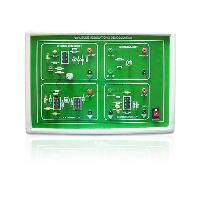
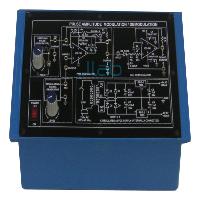
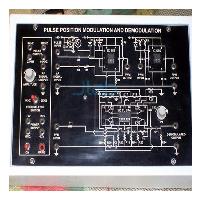
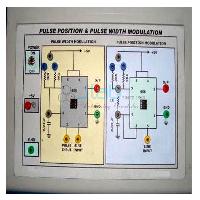
Training Kits for Communication Lab are bench trainers on which students build and measure the basic links of analog, pulse and optical communication. The range covers amplitude modulation and demodulation, pulse amplitude, pulse position and pulse width modulation, a phase locked loop on the IC 565, and a fiber optic transmitter and receiver. Every trainer has its own DC power supply. Colleges, polytechnics and engineering institutes use them in communication practicals. JLab (Jain Laboratory Instruments Pvt Ltd), Ambala, India, makes the 6 trainers listed here.
Request a quotation | Compare the trainers | See the practicals covered
Which Trainers Are in the Training Kits for Communication Lab Range?
| Group | Items | What it covers |
|---|---|---|
| Analog and Optical Communication Trainers | 2 | AM modulation index, sidebands and demodulation, and an optical link with a transmitter, fiber optic cable and receiver. |
| Pulse Modulation Trainers | 3 | Pulse amplitude modulation and demodulation, pulse position modulation and demodulation, and a combined pulse position and pulse width trainer. |
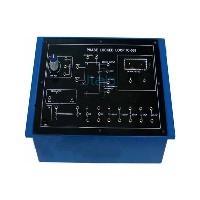
| Phase Locked Loop Trainer | 1 | Lock range and capture range of a phase locked loop built on the IC 565. |
Compare Communication Lab Trainers by Specification
Each table sets the trainers of one group side by side, using the facts given on each product page. Not listed means the product page does not give that detail.
Analog and Optical Communication Trainers (2)
| Trainer | Experiments | Power supply | Signal source | Main parts |
|---|---|---|---|---|
| Study of Transmitter and Receiver using Fiber Optics Cable | Output power of an optical transmitter and receiver; signal transmission through the fiber; attenuation from transmitter to receiver | 6 V DC and 3 V DC, built in | Microphone | Photodetector and transistor preamplifier, transistor power amplifier with driver transformers, LEDs, speaker and fiber optic cable |
| Study of Amplitude Modulation and Demodulation | Modulation index, upper and lower sideband frequencies, frequency of the demodulated signal | DC regulated, built in | Sine wave oscillator, 100 Hz to 1 kHz | Circuit diagram drawn on the panel, components on it, connections at terminals |
Pulse Modulation Trainers (3)
| Trainer | Experiment | Power supply | Mains input | Oscillators | Cabinet |
|---|---|---|---|---|---|
| Pulse Amplitude Modulation and Demodulation | Pulse amplitude modulation and demodulation | ±9 V DC, 100 mA, IC regulated, internally connected | 230 V ±10%, 50 Hz AC | Not listed | About 3 kg |
| Pulse Position Modulation and Demodulation | Pulse position modulation of a carrier; frequency of the demodulated signal | 5 V DC, 150 mA, regulated | Not listed | AF sine wave oscillator; RF oscillator on the IC 555 | Circuit diagram printed on the panel, 4 mm sockets |
| Pulse Position and Pulse Width Modulation | Pulse position modulation and pulse width modulation | +5 V DC, 300 mA, regulated | 100–230 V AC, 50–60 Hz | Not listed | ABS plastic, 29 × 20 × 11 cm, 1.5 kg |
Phase Locked Loop Trainer (1)
| Trainer | Experiment | PLL device | Power supply | Internal parts |
|---|---|---|---|---|
| Phase Locked Loop Circuit (PLL) | Study of the phase locked loop; lock range and capture range frequencies | IC 565 | Two DC regulated supplies, built in | Resistors, capacitors and one potentiometer inside; connections at the front panel |
How to Choose Communication Lab Trainers
- Start from the practical list. Match each modulation, phase locked loop or fiber optic experiment in your syllabus to a trainer in the practicals table. The analog, pulse and optical links each sit on a trainer of their own.
- Separate or combined pulse trainers. The Pulse Position and Pulse Width Modulation covers PWM and PPM in one portable cabinet. The separate PAM and PPM trainers each include demodulation, so students can recover the message as well as generate it.
- Built-in signal sources. The AM trainer has its own 100 Hz to 1 kHz message oscillator and the PPM trainer has an AF sine wave oscillator and an IC 555 RF oscillator. For the other trainers, check whether the bench needs an external signal source.
- Mains supply. The PPM and PWM trainer accepts 100–230 V AC at 50–60 Hz, while the PAM trainer is listed for 230 V AC, 50 Hz. Check this before ordering for a lab on 110 V mains.
- Optical communication. The fiber optic trainer has a microphone input and a speaker output, so students can hear the signal that crosses the fiber and then measure its attenuation.
Practicals Covered by the Training Kits for Communication Lab Range
| Practical | Trainer |
|---|---|
| Amplitude modulation and demodulation; modulation index | Study of Amplitude Modulation and Demodulation |
| Upper and lower sideband frequencies of an AM signal | Study of Amplitude Modulation and Demodulation |
| Pulse amplitude modulation and recovery of the message signal | Pulse Amplitude Modulation and Demodulation |
| Pulse position modulation and demodulation | Pulse Position Modulation and Demodulation |
| Pulse position modulation and pulse width modulation | Pulse Position and Pulse Width Modulation |
| Lock range and capture range of a phase locked loop | Phase Locked Loop Circuit (PLL) |
| Optical transmitter and receiver: output power and signal transmission through a fiber | Study of Transmitter and Receiver using Fiber Optics Cable |
| Attenuation of a signal along a fiber optic link | Study of Transmitter and Receiver using Fiber Optics Cable |
Who Uses Training Kits for Communication Lab?
Communication and electronics laboratories of engineering colleges, polytechnics and ITIs use these trainers, as do B.Sc. physics and electronics labs that teach modulation practicals.
Ordering, Minimum Quantity and Dispatch
| Point | Detail |
|---|---|
| Minimum order quantity | 10 units of each trainer, as shown on its product page |
| Pack quantity | Each trainer is sold individually |
| Dispatch time | Usually 7–10 working days |
| How to enquire | Use Add To Cart on a product page, or send the trainer names and quantities through the contact page |
| Tenders and OEM supply | Send the schedule through the tender enquiry page |
| Manufacturer | JLab (Jain Laboratory Instruments Pvt Ltd), Ambala, India |
Related Ranges in Scientific Instruments
Training Kits for Communication Lab is one of 22 subcategories of the Scientific Instrument range. These neighbouring ranges sit close to it in the electronics syllabus.
| Range | How it relates |
|---|---|
| Oscillators | Hartley, Colpitts, phase shift and Wien bridge oscillator trainers, the circuits that produce carrier and message signals. |
| Study of Multivibrators | IC 555 and transistor multivibrator trainers that generate the pulse trains used in pulse modulation. |
| Test and Measuring Instruments | R.F. oscillators including an AM and FM model, A.F. oscillators, a distortion factor meter and an absorption wave meter. |
| Digital Electronic Experiments Computer Principles | Logic gate, adder, code converter and counter trainers for the digital side of communication courses. |
| Characteristics Operational Amplifiers | Op-amp trainers including a voltage comparator, Schmitt trigger and wave converters. |
| Power Supplies and Transformers | Regulated, dual and fixed-voltage IC power supplies for circuits built away from the trainers. |
Frequently Asked Questions
How is the modulation index found on the AM trainer?
Display the AM wave on an oscilloscope and read the maximum and minimum heights of the envelope. The modulation index is (Emax − Emin) / (Emax + Emin). Values above 1 mean over-modulation, and the demodulated signal is then distorted.
How fast must the pulses sample the message in PAM?
At least twice the highest frequency in the message signal, as the sampling theorem states. Below that rate the recovered signal is distorted by aliasing. A low-pass filter after the demodulator removes the pulse frequency and returns the original message.
How are PWM and PPM related?
A PPM signal is usually made from a PWM signal. The trailing edge of each PWM pulse moves with the message, and that edge triggers a fixed-width pulse, so the pulse position carries the message. Because all PPM pulses have the same height and width, PPM is less affected by amplitude noise.
What is the difference between lock range and capture range in a PLL?
Lock range is the band of input frequencies over which a PLL that is already locked stays locked. Capture range is the narrower band over which an unlocked PLL can pull into lock. Students sweep the input frequency up and down and note where locking starts and stops.
What bench instruments are needed with these trainers?
A dual trace oscilloscope on each bench, to compare the message with the modulated and recovered signals. A frequency meter helps with the sideband and lock range readings. Every trainer has its own DC supply, so no separate bench power supply is needed.
Request a Quote
Name each trainer and the number of sets you need, for example ten Study of Amplitude Modulation and Demodulation and ten Phase Locked Loop Circuit (PLL). Then send the request from the contact page.
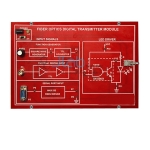
Study of Transmitter and Receiver using Fiber Optics Cable
Product Code : EL-TKFCL-1198
Fiber optic communication trainer for building an optical transmitter and receiver, calculating their output power and studying signal attenuation along a fiber optic cable.
View Details