

Electrical Measuring Instruments Manufacturer, Suppliers and Exporter in India
Jlabexport is a leading Electrical Measuring Instruments Manufacturer,and suppliers in India, United States, Indonesia, Brazil, Bangladesh, Mexico, Japan, Egypt, Philippines, Democratic Republic of the Congo, Vietnam, Iran, Turkey, Tanzania, United Kingdom, France, South Africa, Italy, Kenya, Colombia, Sudan, Uganda, South Korea, Argentina, Afghanistan, Yemen, Angola, Morocco, Poland, Uzbekistan, Mozambique, Malaysia, Ghana, Saudi Arabia, Peru, Madagascar, Côte d’Ivoire, Cameroon, Niger, Venezuela, Australia, Syria, Mali, Burkina Faso, Sri Lanka, Malawi, Zambia, Chad, Kazakhstan, Somalia, Chile, Senegal, Ecuador, Cambodia, Zimbabwe, Guinea, Benin, Rwanda, Burundi, Bolivia, South Sudan, Tunisia, Haiti, Belgium, Dominican Republic, Jordan, United Arab Emirates, Honduras, Tajikistan, Papua New Guinea, Portugal, Togo, Sierra Leone, Belarus, Laos, Turkmenistan, Libya, Kyrgyzstan, Nicaragua, Paraguay, Bulgaria, Serbia, Republic of the Congo, Lebanon, Liberia, Central African Republic, Palestine, Oman, Mauritania, New Zealand, Costa Rica, Kuwait, Panama, Croatia, Georgia, Eritrea, Mongolia, Uruguay, Qatar, Namibia, Bosnia and Herzegovina, Moldova, Armenia, Gambia, Jamaica, Lithuania, Albania, Gabon, Botswana, Lesotho, Guinea-Bissau, Slovenia, Equatorial Guinea, Latvia, North Macedonia, Bahrain, Trinidad and Tobago, Timor-Leste, Cyprus, Estonia, Eswatini, Mauritius, Djibouti, Fiji, Comoros, Solomon Islands, Guyana, Bhutan, Luxembourg, Suriname, Montenegro, Malta, Maldives, Cabo Verde, Brunei, Belize, Bahamas, Iceland, Vanuatu, Barbados, São Tomé and Príncipe, Samoa, Saint Lucia, Kiribati, Seychelles, Grenada, Saint Vincent and the Grenadines, Antigua and Barbuda.
Last updated: 20 November 2026
What Instruments Are in the Electrical Measuring Instruments Range?
This range holds bench measuring instruments for physics and electrical labs. It has eight items in four groups. They are a portable moving-coil ammeter or voltmeter in a teak wood case, three galvanometers for null detection, small currents and charge, two ohms meters for normal and very low resistances, and two insulation testers that read in megohms. Colleges, universities, polytechnics, ITI workshops and maintenance teams use them. JLab (Jain Laboratory Instruments Pvt Ltd), Ambala, India, makes all eight items.
Request a quotation | Compare the instruments | See the practicals covered
Which Instrument Groups Does the Range Cover?
| Group | Items | What it covers |
|---|---|---|
| Portable Moving-Coil Meter | 1 | A bench ammeter or voltmeter made to any range up to 10 A or 500 V, with a 15 cm mirror scale. |
| Galvanometers | 3 | A tripod pointer galvanometer, a ballistic mirror galvanometer for charge, and a spot galvanometer with its own lamp, scale and shunt. |
| Resistance Meters | 2 | A panel ohmmeter for resistances up to the kilohm region and a meter for milliohm readings on joints and contacts. |
| Insulation Testers | 2 | A portable tester with four test voltages from 100 V to 1000 V and a mains-operated high voltage tester for high resistance values on plant and machines. |
Compare the Moving Coil and Test Instruments
Each table sets out the instruments of one group, using the ranges, scales and accuracy given on each product page.
Portable Moving-Coil Meter (1)
| Instrument | Ranges | Scale | Accuracy | Case |
|---|---|---|---|---|
| Portable Meter | Any range up to 10 A or 500 V, made to order | 15 cm, edge pointer with parallax mirror | ±1% | Teak wood, 8 x 8 in (about 20 cm square) |
Galvanometers (3)
| Galvanometer | Reading | Coil resistance | Sensitivity | Main use |
|---|---|---|---|---|
| D'Arsonval Galvanometer | Pointer on a 70-0-70 centre-zero scale, on a tripod | 200 Ω | 3 µA per division | Null detection and small currents |
| Ballistic Galvanometer Reflecting | Mirror on a phosphor bronze strip, 50 cm focal length | Not listed | Not listed | Charge from the first throw |
| Spot Reflecting Galvanometer | Light spot on a built-in lamp and scale | 100 Ω or 500 Ω | Not listed | Null detection in bridges and potentiometers |
The spot galvanometer comes with a universal shunt and a step-down transformer for its lamp. The ballistic galvanometer needs a separate lamp and scale.
Resistance Meters (2)
| Meter | Ranges | Accuracy | Power | Other points |
|---|---|---|---|---|
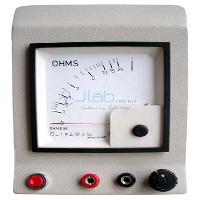
| Ohms Meter | 0–100, 0–250, 0–500 or 0–1000 Ω, or the range needed | ±5% of reading at centre scale | One 1.5 V cell | Panel mounting on a Bakelite plate, zero adjustment |
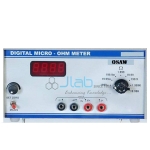
| Low Ohms Meter | 10 to 400 milliohms and 1 to 40 ohms | Not listed | One 1.5 V cell | 90 mm scale, supplied with a probe |
Insulation Testers (2)
| Tester | Test voltage | Insulation range | Accuracy | Power |
|---|---|---|---|---|
| Insulation Tester | 100, 250, 500 or 1000 V, by type | 0–25 MΩ at 100 and 250 V; 0–100 MΩ at 500 V; 0–200 MΩ at 1000 V | ±5% | Not listed |
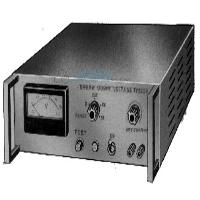
| High Voltage Insulation Break Down Tester | Not listed | Not listed | ±2.5% | Mains, with automatic short-circuit cut-off |
How to Choose Moving Coil and Test Instruments
- Bench meter or panel meter. The Portable Meter has a 15 cm mirror scale and ±1% accuracy, so it reads more closely than a small panel meter. Labs use it to check their panel ammeters and voltmeters.
- Which galvanometer. Choose the D'Arsonval galvanometer for null detection and small currents with a known sensitivity. Choose the ballistic model for charge and capacitance work, and the spot model when lamp, scale and shunt should sit in one case.
- Coil resistance of the spot galvanometer. It comes with a 100 Ω or 500 Ω coil. As a general guide, pick the value nearer to the resistance of the circuit it will sit across.
- Ohms or milliohms. The Ohms Meter reads resistors and coils on listed ranges up to 1000 Ω. Loose contacts and dry solder joints need the Low Ohms Meter, which reads down to 10 milliohms.
- Insulation test voltage. The portable Insulation Tester covers 100 V to 1000 V for wiring, cables, motors and appliances. Electrical plant and machines that need a high voltage test of high resistance values need the high voltage tester.
Practicals and Tests Covered by the Range
| Practical or test | Instrument |
|---|---|
| Measuring current and voltage on the bench, and checking panel meters | Portable Meter |
| Null detection in Wheatstone bridge, meter bridge and potentiometer experiments | D'Arsonval Galvanometer; Spot Reflecting Galvanometer |
| Resistance and figure of merit of a galvanometer | D'Arsonval Galvanometer |
| Conversion of a galvanometer into an ammeter or voltmeter | D'Arsonval Galvanometer |
| Measuring charge and comparing capacitances from the first throw | Ballistic Galvanometer Reflecting |
| Checking resistor values, coils and continuity | Ohms Meter |
| Finding loose contacts and dry solder joints | Low Ohms Meter |
| Insulation resistance of wiring, cables, motors and appliances | Insulation Tester |
| High insulation resistance of electrical plant and machines at high voltage | High Voltage Insulation Break Down Tester |
Who Uses These Instruments?
Physics labs of colleges and universities use the galvanometers and the portable meter for bridge, potentiometer and charge practicals. Electrical labs, ITI workshops and maintenance teams use the ohms meters and insulation testers.
Ordering, Minimum Quantity and Dispatch
| Point | Detail |
|---|---|
| Minimum order quantity | 10 units of each instrument, as shown on its product page |
| Pack quantity | Each instrument is sold individually |
| Dispatch time | Usually 7–10 working days |
| How to enquire | Use Add To Cart on a product page, or send the instrument names, ranges or types and quantities through the contact page |
| Tenders and OEM supply | Send the schedule through the tender enquiry page |
| Manufacturer | JLab (Jain Laboratory Instruments Pvt Ltd), Ambala, India |
Related Ranges in Scientific Instruments
Electrical Measuring Instruments is one of 22 subcategories of the Scientific Instrument range. These neighbouring ranges hold the meters, boxes and apparatus used with these instruments.
| Range | How it relates |
|---|---|
| Switchboard Panel, Ammeters, Voltmeters, Rectifier Type | Panel ammeters, voltmeters and centre-zero galvanometers that the portable meter can check. |
| Decade Box | Resistance boxes, standard resistances and decade boxes for bridge arms, shunts and series resistances. |
| Verification of Various Laws and Conservation of Signal | Conversion of a galvanometer into a voltmeter and current meter, Ohm's law and condenser charging apparatus. |
| Digital Measuring Instruments | Digital meters such as an LCR meter, a digital potentiometer and an AC millivoltmeter. |
| Test and Measuring Instruments | Clamp on meter, vacuum tube voltmeter, Q meter and transistor tester. |
| Power Supplies and Transformers | Bench supplies and battery eliminators that drive the bridge and potentiometer circuits. |
Frequently Asked Questions
Which test voltage should an insulation tester use?
Match the test voltage to the working voltage of the equipment. As a general guide, 100 V and 250 V suit low-voltage circuits, 500 V suits ordinary mains wiring and small motors, and 1000 V suits higher-rated cables and machines. The Insulation Tester offers all four types.
Why can an ordinary ohmmeter not test insulation?
An ohmmeter works from a 1.5 V cell, and weak insulation often looks sound at that voltage. An insulation tester applies hundreds of volts and reads the small leakage current as megohms, so faults from moisture, dirt or age show up.
What precautions apply before and after an insulation test?
Switch off and isolate the circuit first, and disconnect electronic units that the test voltage could damage. After the test, a cable or winding can hold a charge, so discharge it to earth before anyone touches the conductors.
What is the figure of merit of a galvanometer?
It is the current that moves the pointer by one division, given in amperes per division. The D'Arsonval galvanometer is listed at 3 µA per division, so its 70 divisions on each side need about 210 µA for full deflection.
Why is a ballistic galvanometer lightly damped?
Its coil swings slowly, so a brief pulse of charge has passed before it moves much. With little damping the first throw stays proportional to the charge, which is why it is read for charge and capacitance work.
Why use a series resistance or shunt with a galvanometer?
A galvanometer coil is very sensitive and can be damaged by a current far above full scale. A high series resistance or a shunt keeps the current low while the circuit is balanced, then is removed to read the null closely.
Request a Quote
Name each instrument, its range, coil resistance or type, and the quantity, for example ten Insulation Tester units of type (C), 500 V. Then send the request from the contact page.

Portable Meter
Product Code : EL-EMI-1232
Housed in teak wood 8"x8", scale length 15 cm, edge pointer, parallax mirror, moving coil with heavy magnet, jewelled axle, smooth linear movement; any range up to 10 A and 500 V.
View Details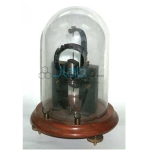
D'Arsonval Galvanometer
Product Code : EL-EMI-1237
Case of Bakelite, Mounted on special tripod, having one leg at 12" holding scale graduated 70-0-70. The Scale is adjustable up and down.
View Details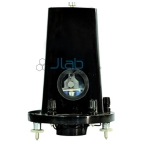
Ballistic Galvanometer Reflecting
Product Code : EL-EMI-1238
Moving coil suspended by Phosphor Bronze strip, which carries optically true mirror of 50cms focal length.
View Details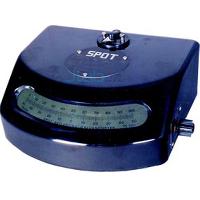
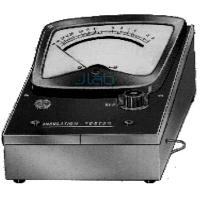
Low Ohms Meter
Product Code : EL-EMI-1243
Low ohms meter for measuring very low resistances, loose contacts and dry soldering in electronic assemblies, and the low resistances of other electrical appliances.
View Details