Resistivity of Semiconductors by Four Probe Method at Different Temperatures and Determination of Band-Gap Manufacturer,Supplier and Exporter in India
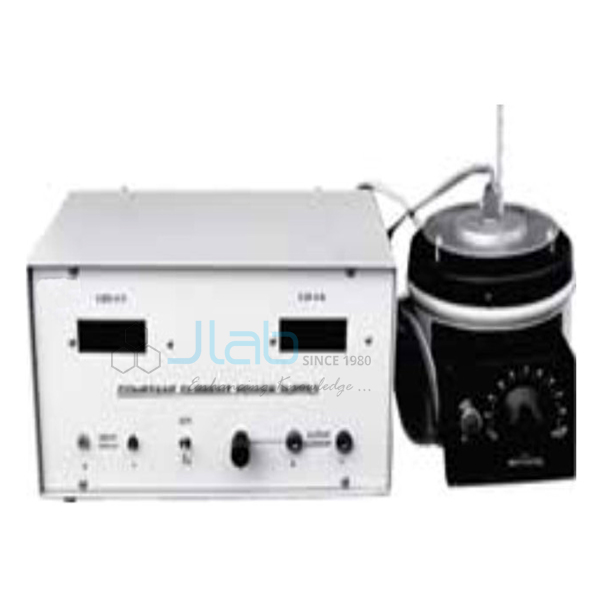
Product Code : EL-SI-1089
Jlab Export is a leading Resistivity of Semiconductors by Four Probe Method at Different Temperatures and Determination of Band-Gap Manufacturer,and suppliers in India
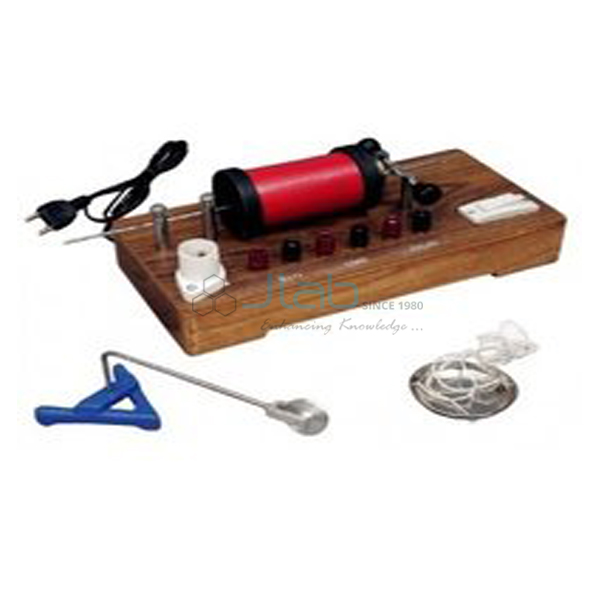
Resistivity of Semiconductors by Four Probe Method at Different Temperatures and Determination of Band-Gap (code EL-SI-1089) is a complete four probe set-up for measuring the resistivity of a semiconductor at different temperatures and finding its energy band gap in physics laboratories. It combines a four probe arrangement, a mounted germanium (Ge) crystal, an oven that heats up to 200 ºC, a 0–200 ºC thermometer, a digital constant current supply and a 200 mV electronic millivoltmeter. It is made by Jain Laboratory Instruments Pvt Ltd (JLab) at its works in Ambala, India.
Get a quote: use the Add To Cart enquiry button below, or send your quantity and destination through the contact page.
Specifications
| Parameter | Detail |
|---|---|
| Probe unit | Four probe arrangement |
| Sample | Germanium (Ge) crystal, mounted |
| Oven | Heats up to 200 ºC |
| Thermometer | 0–200 ºC |
| Constant current power supply | Digital; accuracy 0.25% of the reading + 1 digit (as listed); load regulation 0.03% from no load to full load |
| Electronic millivoltmeter | 200 mV range; accuracy 0.1% of the reading, 1 digit (as listed); impedance 1 MΩ |
| Display | 3½ digit, 7-segment LED, 12.5 mm high, with auto polarity and decimal indication |
| Quality check | Each set-up is visually inspected before dispatch |
| Pack quantity | Each (sold individually) |
| Minimum order quantity | 10 units |
| Dispatch time | Usually 7–10 working days |
| Product code | EL-SI-1089 |
| Manufacturer | Jain Laboratory Instruments Pvt Ltd (JLab) — OEM |
| Country of origin | India (made in Ambala, Haryana) |
What Is the Four Probe Set-Up Used For?
The four probe method is the standard way to measure the resistivity of a semiconductor wafer or crystal without errors from contact resistance. Four equally spaced, in-line probes press on the sample: the outer pair carries a constant current from the current supply, and the inner pair picks up the voltage, which is read on the high-impedance millivoltmeter. Resistivity is then calculated from the ratio of voltage to current, the probe spacing and a correction for the sample’s thickness. Because almost no current flows through the voltage probes, their contact resistance does not affect the reading.
In this experiment the germanium crystal is heated in the oven and the resistivity is measured at a series of temperatures read on the thermometer. In the intrinsic range the resistivity of a semiconductor falls exponentially as temperature rises, so a graph of log resistivity against the reciprocal of absolute temperature is a straight line, and its slope gives the energy band gap. It is a standard solid-state physics practical in B.Sc. and M.Sc. physics and engineering physics laboratories, and is often run alongside the Hall effect experiment on a similar germanium sample.
What to Specify When Ordering
- Quantity — the minimum order is 10 set-ups; tell us how many student stations you are equipping.
- Related solid-state experiments — the Hall effect experiment and the PN junction band gap apparatus are separate items that can go on the same quotation.
- Delivery details — destination country and city or port, delivery terms (for example FOB or CIF) and any tender reference.
Frequently Asked Questions
What does this four probe set-up include?
A four probe arrangement, a mounted germanium crystal, an oven that heats up to 200 ºC, a 0–200 ºC thermometer, a digital constant current power supply and a 200 mV electronic millivoltmeter.
How is the band gap found with this apparatus?
Measure the resistivity of the germanium crystal at several temperatures as the oven heats it, then plot log resistivity against the reciprocal of absolute temperature. The slope of the straight part of the graph gives the energy band gap.
Why use four probes instead of two?
Separating the current probes from the voltage probes removes the effect of contact resistance, because the high-impedance millivoltmeter (1 MΩ) draws almost no current through the voltage probes.
What kind of display do the meters have?
A 3½ digit, 7-segment LED display, 12.5 mm high, with auto polarity and decimal indication.
What is the minimum order and dispatch time?
The minimum order is 10 units, sold individually. Orders are usually dispatched within 7–10 working days, each set-up is visually inspected before it leaves, and export transit depends on the destination and shipping method.
Who manufactures this apparatus?
Jain Laboratory Instruments Pvt Ltd, trading as JLab, makes it at its works in Ambala, Haryana, India, and quotes for it as the manufacturer.
OEM Manufacturer
JLab is the trading name of Jain Laboratory Instruments Pvt Ltd, an Indian maker of physics laboratory instruments, incorporated in 2017 and based on Hargolal Road, Ambala, Haryana. The four probe set-up is built at JLab’s own works rather than bought from a trader, which means universities, colleges, dealers and importers buy direct from the manufacturer, every set-up is visually inspected before dispatch, and repeat orders and spares are handled in-house. JLab exports worldwide and ships to every region — for example Congo in Central Africa, South Africa in Southern Africa, Australia in Oceania, Spain in Southern Europe and Armenia in Eastern Europe. Institutions buying through tenders can visit the JLab lab tenders page.
Related Solid-State Physics Experiments
- Hall Effect Experiment — an electromagnet, a mounted germanium crystal with its constant current supply, digital meters and a digital gauss meter with Hall probe.
- Energy Band Gap of PN Junction Diode — finds the band gap from reverse saturation current against temperature, with the diode in an oven.
- Thermistor Characteristics Apparatus — resistance–temperature characteristics of a thermistor, with oven and thermometer.
Browse the full Scientific Instrument range or the Indian Instruments section.
Request a Quote
Quotes come direct from the manufacturer. Use the Add To Cart enquiry button on this page, or send the number of set-ups (minimum 10 units), any related experiments you want quoted, and your delivery location through the contact page.
Last updated: 8 October 2026