LCR Resonance Apparatus Series and Parallel Manufacturer,Supplier and Exporter in India
Product Code : EL-SI-1109
Jlab Export is a leading LCR Resonance Apparatus Series and Parallel Manufacturer,and suppliers in India
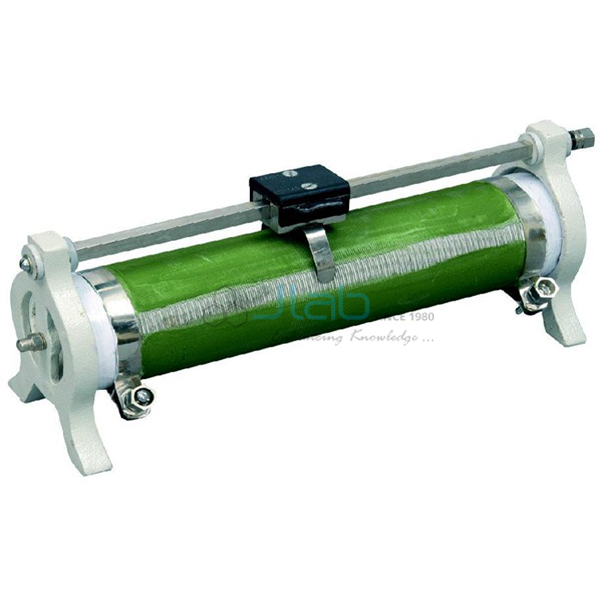
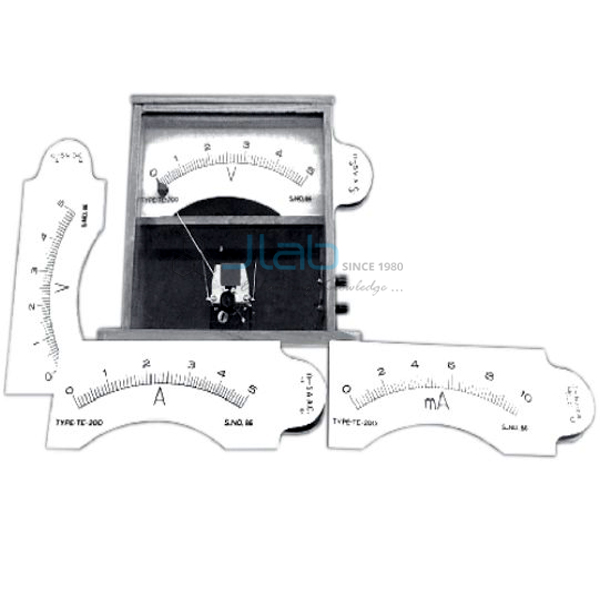
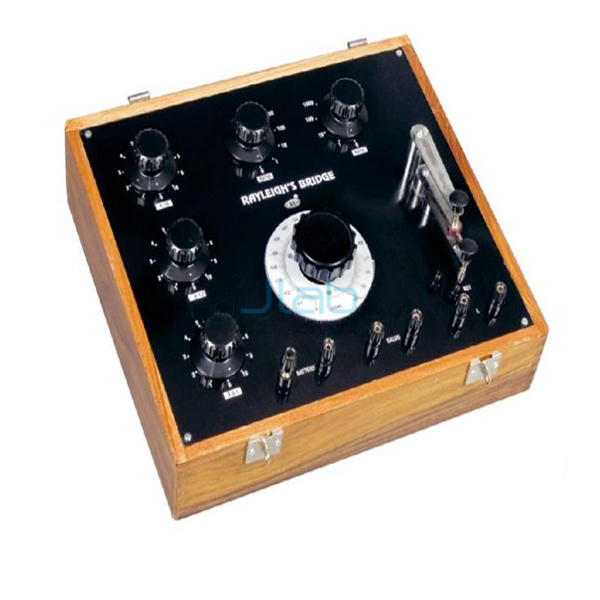
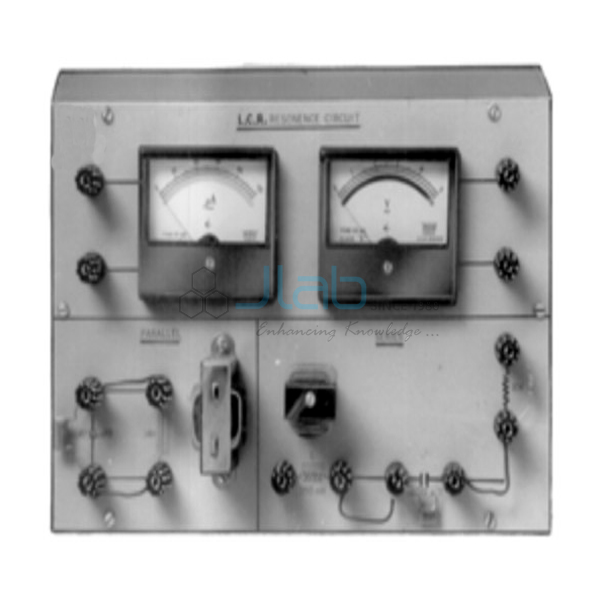
LCR Resonance Apparatus Series and Parallel (code EL-SI-1109) is a bench apparatus for plotting current against frequency in series and parallel LCR circuits, so students can find the resonant frequency and see how sharp the resonance is, in college physics and electrical laboratories. It has one resistance, one capacitor and one inductance with their connections brought out to terminals, two AC moving coil meters for voltage and current, and an audio frequency function generator. It is made by Jain Laboratory Instruments Pvt Ltd (JLab) at its works in Ambala, India.
Specifications
| Parameter | Detail |
|---|---|
| Experiment | Frequency against current characteristics of an LCR circuit, connected in series and in parallel |
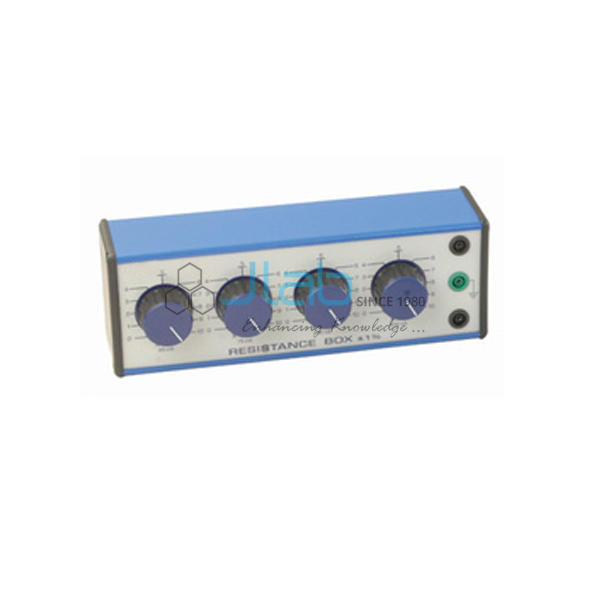
| Components | 1 resistance, 1 capacitor and 1 inductance, with connections brought out to terminals |
| Meters | 2 AC moving coil meters, for voltage and current |
| Signal source | Audio frequency function generator, model TE-93 |
| Dimensions | 10 x 8 x 3 inches |
| Quality check | Each apparatus is visually inspected before dispatch |
| Pack quantity | Each (sold individually) |
| Minimum order quantity | 10 units |
| Dispatch time | Usually 7–10 working days |
| Product code | EL-SI-1109 |
| Manufacturer | Jain Laboratory Instruments Pvt Ltd (JLab) — OEM |
| Country of origin | India (made in Ambala, Haryana) |
What Is the LCR Resonance Apparatus Used For?
In an LCR circuit the inductive and capacitive reactances cancel at one frequency, the resonant frequency, which equals 1/(2π√LC). With the components wired in series, the impedance is smallest at resonance and the current peaks; wired in parallel, the impedance reaches its maximum and the line current dips to a minimum. Using this apparatus, students connect the resistance, capacitor and inductance in series or in parallel at the terminals, feed the circuit from the audio frequency function generator, keep the applied voltage steady on the voltmeter, and note the current as they step through the frequency range. Plotting current against frequency gives the resonance curve, from which they read the resonant frequency and, from the frequencies where the current falls to 1/√2 of its peak, the bandwidth and quality factor (Q).
The experiment is part of undergraduate physics and electrical engineering practicals on AC circuits, and it shows directly why series resonant circuits are used to select one frequency and parallel ones to reject it. Take more readings close to resonance, where the current changes fastest, and compare the measured resonant frequency with the value calculated from L and C.
What to Specify When Ordering
- Quantity — the minimum order is 10 units; plan one for each student group.
- Extra components and instruments — decade capacitance and inductance boxes, or an oscilloscope to view the waveforms, are separate items that can be quoted together.
- Delivery details — destination country and city or port, delivery terms (for example FOB or CIF) and any tender reference.
Frequently Asked Questions
What experiment does this apparatus perform?
It plots frequency against current for an LCR circuit connected in series and in parallel, giving the resonance curve of each arrangement.
What components and meters are included?
One resistance, one capacitor and one inductance with their connections brought out to terminals, two AC moving coil meters for voltage and current, and an audio frequency function generator.
How do the series and parallel results differ?
In series the current is greatest at the resonant frequency; in parallel the impedance is greatest there, so the current drawn from the generator is smallest.
How large is the apparatus?
It measures 10 x 8 x 3 inches.
Who manufactures this apparatus?
Jain Laboratory Instruments Pvt Ltd (JLab) makes it at its works in Ambala, Haryana, India, and quotes for it directly.
OEM Manufacturer
JLab is the trading name of Jain Laboratory Instruments Pvt Ltd, a physics and electrical laboratory apparatus manufacturer in India, incorporated in 2017 and based on Hargolal Road, Ambala, Haryana. This apparatus is assembled in JLab’s own works rather than bought from a trader, so colleges, universities, dealers and importers order it factory-direct; each unit is visually inspected before dispatch, and repeat orders are handled by the manufacturer. JLab exports worldwide and ships to all regions — Estonia in Northern Europe, Botswana in Southern Africa, Benin in West Africa, Bangladesh in South Asia and Hong Kong in East Asia, for example. Tender details are on the JLab lab tenders page.
Related AC Circuit Instruments
- Oscilloscope — a single-beam, DC to 10 MHz oscilloscope for viewing the voltage across each component.
- A.F. Oscillator Bridge Experiments — a variable-frequency oscillator with sine, square and triangular outputs.
- Four Dial Condenser Box — a four-dial decade capacitance box for trying other values of C.
- Fixed Inductance Boxes — air-cored inductance coils in a Bakelite case, for other values of L.
See the full Scientific Instrument range or the Indian Instruments section.
Request a Quote
Quotes come direct from the manufacturer. Use the Add To Cart enquiry button on this page, or send the number of units (minimum 10), any extra component boxes or instruments you need, and your delivery location through the contact page.
Last updated: 8 October 2026