Permanent or prepared slides of Binary fission in Amoeba & Budding in Yeast Manufacturer,Supplier and Exporter in India
Product Code : EL-BL-11267
Jlab Export is a leading Permanent or prepared slides of Binary fission in Amoeba & Budding in Yeast Manufacturer,and suppliers in India
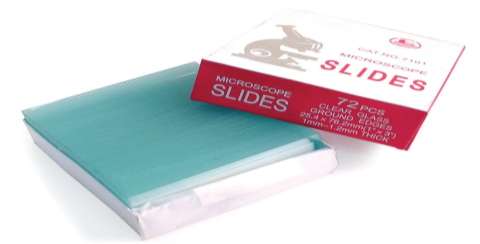
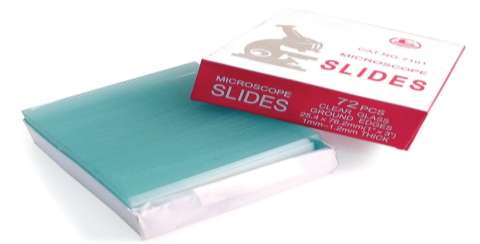
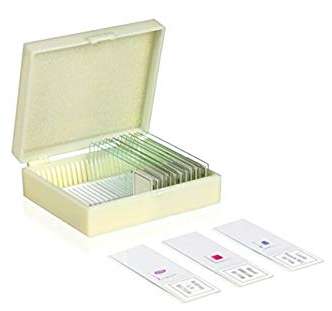
Permanent or prepared slides of Binary fission in Amoeba & Budding in Yeast (code EL-BL-11267) are ready-made microscope slides for the class 10 practical on asexual reproduction, showing how a single-celled organism divides or buds. They come as a pack of 5 in a white plastic box, on rectangular slides of clear borosilicate glass. They are made by Jain Laboratory Instruments Pvt Ltd (JLab) at its works in Ambala, India.
Specifications
| Parameter | Detail |
|---|---|
| Type | Permanent (prepared) slides |
| Topics | Binary fission in Amoeba; budding in yeast |
| Slides | Rectangular, clear borosilicate glass |
| Box | Plastic, white |
| Use | Laboratory |
| Catalogue model number | JL199/2.14 |
| Quality check | Each box is visually inspected before dispatch |
| Pack quantity | Pack of 5, in a box (as listed); the split between Amoeba and yeast slides is confirmed when quoting |
| Minimum order quantity | 10 units |
| Dispatch time | Usually 7–10 working days |
| Product code | EL-BL-11267 |
| Manufacturer | Jain Laboratory Instruments Pvt Ltd (JLab) — OEM |
| Country of origin | India (made in Ambala, Haryana) |
What Do These Prepared Slides Show?
In binary fission the nucleus of an Amoeba divides first and the cytoplasm then splits, leaving two daughter cells of roughly equal size. In budding, a yeast cell pushes out a small outgrowth that enlarges and separates, and buds often stay attached for a while to form short chains. The class 10 science practical asks students to identify both from prepared slides. Start each slide at low power, centre the cells, then move up to high power; hold slides by their edges and return them to the box so they stay clean and flat between classes.
Frequently Asked Questions
How many slides are in the pack, and which organisms do they show?
The listing gives a pack of 5 in a box. The product covers binary fission in Amoeba and budding in yeast, while the description text mentions budding in yeast, so ask JLab to confirm how many slides of each topic the pack contains.
Which practical are these slides for?
The class 10 science practical on asexual reproduction, in which students study binary fission in Amoeba and budding in yeast with the help of prepared slides and a compound microscope.
Who makes these prepared slides?
Jain Laboratory Instruments Pvt Ltd, trading as JLab, makes them at its works in Ambala, Haryana, India, and quotes for them as the manufacturer.
OEM Manufacturer
JLab is the trading name of Jain Laboratory Instruments Pvt Ltd, a manufacturer in India of prepared slides, microscopes and biology lab equipment for teaching laboratories, incorporated in 2017 and based on Hargolal Road, Ambala, Haryana. The slides are prepared at JLab’s own works rather than bought from a trader, so schools, colleges, dealers and importers buy factory-direct. JLab exports worldwide and ships to buyers in every region — for example Uganda in East Africa, Egypt in North Africa, South Korea in East Asia, Sweden in Northern Europe and the Maldives in South Asia. For tender supply, see the JLab lab tenders page.
Microscopes and More Slides
- Amoeba Prepared Slide — a single stained slide of Amoeba for general study of the cell.
- Compound Microscope — a student microscope with stage clips and mirror illumination for viewing these slides.
- Glass Slides (Embryo of Dicot Seeds box) — a white plastic box of borosilicate slides for another class 10 topic.
- Microscope Slide Box — storage with numbered grooves for a growing slide collection.
See the full Biology Lab range and all Biology Lab Equipment.
Request a Quote
Quotes come direct from the manufacturer. Use the Add To Cart enquiry button or the contact page, and send the number of packs (minimum 10 units), any other slide topics or microscopes, and your delivery city or port.
Last updated: 5 October 2026