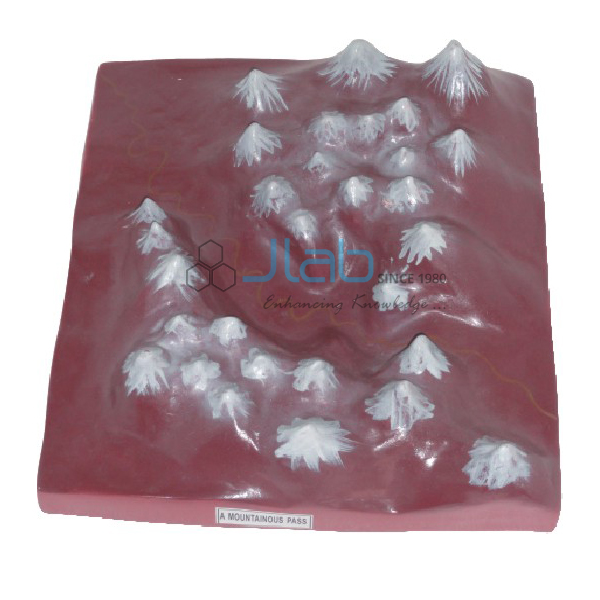
Horsts and Grabens Model Manufacturer,Supplier and Exporter in India
Product Code : EL-ERAM-4412
Jlab Export is a leading Horsts and Grabens Model Manufacturer,and suppliers in India
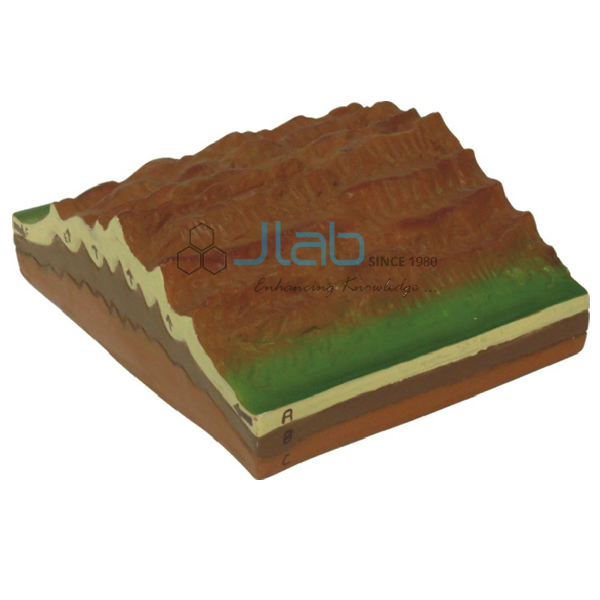
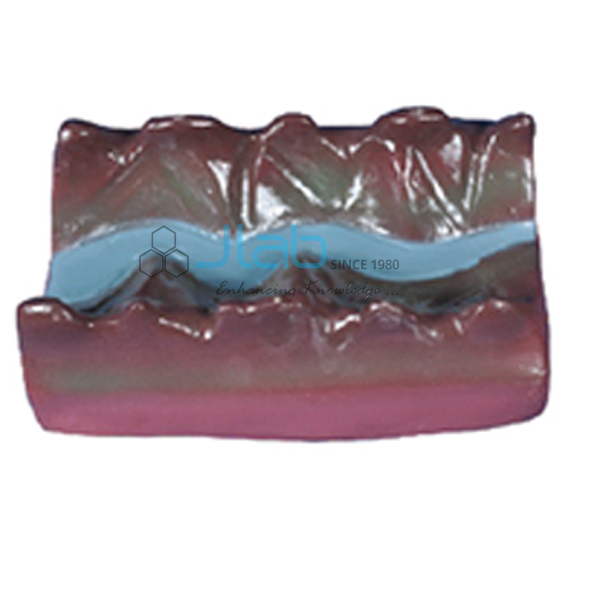
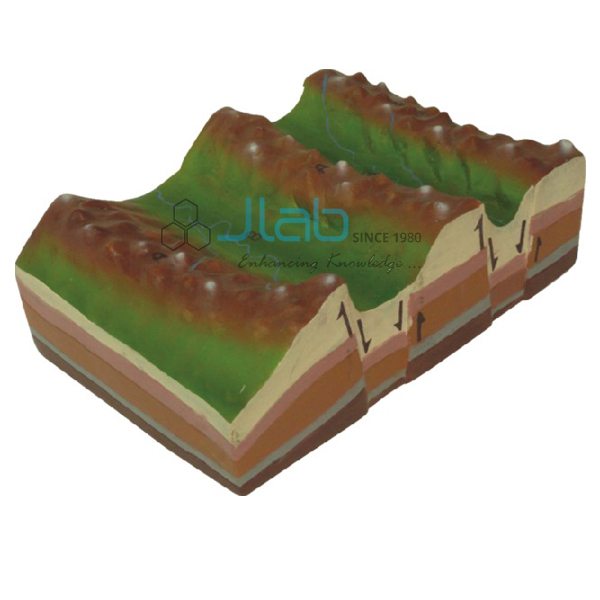
Horsts and Grabens Model (code EL-ERAM-4412) is a geology and geography teaching model of the fault blocks that lie between normal faults. A horst is a block raised by the faulting and a graben is a block that has dropped, and together they explain block mountains and rift valleys. JLab — Jain Laboratory Instruments Pvt Ltd — manufactures the model at its works in Ambala, India.
Specifications
| Parameter | Detail |
|---|---|
| Structures | Horsts and grabens — regions lying between normal faults |
| Horst | A block pushed upward by the faulting |
| Graben | A block that has dropped due to the faulting |
| Quality check | Each model is visually inspected before dispatch |
| Pack quantity | Each (sold individually) |
| Minimum order quantity | 10 units |
| Dispatch time | Usually 7–10 working days |
| Product code | EL-ERAM-4412 |
| Manufacturer | Jain Laboratory Instruments Pvt Ltd (JLab) — OEM |
| Country of origin | India (made in Ambala, Haryana) |
What Is the Horsts and Grabens Model Used For?
When the crust is stretched, it breaks along a series of normal faults and the blocks between them move at different levels: some sink to form grabens, while neighbouring horsts are left standing high as block mountains. The class 6 geography chapter on major landforms uses the Rhine valley and the Vosges mountains in Europe as its example, and in India the Narmada river flows through a rift valley. On a larger scale, the same pattern of stretched crust and dropped blocks appears along continental rifts such as the East African Rift.
Teachers use this model after a single normal fault model, to show how several faults working together shape a whole landscape, and for structural geology and map work in colleges.
Frequently Asked Questions
What is the difference between a horst and a graben?
A horst is a block raised by faulting that stands higher than the ground on either side; a graben is a block that has dropped between faults, often forming a long valley.
What kind of faults bound horsts and grabens?
Normal faults, in which the hanging wall moves down relative to the footwall; they develop where the crust is under tension.
Is a rift valley the same as a graben?
A rift valley is a long valley formed by a graben, or a series of grabens, where the crust has been pulled apart.
What are the order terms?
Minimum 10 units, sold individually, usually dispatched within 7–10 working days; export transit is extra.
OEM Manufacturer
Jain Laboratory Instruments Pvt Ltd, known as JLab, makes geography and earth science teaching models together with general school laboratory equipment; it was incorporated in 2017 and is based on Hargolal Road, Ambala, Haryana. Because the model comes from its own works, schools, colleges, dealers and importers deal with the manufacturer, not an intermediary. For buyers’ records, the company’s GSTIN is 06AADCJ9848D1ZE and its Legal Entity Identifier is 549300DTGS77DGYD6N03. JLab exports worldwide and ships to buyers in every region — for example Vanuatu in Oceania, Bhutan in South Asia, Canada in North America, Brunei in Southeast Asia and Sudan in North Africa.
Related Fault Models
- Normal Fault Model — the single fault type that bounds horsts and grabens.
- Divergent Plate Boundaries Model — plates drifting apart and stretching the crust.
- Reverse Fault Model — the compressional counterpart, with the hanging wall moving up.
- Fold and Fault 3D Model — a rigid PVC wall model of folds and faults.
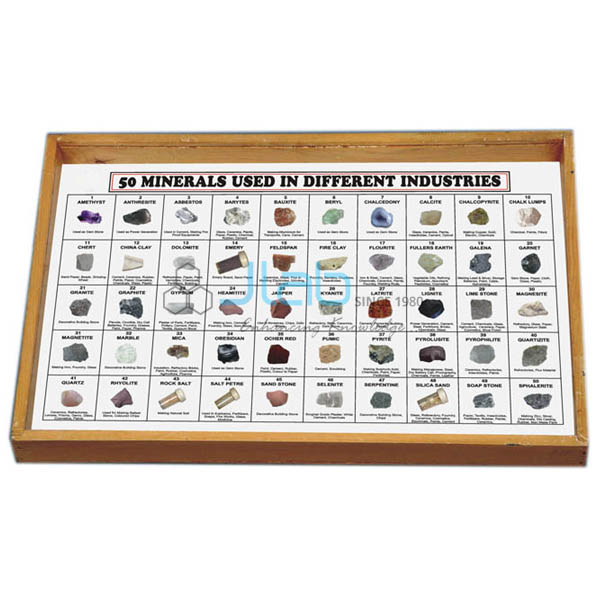
See Educational Rock and Minerals or Rocks and Minerals.
Request a Quote
JLab quotes as the manufacturer. Use the Add To Cart button, or send the quantity (minimum 10 units) and destination through the contact page.
Last updated: 9 October 2026