Human Skeleton 67 Full Size Flexible 170cm Manufacturer,Supplier and Exporter in India
Product Code : EL-HM-8287
Jlab Export is a leading Human Skeleton 67 Full Size Flexible 170cm Manufacturer,and suppliers in India
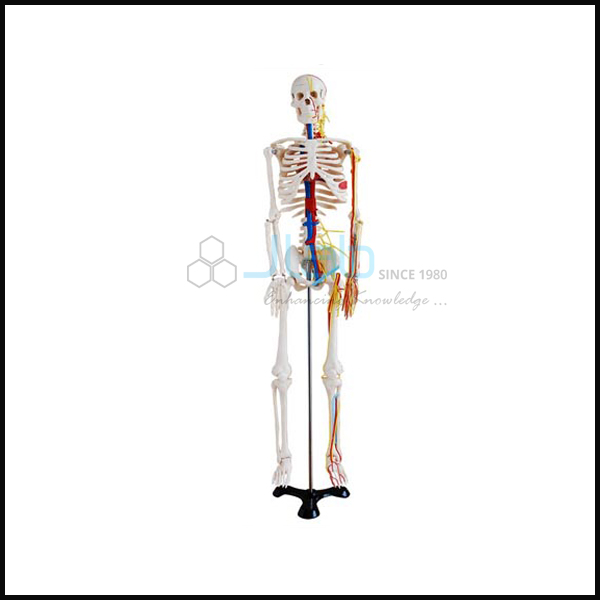
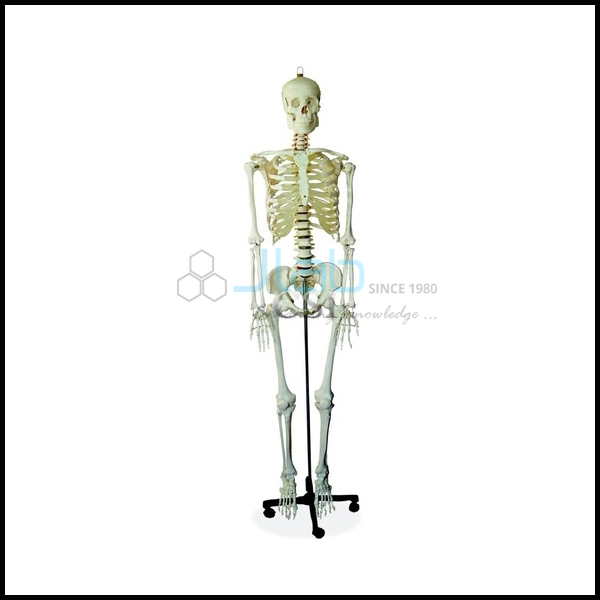
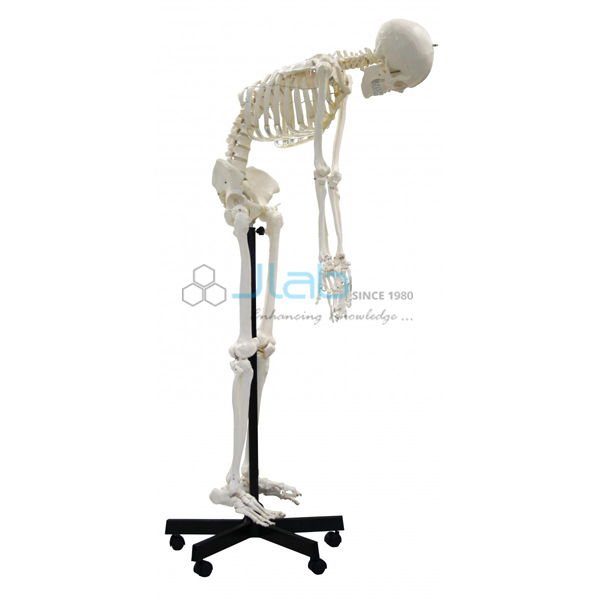
The spine of this full-size skeleton is flexible, so it bends forward, back and to the side the way a living back does. It stands 170 cm tall on a roller base and is held at the pelvis. The arms and legs come off for closer study, and the skull has a movable jaw, a removable skullcap, suture lines and a full set of teeth.
Specifications
| Height | 170 cm (67 in) |
| Spine | Flexible, bends like a natural back |
| Removable parts | Arms, legs and skullcap |
| Skull | Movable jaw, suture lines and full dentition |
| Joints | Movable parts joined by connectors |
| Hands and feet | Wire mounted in their natural position |
| Bones | Cast one by one in naturally coloured PVC |
| Mounting | Pelvic mounted on a roller base |
| Supplied with | Diagram of the skeleton |
| Minimum order quantity | 1 unit |
| Dispatch time | Usually 14–18 working days |
| Manufacturer | JLab (Jain Laboratory Instruments Pvt Ltd), Ambala, India |
Skeleton Practicals for Biology Classes
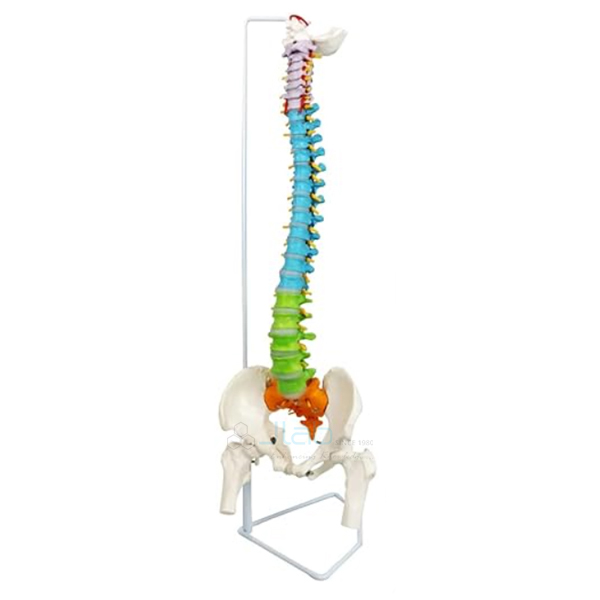
A teacher can bend the spine slowly to show flexion, extension and side bending, and students name each movement. To see where the movement happens, students then handle the loose vertebrae of the Vertebral Column Disarticulate Model and find the facets where neighbouring vertebrae meet.
With an arm or a leg taken off, a small group can lay the limb on the bench. They then name its bones from the shoulder or hip down to the fingers or toes. Lifting the skullcap opens the inside of the skull, and students compare the sutures with those marked on the Human Skull with Markings, Muscles and Sutures. Counting the teeth and then looking at the jaws of the Dentition Development model shows how milk teeth give way to adult teeth.
Frequently Asked Questions
Should a school choose a flexible or a rigid spine?
A rigid spine holds one fixed posture, which is enough for naming bones. A flexible spine like this one bends forward, back and sideways, so a teacher can also show how the back moves and how its curves change. Bend it gently and set it upright again after the lesson.
Can the spine show scoliosis or kyphosis?
It can give a rough picture. Bending the spine sideways shows the kind of curve seen in scoliosis, and bending the upper back forward shows a rounded back. A true scoliosis also twists the vertebrae and stays fixed, so treat the bent spine as a picture of the idea, not as a model of the disorder.
How do students use the diagram supplied with it?
The diagram matches the skeleton, so it gives students a flat reference to check against while they work at the model. Teachers can photocopy it and ask students to write in the bone names as a naming test before a practical exam.
Why are the hands and feet wired instead of jointed?
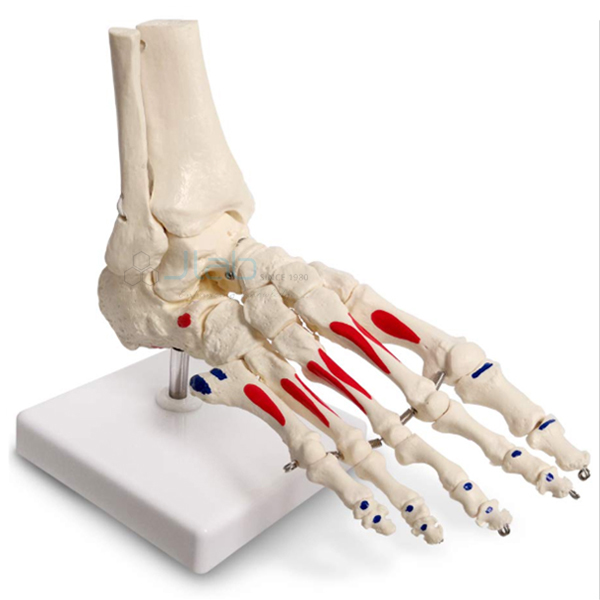
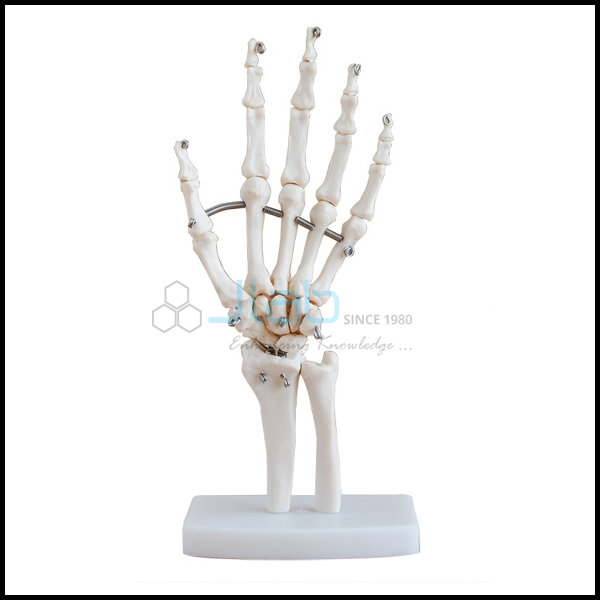
The wrist, hand, ankle and foot hold many small bones, and loose connectors would let them slip out of place. Wiring keeps them in their natural position, so students can study how they fit together while the larger joints still move.
What can students see after lifting the skullcap?
They see the inside of the skull, where the floor of the cranial cavity forms front, middle and back hollows. At its base is the large opening where the brainstem joins the spinal cord. This is where students learn which bones form the base of the skull.
Other Full-Size Skeletons
- Human Skeleton Full Size Flexible with Muscle 170cm (flexible spine, with muscles)
- Human Skeleton Full Size 170cm Muscles and Ligaments
- Human Skeleton Full Size with Thick Zip Dust Cover
For a quote, use Add To Cart or send us a message through the contact page.
Last updated: 15 November 2026