Low Current Sensor Manufacturer,Supplier and Exporter in India
Product Code : EL-TWL-9198
Jlab Export is a leading Low Current Sensor Manufacturer,and suppliers in India
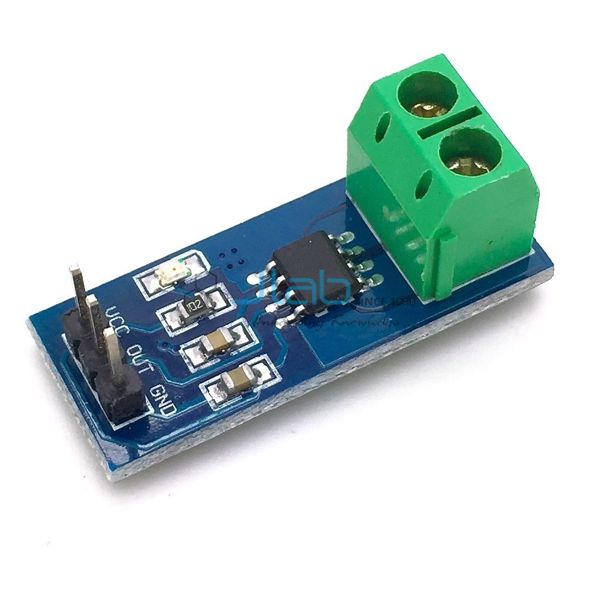
Built around a Hall effect current sensor chip, this small module measures AC or DC current up to 5 A. Its analog output voltage varies linearly with the sensed current, so a logger or microcontroller can read the current straight from it. It suits the bench circuits used in school, college and ITI electricity practicals.
Specifications
| Maximum current | 5 A |
| Current type | AC or DC |
| Sensing element | Hall effect current sensor chip |
| Output | Analog voltage, varying linearly with the sensed current |
| Form | Small linear current sensor module |
| Minimum order quantity | 5 units |
| Dispatch time | Usually 7–10 working days |
| Manufacturer | JLab (Jain Laboratory Instruments Pvt Ltd), Ambala, India |
Electricity Practicals with the Current Sensor
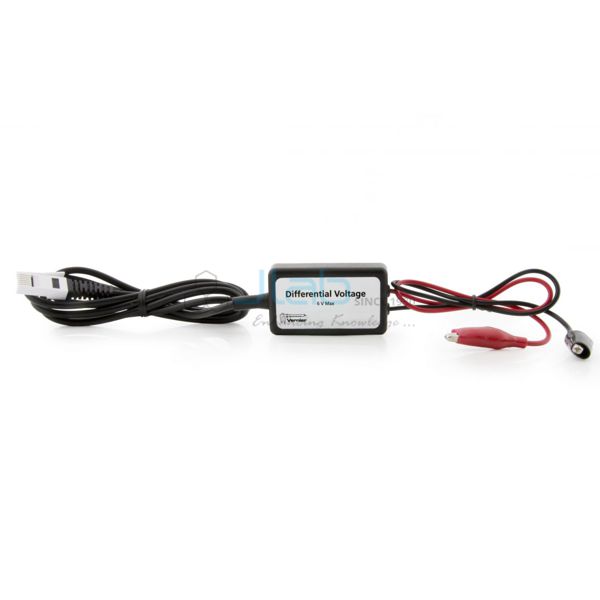
For Ohm’s law, students connect the sensor in series with one resistor from the Resistors Group with the Component Holder and a Rheostat 30 Ohm. A Differential Voltage Sensor reads across the resistor. As the rheostat is moved, the voltage against current graph comes out as a straight line, and its slope is the resistance.
Swapping the resistor for a bulb gives a curve instead, because the filament resistance climbs as it heats. In a parallel circuit, readings in each branch and in the main lead show that the branch currents add up to the total. On a low-voltage AC supply, a logger shows the current as a wave that crosses zero.
Frequently Asked Questions
How does a Hall effect current sensor work?
The current passes along a conductor inside the chip and sets up a magnetic field. A Hall element beside it turns that field into a voltage proportional to the current. The reading comes from the field, not from a drop across a resistor.
What current can it measure?
Up to 5 A, AC or DC. That covers bulbs, resistors and small motors on a bench supply. For larger currents, choose the High Current Sensor instead.
How is it connected?
Like an ammeter, in series with the load, so the full current flows through the module. The analog output goes to an input of a logger, interface or microcontroller.
Why does it read a little current with nothing switched on?
Hall sensors respond to any magnetic field, including those from magnets, motors and transformers nearby, and they have a small offset. Note the zero reading before each run, keep magnets away and take that value off later readings.
Other Sensors and Parts for Circuit Work
- High Current Sensor (Hall effect, with a replaceable fuse)
- Bulb Holder (fits torch bulbs)
- Multimeter, Digital
- Datalogger
For a quote, use Add To Cart or send us a message through the contact page.
Last updated: 6 November 2026