
Orbiter Astronomy Manufacturer,Supplier and Exporter in India
Product Code : EL-AE-7201
Jlab Export is a leading Orbiter Astronomy Manufacturer,and suppliers in India
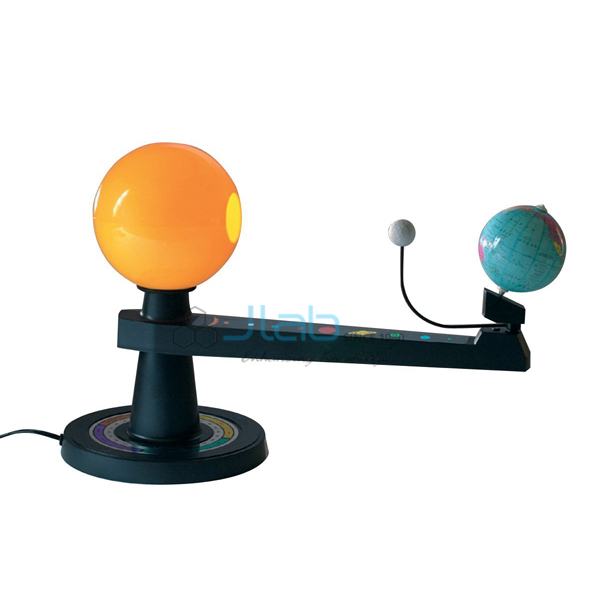
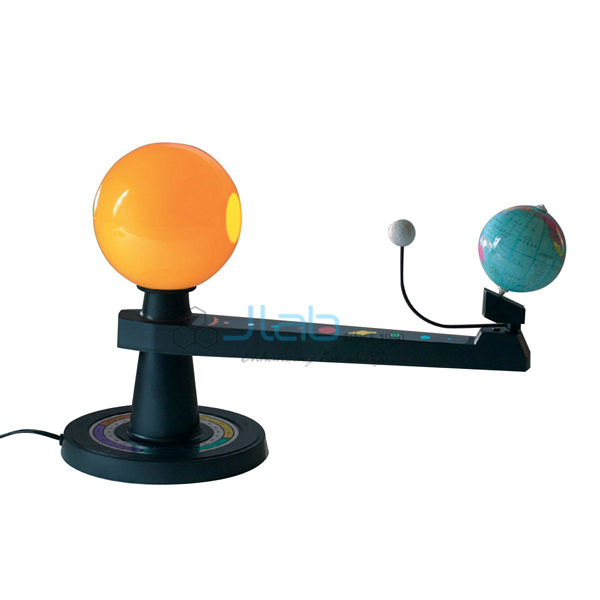
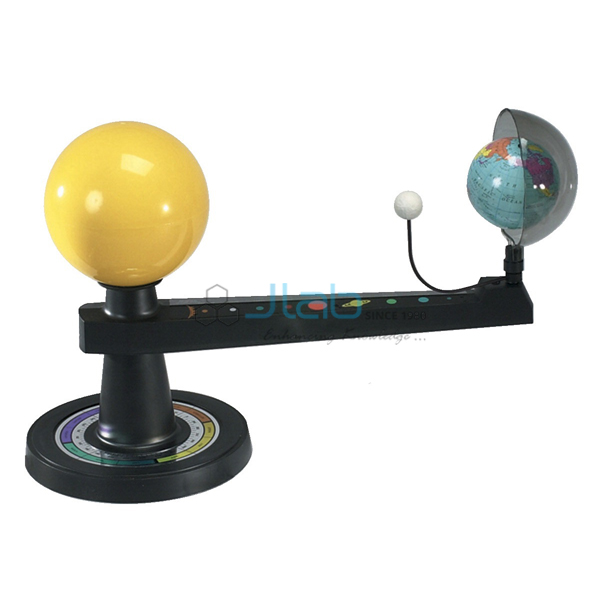
Orbiter Astronomy (code EL-AE-7201) is a hand-turned, gear-driven model in which the Sun, Earth and Moon revolve around one another, used to show daylight and night, the seasons and the phases of the Moon in school geography and astronomy lessons. The Sun is a 6 inch yellow sphere, the Earth a 4 inch globe and the Moon a 1 inch reproduction. It is made by Jain Laboratory Instruments Pvt Ltd (JLab) at its works in Ambala, India.
Specifications
| Parameter | Detail |
|---|---|
| Model type | Sun, Earth and Moon orbiter |
| Drive | Gear-driven; the bodies revolve around one another when turned by hand |
| Demonstrates | Daylight and night, seasons, phases of the Moon |
| Sun | 6 inch (about 152 mm) yellow sphere |
| Earth | 4 inch (about 102 mm) globe |
| Moon | 1 inch (about 25 mm) diameter reproduction of the Moon |
| Arm length | 381 mm (15 in) |
| Quality check | Each orbiter is visually inspected before dispatch |
| Pack quantity | Each (sold individually) |
| Minimum order quantity | 10 units |
| Dispatch time | Usually 7–10 working days |
| Product code | EL-AE-7201 |
| Manufacturer | Jain Laboratory Instruments Pvt Ltd (JLab) — OEM |
| Country of origin | India (made in Ambala, Haryana) |
How Does It Compare with Other JLab Orbiters?
| Model | Motion | Supply | Listed details |
|---|---|---|---|
| This orbiter (EL-AE-7201) | Turned by hand through gears | None listed | 6 in yellow Sun; 4 in Earth globe; 1 in Moon; 381 mm arm |
| Illuminated Orbiter 110v | Turned by hand through gears | 110 V (230 V version available) | Illuminated; 152 mm Sun; 381 mm arm; study guide included |
| Illuminated Orbiter Astronomy | Electronic motor | 230 V | Illuminated; 6 in yellow Sun; 4 in Earth globe; 1 in Moon; 381 mm arm |
Pick this orbiter for hands-on group work where students turn the gears themselves and no power point is needed for the model as listed. Choose an illuminated version when you want a lit Sun for day-and-night demonstrations, and the motorised one when the teacher wants the bodies to move on their own.
What Is the Orbiter Used For?
Turning the gears carries the Earth round the Sun and the Moon round the Earth, so students see the motions behind three everyday observations. The half of the globe facing the Sun is in daylight and the other half in night; the tilt of Earth’s axis, as the Earth travels round the Sun, explains the seasons; and as the Moon circles the Earth, the part of its sunlit half we can see changes, which gives the phases. No lamp is listed for this model, so the teacher points out which side faces the Sun — or, in a darkened room, a torch can stand in for sunlight. The sizes are chosen for visibility, not scale: the real Sun is more than a hundred times wider than Earth, although the model’s Earth-to-Moon ratio is close to the real one, Earth being a little under four times the Moon’s diameter.
Turn the gears steadily rather than forcing them, keep the model on a firm bench during lessons, and dust the globe and Moon gently.
What to Specify When Ordering
- Model — this hand-turned orbiter, or an illuminated or motorised version from the table above.
- Quantity — the minimum order is 10 orbiters; for group work, plan one per group.
- Delivery — destination city or port and any packing or labelling needs.
Frequently Asked Questions
What does Orbiter Astronomy demonstrate?
Daylight and night, the seasons and the phases of the Moon, using a Sun, Earth and Moon that revolve around one another on hand-turned gears.
What sizes are the Sun, Earth and Moon?
The Sun is a 6 inch yellow sphere, the Earth a 4 inch globe and the Moon a 1 inch reproduction of the Moon, on a 381 mm arm.
Is the model to scale?
No. Sizes and distances are enlarged or reduced so that a class can see them; the real Sun is more than a hundred times Earth’s diameter.
Does it need electricity?
No supply is listed for this model; it is driven by hand. JLab lists illuminated versions for 110 V and 230 V separately.
What does an export quotation need?
The quantity, destination country and port or city, preferred delivery terms such as FOB or CIF, packing or labelling requirements, and any tender reference.
Who manufactures it?
Jain Laboratory Instruments Pvt Ltd, trading as JLab, at its works in Ambala, Haryana, India.
OEM Manufacturer
JLab is the trading name of Jain Laboratory Instruments Pvt Ltd, a manufacturer of astronomy models and school laboratory equipment in India, incorporated in 2017 and operating from Hargolal Road, Ambala, Haryana. JLab makes this orbiter at its own works — it is not bought in from a trader — so schools, colleges, dealers and importers order from the maker, every unit is visually inspected before dispatch, and repeat orders are handled directly. JLab exports worldwide and ships to all regions, with buyers for example in the USA in North America, Bangladesh in South Asia, Uzbekistan in Central Asia, Gabon in Central Africa and Finland in Northern Europe. Tender buyers will find details on the JLab lab tenders page.
Related Astronomy Models
- Illuminated Orbiter 110v — the hand-turned illuminated orbiter with study guide, for 110 V.
- Illuminated Orbiter Astronomy — the motorised, illuminated orbiter for 230 V.
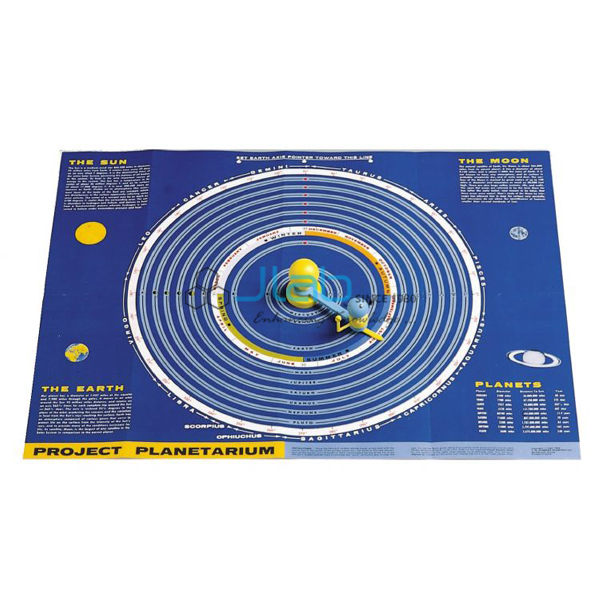
- Project Planetarium — a mini Sun-Moon-Earth model with chart and study guide for plotting eclipses and Moon phases.
- Raised Relief Map of the Moon — the Moon’s near and far sides in relief.
- Solar System Model Astronomy — positions the planets by date on a calendar base.
Explore Astronomy Equipment or the full Geography Lab Models range.
Request a Quote
JLab quotes directly as the maker. Use the Add To Cart enquiry button on this page, or send the number of orbiters (minimum 10), the model you want, and your delivery location through the contact page.
Last updated: 3 October 2026