Polythene Rod Manufacturer,Supplier and Exporter in India
Product Code : EL-SLE-4683
Jlab Export is a leading Polythene Rod Manufacturer,and suppliers in India
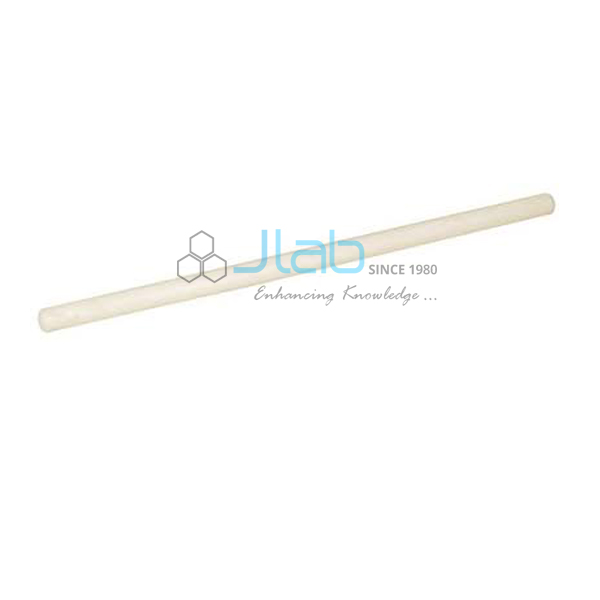
Polythene Rod (code EL-SLE-4683) is a plain polythene rod used to teach the principles of electrostatic charge in school and college physics labs. It is 300 mm long and 6 mm in diameter with rounded edges, and rubbing it with a dry woollen cloth or fur charges it by friction for simple attraction and repulsion experiments. It is made by Jain Laboratory Instruments Pvt Ltd (JLab) at its works in Ambala, India.
Specifications
| Parameter | Detail |
|---|---|
| Material | Polythene |
| Length | 300 mm (30 cm) |
| Diameter | 6 mm |
| Ends | Rounded edges |
| Purpose | Demonstrating the principles of electrostatic charge |
| This listing covers | The rod only; rubbing cloth, fur and other electrostatics apparatus are separate catalogue items |
| Quality check | Each rod is visually inspected before dispatch |
| Pack quantity | Each (sold individually) |
| Minimum order quantity | 10 units |
| Dispatch time | Usually 7–10 working days |
| Product code | EL-SLE-4683 |
| Manufacturer | Jain Laboratory Instruments Pvt Ltd (JLab) — OEM |
| Country of origin | India (made in Ambala, Haryana) |
How Does It Compare with Other JLab Electrostatics Rods?
| Item | Material | Size (as listed) | Listed use |
|---|---|---|---|
| This rod (EL-SLE-4683) | Polythene | 300 mm long, 6 mm diameter, rounded edges | Principles of electrostatic charge |
| Ebonite Rod | Ebonite | 12 in (30.5 cm) long, 9 mm diameter, plain ends | Static electricity by friction; picks up a negative charge when rubbed with fur or wool |
| Perspex Rod | Perspex | 10 x 200 mm | Electrostatics; rubbed with cotton or wool flannel to generate a charge |
| Polythene Strip | Polythene | 260 x 20 x 3 mm strip | Assorted electrostatics investigations |
Choose this rod when you want a slim, long polythene rod that students can hold by one end and rub. The ebonite rod is thicker, the perspex rod gives a second material to compare, and the polythene strip is a flat piece of the same plastic for bench investigations.
What Is the Polythene Rod Used For?
When a polythene rod is rubbed with a dry woollen cloth or fur, electrons move from the cloth to the polythene and the rod becomes negatively charged. Students then use it to pick up small bits of paper, bend a thin stream of tap water, charge an electroscope, or push away a second charged polythene rod hung in a stirrup. Bringing it near a glass rod rubbed with silk, which becomes positively charged, shows that unlike charges attract. These activities support lessons on charging by rubbing in middle-school science, the topic of electric charges in class 12 physics, and first-year college physics practicals.
Static experiments are most reliable in dry air: on humid days moisture on the surface lets the charge leak away within seconds. Keep the rod clean, dry and free of grease, wipe it with a dry cloth before each run, hold it by one end, and store it away from heat so it stays straight.
What to Specify When Ordering
- Quantity — the minimum order is 10 rods; many labs order one per student group.
- A rod of a second material — such as the ebonite or perspex rod, if students are to compare how different materials charge.
- Rubbing materials and test apparatus — fur, silk or woollen cloth, a pith ball stand or an electroscope are separate items that can go on the same enquiry.
- Delivery details — destination, and any packing or labelling your school or tender requires.
Frequently Asked Questions
What is a polythene rod used for?
It is used in electrostatics lessons. Rubbed with wool or fur it becomes charged, and students use it to attract paper bits, deflect a stream of water, charge an electroscope and show repulsion between like charges.
What size is this rod?
It is 300 mm long and 6 mm in diameter, with rounded edges. No other sizes are listed, so ask JLab if your practical sheet calls for a different length.
What charge does polythene get when it is rubbed?
A negative charge when rubbed with wool or fur, because the polythene takes electrons from the cloth. A glass rod rubbed with silk becomes positive, so the two together show attraction between unlike charges.
Is a rubbing cloth or fur included?
No, this listing covers the rod only. JLab lists rubbing materials and other electrostatics apparatus separately, for example the friction rod kit with silk cloth and a faux fur pad, linked below.
How does it differ from the JLab ebonite rod?
The ebonite rod is listed at 12 in (30.5 cm) long and 9 mm thick with plain ends. This rod is polythene, 300 mm long and 6 mm thick with rounded edges. Both are rubbed to produce a charge by friction.
What should an export enquiry include?
Send the quantity, the destination country and port or city, your preferred delivery terms (for example FOB or CIF), any packing or labelling needs, and the tender reference if one applies.
Who manufactures this polythene rod?
Jain Laboratory Instruments Pvt Ltd (JLab) makes it at its works in Ambala, Haryana, India, and quotes for it directly as the manufacturer.
OEM Manufacturer
JLab is the trading name of Jain Laboratory Instruments Pvt Ltd, a manufacturer of physics and school science lab equipment in India, incorporated in 2017 and based on Hargolal Road, Ambala, Haryana. This rod is produced at JLab’s own works rather than sourced from a trader, so schools, colleges, dealers and importers buy direct from the factory, every rod is visually inspected before packing, and repeat orders are handled by the manufacturer. JLab exports worldwide and ships to buyers in every region — for example Iceland in Northern Europe, Mexico in North America, Bangladesh in South Asia, Bahrain in the Middle East and Albania in Southern Europe. Schools buying through a tender can find details on the JLab lab tenders page.
Related Electrostatics Equipment
- Ebonite Rod — a 30.5 cm ebonite rod that charges negatively when rubbed with fur or wool.
- Perspex Rod — a 10 x 200 mm rod rubbed with cotton or wool flannel to generate a charge.
- Polythene Strip — a 260 x 20 x 3 mm polythene strip for electrostatics investigations.
- Friction Rod Kit — glass and ebonite rods with a silk cloth piece and a faux fur pad.
- Pith Ball on Stand — two light balls on nylon thread for showing attraction and repulsion.
- Electrostatic Kit — an electroscope, electrophorus plate, proof plane, acetate and polythene strips and a stirrup for suspension.
Browse the full School Lab Equipment range for more physics apparatus.
Request a Quote
Quotes come direct from the manufacturer. Use the Add To Cart enquiry button on this page, or send the quantity (minimum 10 units), any matching rods, cloths or electroscopes you need, and your delivery location through the contact page.
Last updated: 4 October 2026