Ebonite Rod Manufacturer,Supplier and Exporter in India
Product Code : EL-SLE-4539
Jlab Export is a leading Ebonite Rod Manufacturer,and suppliers in India
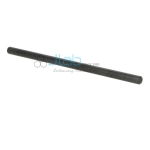
Ebonite Rod (code EL-SLE-4539) is a 12 in (30.5 cm) rod of ebonite, 9 mm in diameter with plain ends, used to study electric charge produced by friction — static electricity — in school and college physics labs. Rubbed with fur or wool, it picks up a negative charge that students can use to attract small objects, charge an electroscope or compare with a charged glass rod. It is made by Jain Laboratory Instruments Pvt Ltd (JLab) at its works in Ambala, India.
Specifications
| Parameter | Detail |
|---|---|
| Material | Ebonite (hard rubber) |
| Length | 12 in (about 30.5 cm) |
| Diameter | 9 mm |
| Ends | Plain |
| Use | Static electricity: electric charge produced by friction |
| Quality check | Each rod is visually inspected before dispatch |
| Pack quantity | Each (sold individually) |
| Minimum order quantity | 10 units |
| Dispatch time | Usually 7–10 working days |
| Product code | EL-SLE-4539 |
| Manufacturer | Jain Laboratory Instruments Pvt Ltd (JLab) — OEM |
| Country of origin | India (made in Ambala, Haryana) |
How Does It Compare with Other JLab Friction Rods?
| Rod | Material | Size (as listed) | Charge when rubbed (general physics) |
|---|---|---|---|
| This rod (EL-SLE-4539) | Ebonite | 12 in long, 9 mm diameter | Negative (with fur or wool) |
| Ebonite Friction Rod | Ebonite | 300 x 12 mm | Negative (with fur or wool) |
| Glass Friction Rod | Glass | 300 x 12 mm | Positive (with silk) |
| Polythene Rod | Polythene | Not stated | Negative (with wool or a dry cloth) |
Choose this rod for the classic ebonite experiments in a slimmer 9 mm section. The thicker ebonite friction rod is the alternative of similar length, and pairing either with a glass rod lets students see attraction and repulsion between unlike and like charges.
What Is the Ebonite Rod Used For?
Ebonite is a hard, vulcanised rubber and a good electrical insulator. When it is rubbed with fur or wool, electrons transfer from the fur to the rod, leaving the ebonite negatively charged and the fur positively charged; because ebonite is an insulator, the charge stays on the rubbed part instead of leaking away through the hand. Students use the charged rod to pick up small pieces of paper, deflect a thin stream of water, swing a pith ball, and charge a gold leaf electroscope by contact or by induction. Bringing it near a suspended charged glass rod (rubbed with silk) shows attraction between unlike charges, and near a second charged ebonite rod shows repulsion between like charges — the basis of the charging-by-rubbing work in class 12 electric charges and fields and of middle-school lessons on static electricity. Experiments work more reliably in dry weather; keep the rod clean and dry, and store it away from dust and grease.
What to Specify When Ordering
- Quantity — the minimum order is 10 rods; groups usually need one ebonite rod and one glass rod each.
- Rubbing materials — fur, wool or silk pieces are not part of this listing; ask JLab to quote them if needed.
- Detectors — a gold leaf electroscope makes the charge visible and measurable.
- Delivery — destination country, port or city and delivery terms for export orders.
Frequently Asked Questions
What is an ebonite rod used for?
Static electricity experiments. Rubbing it with fur or wool gives it a negative charge, which can attract light objects, charge an electroscope and show forces between charges.
What are its dimensions?
12 in (about 30.5 cm) long and 9 mm in diameter, with plain ends.
What charge does ebonite get when rubbed with fur?
Negative. Electrons move from the fur to the ebonite, so the rod becomes negative and the fur positive; a glass rod rubbed with silk becomes positive.
Is the rubbing fur or wool included?
The listing covers the rod only. Ask JLab if you would like rubbing materials quoted with it.
Why do static electricity experiments fail on humid days?
Moisture in the air and on surfaces lets charge leak away quickly. Work in a dry room and make sure the rod and the rubbing cloth are dry.
What details are needed for an export quotation?
Quantity, destination country and port or city, delivery terms such as FOB or CIF, any packing or labelling requirements and the tender reference if there is one.
Who manufactures the ebonite rod?
Jain Laboratory Instruments Pvt Ltd (JLab) makes it at its works in Ambala, Haryana, India, and quotes directly as the manufacturer.
OEM Manufacturer
JLab is the trading name of Jain Laboratory Instruments Pvt Ltd, a physics and general science laboratory equipment manufacturer in India, incorporated in 2017 and based on Hargolal Road, Ambala, Haryana. The rods are produced at JLab’s own works, not bought from a trader, so schools, colleges, dealers and importers deal with the maker directly; each rod is visually inspected before dispatch, and repeat orders are handled by the manufacturer. JLab exports worldwide and can ship to buyers in every region — Poland in Eastern Europe, Norway in Northern Europe, Uruguay in South America, Sri Lanka in South Asia and Brunei in Southeast Asia are some examples. Tender details are on the JLab lab tenders page.
Electrostatics Apparatus
- Gold Leaf Electroscope — a standard-size electroscope for detecting the charge on the rod.
- Glass Friction Rod — for producing the opposite (positive) charge.
- Polythene Rod — another rod for electrostatic charge experiments.
- Ebonite Friction Rod — a thicker ebonite rod for static electricity work.
See the full School Lab Equipment range.
Request a Quote
Quotes come direct from the manufacturer. Use the Add To Cart enquiry button on this page, or send the quantity (minimum 10 units), any glass rods, electroscopes or rubbing materials to add, and your delivery location through the contact page.
Last updated: 4 October 2026