

Stereo Acuity Test Kit Manufacturer,Supplier and Exporter in India
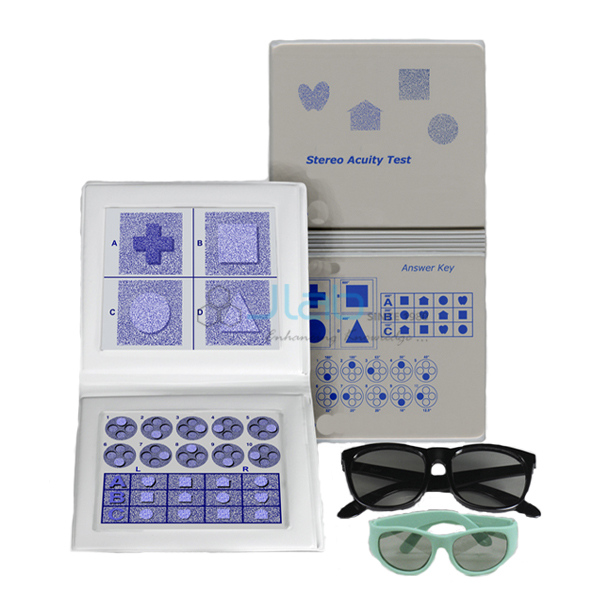
Product Code : EL-FM-3927
Jlab Export is a leading Stereo Acuity Test Kit Manufacturer,and suppliers in India
Stereo acuity is the smallest difference in depth that a person can see with both eyes working together. This kit tests it with printed plates in a booklet: a graded circle test and a random dot symbols test. The plates are made with no monocular clues, and the levels run from gross depth at 2500 seconds of arc down to fine depth at 20.
Specifications
| Format | Improved test booklet |
| Graded circle test | From 400 down to 20 seconds of arc |
| Random dot symbols test | 500, 250, 125 and 63 seconds of arc |
| Overall range | Gross to fine stereopsis, 2500 to 20 seconds of arc |
| Monocular clues | None, by design of the plates |
| Viewing | Through polarised viewers |
| Minimum order quantity | 10 units |
| Dispatch time | Usually 4–6 working days |
| Manufacturer | JLab (Jain Laboratory Instruments Pvt Ltd), Ambala, India |
Stereo Vision Practicals for Students
In an optometry or nursing vision practical, students work in pairs. One holds the booklet upright under even light while the other points to the circle or symbol that seems to stand out from the page. The examiner records the finest level answered correctly, then repeats the line before any miss to check the answer was not a guess.
The class first checks distance vision with each eye. A student who has left their spectacles behind can be tested through the Trial Lens Set, since blur lowers the stereo score. Students then compare their stereo results with a colour vision check from the Color Vision Testing kit and explain how each test measures a different part of sight.
Frequently Asked Questions
What does seconds of arc mean?
It is the size of the depth difference shown by a plate, as an angle at the eye. The smaller the number, the finer the depth step. A person who sees the 20 second level has finer stereo acuity than one who stops at 400.
How do I tell real stereo vision from guessing?
Cover one eye and ask again: with one eye the shapes on these plates should not stand out, because they carry no monocular clues. The examiner should also hold the booklet so the subject cannot tilt or wiggle it to look for clues.
How far away should the booklet be held?
Hold it at the reading distance its instructions give, square to the face and upright. The seconds-of-arc values only apply at that distance, so measure it each time instead of judging it by eye.
What lighting does the test need?
Use good, even room light with no glare or reflections on the plates. A plain, darker background behind the subject helps, and the booklet must not be turned upside down, which reverses the depth.
How is the result written down?
Record the finest level the subject answered correctly, in seconds of arc, and which test it came from. Note whether spectacles were worn, so a later test can be done in the same way.
Eye Charts for the Same Lesson
For a quote, use Add To Cart or send us a message through the contact page.
Last updated: 20 November 2026
