DNA Activity Model Manufacturer,Supplier and Exporter in India
Product Code : EL-GAIE-6883
Jlab Export is a leading DNA Activity Model Manufacturer,and suppliers in India
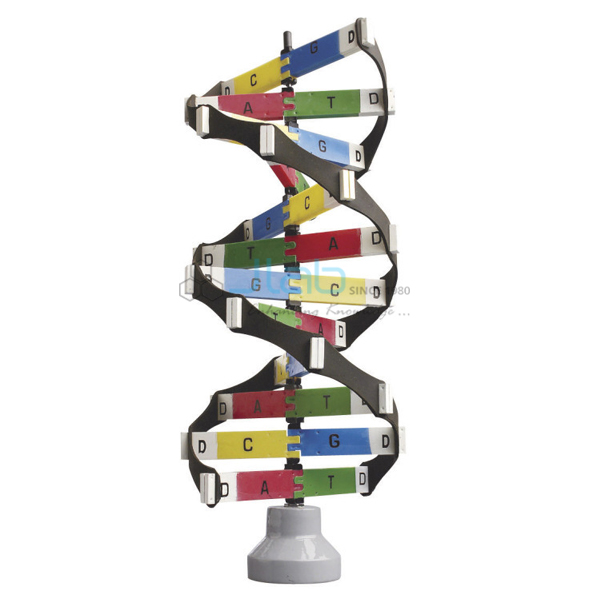
DNA Activity Model (code EL-GAIE-6883) is a build-it-yourself double helix model in which students assemble colour-coded cytosine, adenine, guanine and thymine bases, connecting phosphate strands and a centre rod representing hydrogen bonds, then unzip the helix to show DNA replication. It stands 19 in (about 48 cm) high on a sturdy metal base that rotates for classroom display. It is made by Jain Laboratory Instruments Pvt Ltd (JLab) at its works in Ambala, India.
Specifications
| Parameter | Detail |
|---|---|
| Model type | Three-dimensional double helix DNA model, assembled by students |
| Bases | Cytosine, adenine, guanine and thymine |
| Backbone | Connecting phosphate strands |
| Centre rod | Represents the hydrogen bonds |
| Parts | Colour-coded, with specially shaped ends to ensure proper base-pair alignment |
| Replication demonstration | Parts can be unzipped to demonstrate DNA replication |
| Material | Durable plastic components |
| Base | Sturdy metal base for easy rotation and classroom display |
| Size | 19 in (H) x 7.5 in (D) — about 48 cm x 19 cm |
| Assembly | Easy to assemble |
| Quality check | Each model is visually inspected before dispatch |
| Pack quantity | Each (sold individually) |
| Minimum order quantity | 10 units |
| Dispatch time | Usually 7–10 working days |
| Product code | EL-GAIE-6883 |
| Manufacturer | Jain Laboratory Instruments Pvt Ltd (JLab) — OEM |
| Country of origin | India (made in Ambala, Haryana) |
How Does It Compare with Other JLab DNA Models?
| Model | Size as listed | Listed details |
|---|---|---|
| This DNA Activity Model (EL-GAIE-6883) | 19 in (H) x 7.5 in (D) | Double helix with C, A, G and T bases, phosphate strands and a centre rod for hydrogen bonds; colour-coded parts; unzips for replication; rotating metal base |
| DNA Activity Model (two-segment set) | 12 x 12 x 46 cm | Students construct two complete DNA segments; 48 bases, four strands, two supporting rods with pedestals and illustrated instructions |
| DNA Structure Model | 12 x 12 x 40 cm | 12 base pair model; sugars in a slightly different plastic so the helix flexes; central supporting spine; separates into two strands |
Choose this model when you want one larger double helix that a group builds and then displays on a rotating stand, with an obvious unzipping step for replication. The two-segment set lets students build two separate segments, and the DNA Structure Model is listed with separate sugar pieces for teachers who want the sugar-phosphate backbone shown in more detail.
What Is the DNA Activity Model Used For?
Building the helix by hand helps students remember how DNA is put together. The shaped ends allow only the correct pairings — adenine with thymine and cytosine with guanine — so students discover the base-pairing rule as they assemble the model, and the centre rod shows where hydrogen bonds hold each pair together across the middle of the molecule. Once the helix is complete, students unzip it to show how the two strands separate during replication, each serving as a template for a new strand. The model supports the class 12 biology chapter on the molecular basis of inheritance, introductory genetics in secondary school, and college molecular biology teaching, and it can be shown at science exhibitions.
When teaching from the model, point out that the strands in real DNA are a sugar-phosphate backbone made of alternating deoxyribose sugars and phosphate groups, and that the bases face inward. Store the parts in labelled trays between classes so that each set stays complete, and wipe the plastic parts with a damp cloth when needed.
What to Specify When Ordering
- Quantity — the minimum order is 10 models.
- Model choice — this rotating double helix, the two-segment set or the 12 base pair DNA Structure Model, depending on the detail you need.
- Related teaching aids — a replication model or chromosome staining kit can go on the same enquiry.
Frequently Asked Questions
What parts does the DNA Activity Model include?
Cytosine, adenine, guanine and thymine bases, connecting phosphate strands, a centre rod representing hydrogen bonds and a sturdy metal base. The model is made of durable plastic components.
How big is the assembled model?
It is listed at 19 in high and 7.5 in deep, which is about 48 cm by 19 cm, and the metal base lets it rotate for classroom display.
Can the model show DNA replication?
Yes. The colour-coded parts can be unzipped to demonstrate replication, letting students separate the two strands and discuss how each one acts as a template.
How do students know which bases pair together?
The parts have specially shaped ends that ensure proper base-pair alignment, so adenine fits with thymine and cytosine with guanine, and wrong pairs do not fit.
How is it different from the other DNA Activity Model listing?
This model is a single double helix on a rotating metal base, 19 in high. The other listing with the same name is a set for building two complete DNA segments, with 48 bases, four strands and two supporting rods with pedestals.
What details are needed for an export quotation?
Send the quantity, the destination country and port or city, the delivery terms you prefer (for example FOB or CIF), any packing or labelling requirements, and a tender reference if the purchase is for a tender.
Who manufactures this DNA model?
Jain Laboratory Instruments Pvt Ltd, which trades as JLab, makes it at its works in Ambala, Haryana, India, and quotes directly as the manufacturer.
OEM Manufacturer
JLab is the trading name of Jain Laboratory Instruments Pvt Ltd, a biology model and laboratory equipment manufacturer in India, incorporated in 2017 and located on Hargolal Road, Ambala, Haryana. The DNA Activity Model is made at JLab’s own works and not bought in from a trader, so schools, colleges, dealers and importers buy it factory-direct, every model is checked visually before dispatch, and repeat orders are handled by the maker itself. JLab exports worldwide and ships to buyers in every region — for example Lithuania in Northern Europe, Tajikistan in Central Asia, Tonga in Oceania, Morocco in North Africa and Yemen in the Middle East. Institutional buyers can also see the JLab lab tenders page.
Related Genetics Teaching Aids
- DNA Replication Model — shows the replication fork, the enzymes at work and the semiconservative result.
- DNA/Chromosome Staining Lab Activity — students stain and squash root tips to see chromosomes in every stage of mitosis.
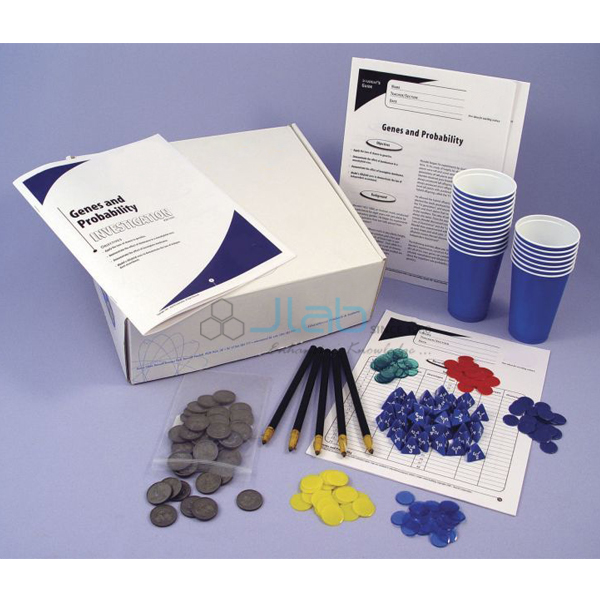
- Genes and Probability — game-like exercises on patterns of inheritance and genetic probability.
See the full Genetics and Inheritance Equipments range or all Biology Lab Equipment.
Request a Quote
Quotes come direct from the manufacturer. Use the Add To Cart enquiry button on this page, or send the number of models (minimum 10 units), whether you also need other DNA models, and your delivery location through the contact page.
Last updated: 5 October 2026